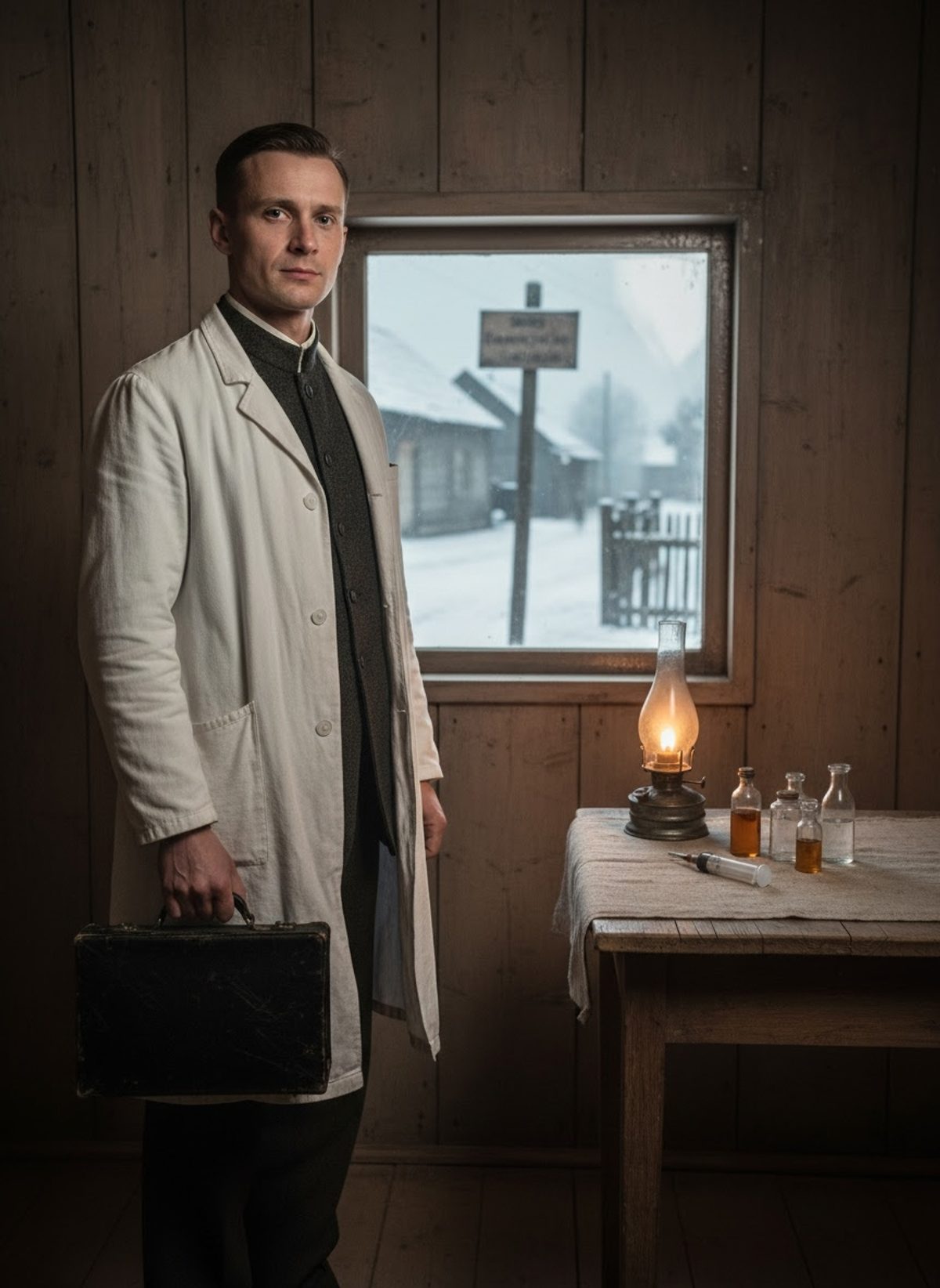
He was a doctor without an army. Yet, his idea would be audacious enough to save thousands from the grip of death. Dr. Eugene Lazowski, nestled in the heart of wartime Poland, used his medical acumen and a dead bacterium to wage a silent war against the Nazis.
Laying the Groundwork
Born in Częstochowa, Poland, in 1913, Eugeniusz Sławomir Łazowski was entrenched in the world of medicine from an early age. He secured his medical degree from Józef Piłsudski University in Warsaw, a foundation that would later serve as a cornerstone for his daring wartime operation.
With the storm clouds of World War II gathering, Lazowski's medical career was anything but conventional. As a medic in the Polish Army, he served with distinction but soon found himself a prisoner in a Soviet camp. His eventual escape marked the beginning of a journey defined by ingenuity and a deep sense of moral duty.
In the small village of Rozwadów, Poland, Dr. Lazowski crafted not only a home for his young family but also a sanctuary for thousands amidst the horror of Nazi occupation. Working alongside his friend and fellow doctor, Stanisław Matulewicz, Lazowski's medical practice became a beacon of hope. The two doctors were not just colleagues but soldiers in a clandestine war against oppression.
Read next: USS Chopper Plunged 1,011 Feet and Breached the Surface Bow-First
The Ingenious Deception
The idea was as simple as it was ingenious. Matulewicz had discovered that by injecting healthy individuals with a harmless strain of the bacterium Proteus OX19, their blood would test positive for typhus. This breakthrough became the linchpin of their plan. By fabricating an epidemic, they could exploit the German fear of disease and quarantine entire villages, transforming them into de facto sanctuaries.
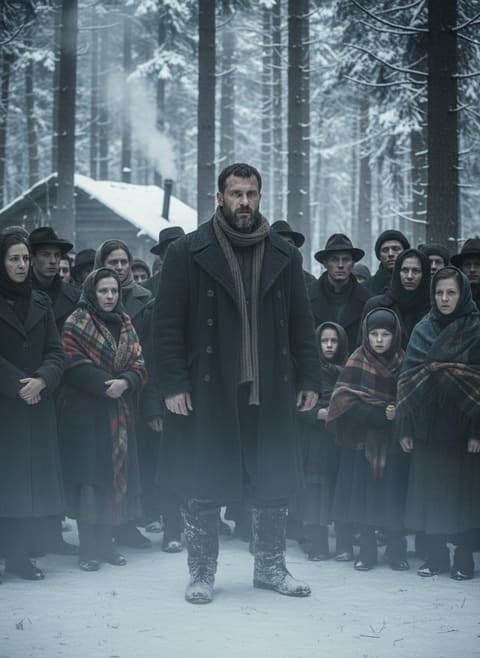
It was a gamble with extraordinarily high stakes. Any blunder could expose the ruse, with lethal consequences. Yet, the alternative was a certainty—deportation to concentration camps. Under their covert operation, the false epidemic spread across a dozen villages from 1941 to 1944, all under the wary yet unwitting supervision of Nazi forces. The Germans never dared to breach the quarantine zones. In their terrified minds, the risk of contagion was too high.
The Breath of Life Behind Barbed Wire
The primary beneficiaries of this bold operation were not just Polish Jews, as some legends suggest, but a broad swath of the local population. Although Lazowski did secretly aid Jews, saving lives through this fraudulent epidemic was his primary battlefront, reaching beyond any single demographic. His clinic served many who had nowhere else to turn, a beacon of salvation amidst peril.
Nestled close to a strategic railway hub, Rozwadów was an imperiled sanctuary on a grander scale. Here, Lazowski extended his reach to those passing through, aiding Jews from ghettos while evading detection—a clandestine victory against the rigid injustice of Nazi protocols.
Read next: Operation Homecoming: 591 Americans Flew Out of Hanoi in 1973
Survival and New Beginnings
The war's end ushered in a new chapter for Lazowski and his family. In 1958, they emigrated to the United States, where the doctor transitioned from saving lives in secret to shaping minds openly. At the University of Illinois in Chicago, Lazowski found a platform to educate others, leaving an indelible mark through countless scientific dissertations.
Despite being hailed a hero, Eugene Lazowski chose a life of quiet dignity. His memoirs, penned late in life, reflect a deep, abiding commitment to human dignity over self-aggrandizement. It is this humility that perhaps casts the most illuminating light on his character—a quiet warrior, content with the knowledge that his actions had made a difference.
An Enduring Reminder
Why does Eugene Lazowski’s remarkable deception still matter today? In an era obsessed with might and display, his story stands untouched by time, a testament to the very heart of courage—a plea for empathy in its truest form. As we navigate modern complexities, it is worth remembering that the quiet strength of integrity, wielded with courage, can bend the arc of history.