Doctors were saving lives. In reality, they were unwittingly ushering patients to their graves. This stark reality was the grim backdrop of the surgical world in the Victorian era, where advances in medical procedures were paradoxically accompanied by an alarming death toll. It was a time when the presiding image of a successful surgeon was one clad in a blood-stained apron, a macabre badge of honor signifying experience. Yet, beneath this facade lurked the grim truth: half of all surgical patients succumbed to infections following their operations, an enigma that beleaguered even the most seasoned medical minds.
The air in Ward 20 of Glasgow Royal Infirmary in 1867 was thick with anticipation and a lingering sense of desperation. In an era devoid of antiseptic procedures, entering the surgical theater was akin to gambling with fate. Joseph Lister, a scholarly figure with a contemplative disposition, was stationed here, grappling with the harsh realities faced by his patients. It was a perplexing conundrum: despite successful surgeries, patients spiraled into fatal fevers, their lives snuffed out by unseen invaders lurking in the sterile-seeming air.
Enter Louis Pasteur, the French chemist whose research would light the path to a medical revolution. Pasteur's work on microbial lifeforms posited an invisible world of pathogens — silent killers thriving in the most ordinary environments. Bridging these radical ideas with his surgical observations, Lister conceived of an audacious yet simple hypothesis: what if microscopic organisms, undetected and unopposed, were the marauders invading post-operative wounds, turning recovery into funeral preparations?
This revelation was akin to discovering a hidden key to an inexplicable mystery. Lister surmised that if these minute saboteurs were the culprits, then finding a method to thwart them could dramatically alter surgical outcomes. It was not an easy sell to his contemporaries, who were deeply entrenched in centuries-old practices that equated bloodied garments with expertise rather than oversight.
Read next: The Day a Chimney Boy Stood Before Parliament and Wept
Armed with his medical acumen and inspired by Pasteur's pioneering theories, Lister looked to carbolic acid as his weapon of choice. This potent compound, known for its disinfecting properties, had been utilized in sewage treatment to quell the pervasive stench and mitigate disease. Could it, he wondered, similarly purify the surgical environment, thwarting the invisible assailants that plagued his patients?
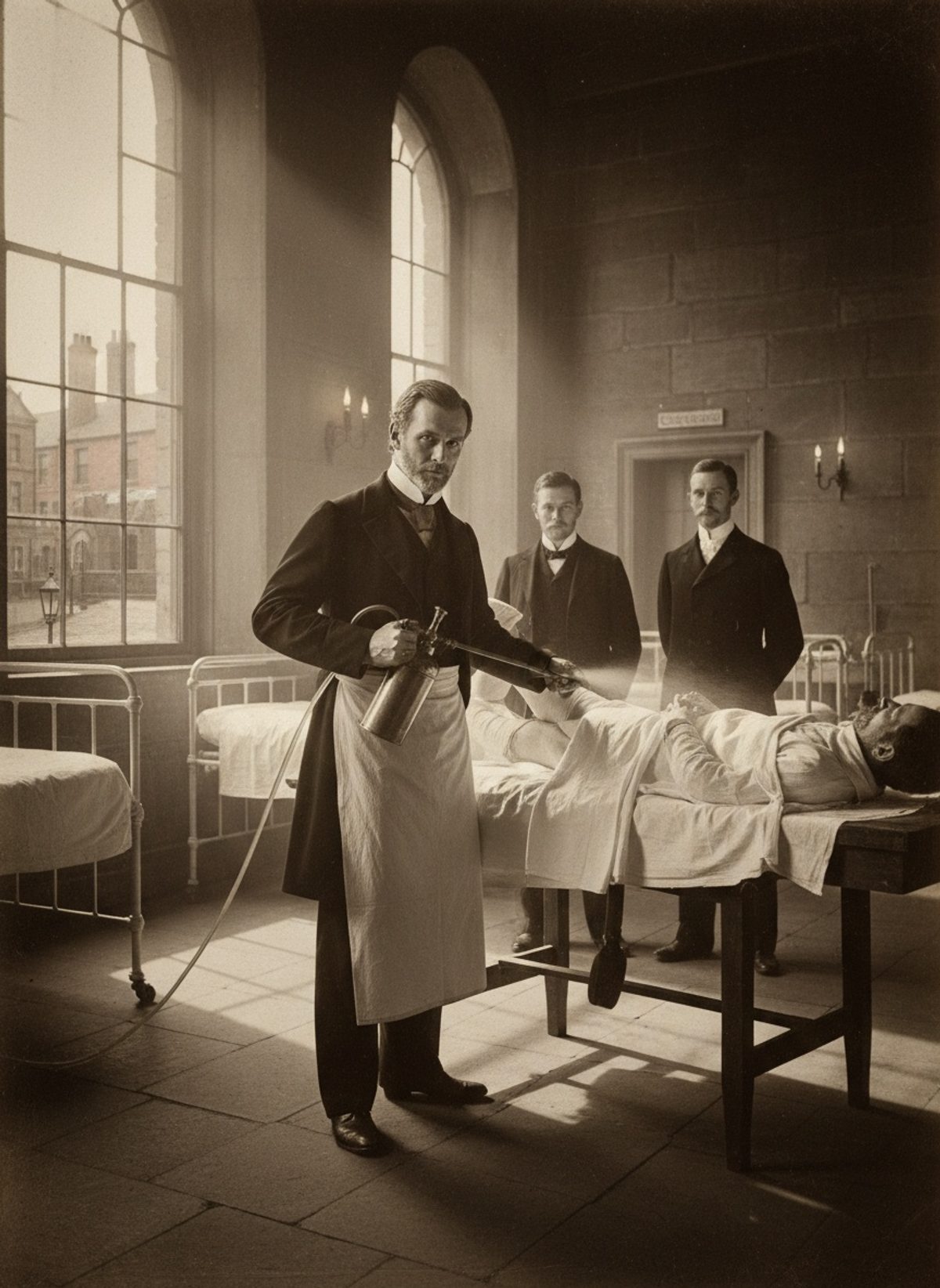
The stage was set for an unprecedented experiment. In a modest corner of Ward 20, under the watchful gaze of cautious peers and trembling students, Lister made history. As surgical steel gleamed and apprehensive eyes fixed upon him, he directed a fine mist of carbolic acid over an open wound, an intervention befitting more a chemist than a surgeon. This was uncharted territory, where risks mingled with unspoken hopes in the shared breaths of those in attendance.
Days passed, stretching into weeks, the patient laboring under the harsh yet necessary assault of post-operative recovery. Yet, against the odds, a miracle unfolded. The wound healed cleanly, unobstructed by the relentless march of the usual formidable infections. It was more than a victory; it was a paradigm shift, a palpable silence in the death wards that spoke louder than any trumpet blast of conventional success. Surgeons who once prided themselves on their sanguinary visage began to reconsider, drawn to this newfound clarity like moths to a luminous flame.
Read next: The Day a Printer's Devil Gave Blind Britons Their Voice
This triumph resonated far beyond Glasgow, reverberating through the surgical theaters of Britain and beyond. The specter of post-operative infection, long a specter lurking in the shadows of medical progress, was being dispelled. Lister's pragmatic approach, first met with skepticism, swiftly took root, the seeds of antiseptic technique blossoming into a cornerstone of modern surgery.
As Lister's methods flourished and spread, hospitals transformed, shedding the once-prized bloodstains for a commitment to sterility and hygiene. The surgical fraternity, initially hesitant, began its march toward the antiseptic era, a tide of change that would lift countless lives from the clutches of infection. Patients who might have once faced grim prognoses found hope renewed, their futures unclouded by the specter of sepsis.
The day Joseph Lister sprayed carbolic acid over an open wound marked the inception of a revolution, yet it was more than just the birth of antiseptic surgery. It was a moment of rediscovery, an acknowledgment that humility and inquiry in the face of tradition could bring about profound transformation. This unlikely triumph reminds us that true innovation often lies at the intersection of disparate ideas, waiting for someone brave enough to explore the boundaries of the known world.