The British cavalry at the Battle of Omdurman is legendary. But the savior of that day walked on two feet, not four.
The Unlikely Hero from the Highlands
Amidst the swirling chaos of the battlefield at Omdurman on September 2, 1898, stood a man many might have overlooked at first glance. Hector MacDonald, known affectionately as “Fighting Mac,” was a son of the Highland soil and of humble beginnings. Born to a blacksmith, MacDonald had risen through the ranks, a rarity in Victoria's empire that had an unspoken penchant for its officers to be of noble birth. Yet, merit has a language of its own, undeterred by titles, whispered in the deafening gunfire as MacDonald's astute leadership embodied the credo that courage and competence might tilt the scales of fate.
As Lord Kitchener's army surged forward to confront the forces of the Dervish led by the Khalifa, few could predict the pivotal role this resolute brigade would play. Hector MacDonald and his men were about to be tested in a trial by fire—a trial that history would nearly forget, save for the seasoned eyes that truly observed that bloody day.
The Dance of the Desert
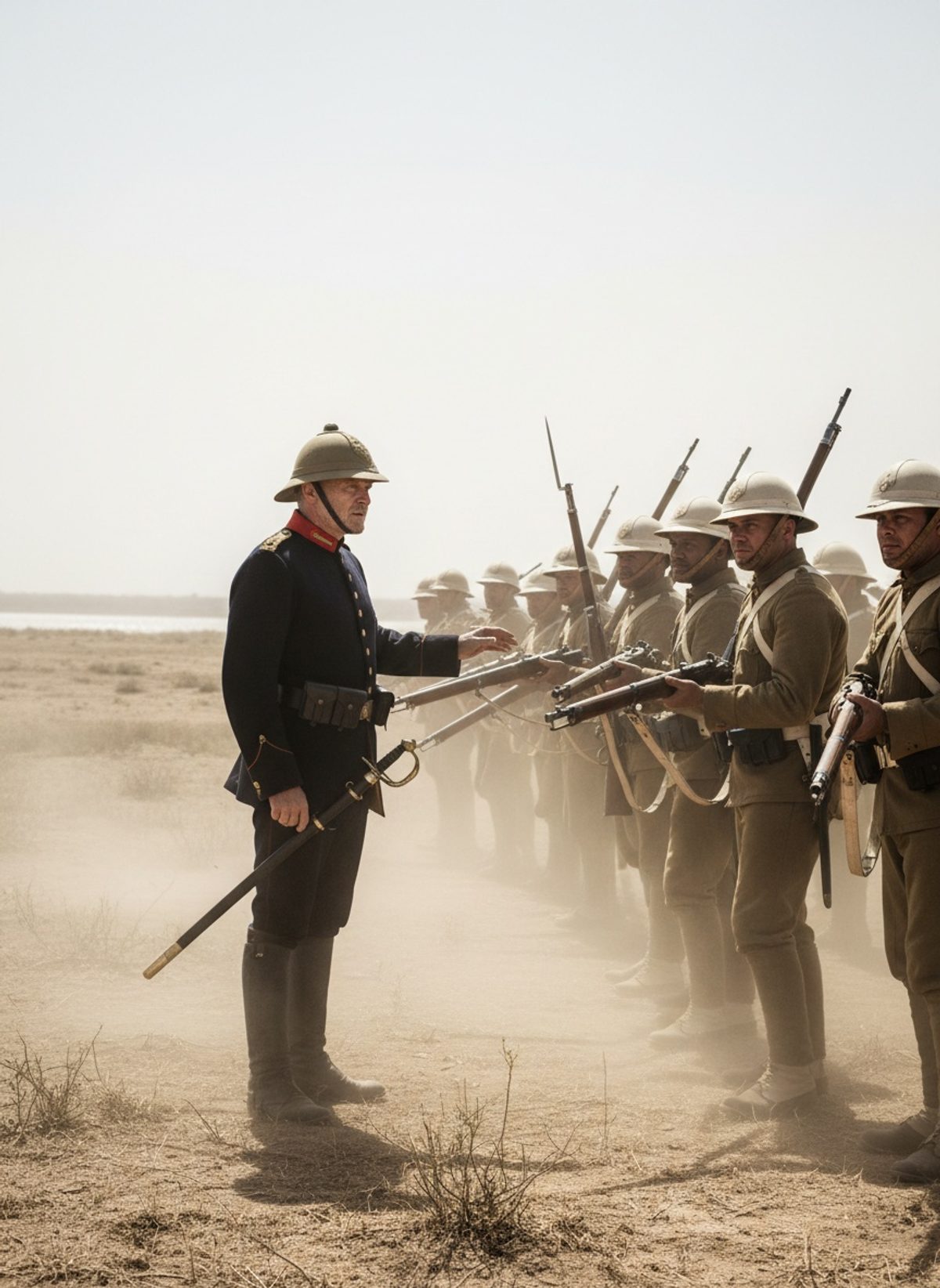
Around the arid Sudanese terrain, beneath a sun that scorched olive-green uniforms with indiscriminate fervor, the Dervishes charged. The clamor of an impending engagement reached a fever pitch as MacDonald realized they faced threats from two directions instead of the singular front they anticipated. His brigade, a well-trained unit, suddenly found itself in the vice grip of dual advancing forces, a situation that could unravel even experienced soldiers with its sheer overwhelming nature.
Read next: The Day a Surgeon's Son Gave London's Slum Children Clean Water
But under MacDonald's command, they performed a feat rarely attempted in the heat of battle—they shifted their line twice under intense pressure. As gunfire rained upon them, MacDonald's orders cracked like whips over the dusty air. The men pivoted, the lines curling and unfurling like a dance choreographed through sheer necessity. Here was the stuff of painterly depictions, but no canvas could fully capture the visceral harmony of disciplined troops responding to one voice. Their maneuvers not only held the line but became a bulwark upon which the British could reorient and launch counterattacks.
The Invisible Backbone of Victory
While the world would sing ballads of the cavalry's charge, it was MacDonald's brigade that held firm when all seemed lost. They did not falter, acting as an anvil upon which the hammers of British strategy would fall decisively. Every soldier who bore witness could recount how the horizon seemed alive with the ebbing mass of their adversaries, how the air crackled with the tension of a thousand impending fates.
Read next: The Day a Surgeon's Son Gave a City's Orphans Back the Sun
Kitchener himself remarked—a man not easily given to hyperbole—that MacDonald had saved the day. In narratives recounted solemnly in officers' clubs and whispered in campfires wayfaring home, this simple acknowledgment bore the weight of unadorned truth. Without MacDonald, Omdurman might have been a story very different in the retelling, a tale spun into obscurity by an advancing wave. But instead, it molded the narrative of a British triumph that would echo through Western-constructed timelines as a crescendo of imperial destiny.
A Lesson Etched in Dust and Blood
Within the shadows of history, nestled in the margins of grand battles, lie tales easily overlooked. Yet Hector MacDonald's story refuses to be silent. It cries that men of brilliance, irrespective of birthright, can rise to carve their names across the sky of immortality. That day beneath the relentless Sudanese sun, MacDonald and his men—anonymous to many—etched their presence onto the age with action, discipline, and unyielding spirit.
Why do such stories matter? They illuminate the hidden threads in the tapestry of our shared past, the unseen forces and the unsung individuals who shaped surges of fate. The deeds of Hector MacDonald remind us that history is not solely a march of vast armies but is often decided by the resolute courage of a limited few. As we remember Omdurman, let us pause to consider those who faced the undying sun, whose courage and grit held firm when the line threatened to break—whose names may slip from the pages of dusty annals, but whose actions ripple through time, ever reminding us of the hidden heroes who dance along the knife's edge of the untold.