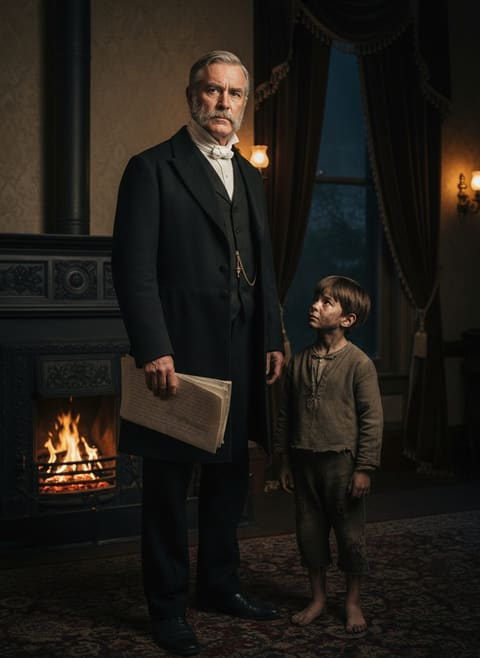
He was a surgeon's son, but he never held a medical degree. He wielded compassion as deftly as any scalpel. This was Benjamin Waugh, a man whose heart led him down the teeming streets of Victorian London to face a legal system as cold as the cobblestones beneath his feet.
A Child Lost and Found
It was 1884, a year that Londoners might remember for things that never graced the pages of history books. In the labyrinth of narrow alleys and suffocating workhouses, a twelve-year-old chimney sweep lay dying. His predicament was not unusual; children of his station were often swallowed whole by the insatiable machine of urban poverty. However, this child would unwittingly become a catalyst for change, simply by lingering one breath away from death, drawing in one final resolve against the injustice that had ensnared him.
Benjamin Waugh, a Congregationalist minister with a penchant for activism and a heart attuned to the whispers of suffering, discovered the boy's plight. Waugh was no stranger to the dark underbellies of his beloved city; his church on North Audley Street had shown him the impoverished faces of those whom society had altogether overlooked. Yet, here was a case so brutal in its simplicity: a child left to die, his crime nothing more than existing within a broken system.
The Courtroom Confrontation
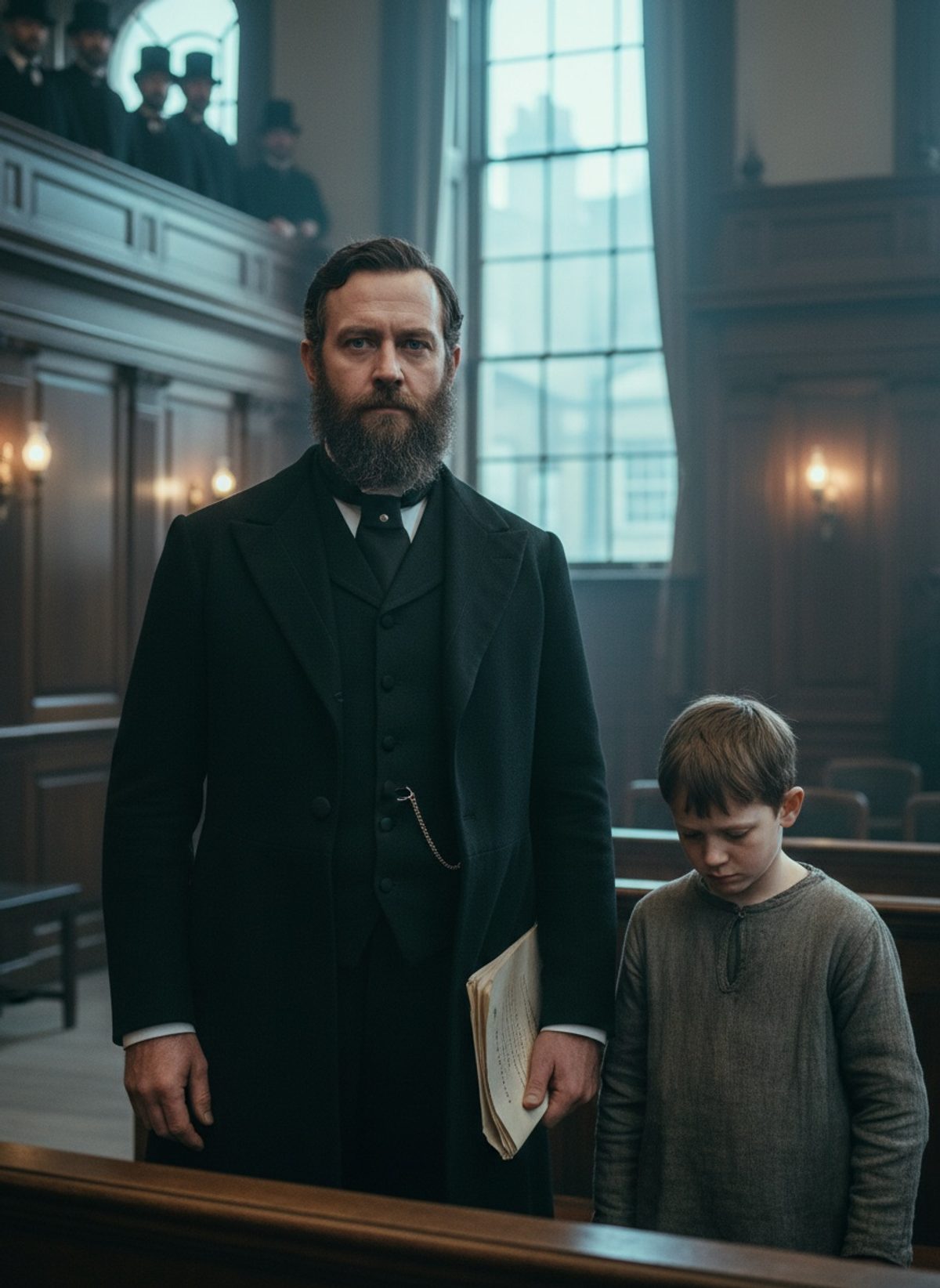
The cornerstone of Waugh's audacious plan was not a revolution but an act so simple it demanded courage to believe it could succeed. He walked into court alone. The path to justice wasn't a straight line back then—especially not for the destitute young souls crammed into workhouse wards. The law had yet to fully embrace the child advocacy that would later become paramount in the city’s evolution.
Read next: The Day a Surgeon's Daughter Walked Into a Medical School and Won
Waugh named the workhouse master responsible, laying bare the callous negligence and lack of aid that had brought the boy to his perilous state. One can imagine the courtroom: a space filled with the dank echoes of oppressive bureaucracy, the air thick with the weight of disbelief that a man of modest stature would dare bring the travesty to light. Yet, Waugh pressed on, chiseling away at the granite facade of indifference until space for justice appeared.
A Society Stirred
The story of the little chimney sweep didn't end just because the law decided it. The courtroom victory, however small, resonated louder than a church bell calling the faithful home. In its tremors, even the most indifferent citizens felt the quiver of awakening. Waugh's advocacy wasn't isolated; it uncovered a readiness in the social consciousness to confront truths long ignored. Where previously the poor were pitied in silence, they began to find spokespeople willing to tie words to actions.
Waugh’s influence extended beyond that solitary courtroom spectacle. Within a year of adopting the wounded boy’s cause, he had co-founded the National Society for the Prevention of Cruelty to Children (NSPCC). The organization sought to formalize the compassion that had driven him to the courts in the first place, aiming to eradicate the notion that society’s youngest and most vulnerable could be treated like expendable resources.
The Ripples of Compassion
In the realm of Victorian morality, where propriety often triumphed over compassion, Waugh’s victory could not be overstated. It symbolized more than just a boy made safe; it was a chisel struck against the icy heart of societal neglect. His actions daringly suggested that ethical responsibility could override archaic laws and that sentiment was, indeed, a viable guide when drafting new ones.
Read next: The Day a Surgeon's Son Gave London's Poorest a Voice
His passion was infectious. Tales of institutional reform grew from a trickle to a flood. Waugh and like-minded advocates worked tirelessly, their collective force informing policy and ushering into existence a framework of child protection that seemed radical only years prior.
An Invitation to Remember
To speak of Benjamin Waugh and that poignant day in 1884 is to speak of heroics that wore the guise of normalcy. He was not armed with legislative power or perennial wealth, but with the inexhaustible conviction that the world could be better if we dared to look with compassionate eyes. The tale of a dying chimney sweep and the steely resolve of a lone minister reminds us that great societal changes are often born from a single moment of unimpeachable humanity.
In these moments, when told through the prism of history, we find the seeds of common decency and the powerful impetus for change. Waugh’s story beckons us to consider not just the loud clamor of revolutions, but the quiet murmurings of kindness that push us—inch by inch—toward a more just world.