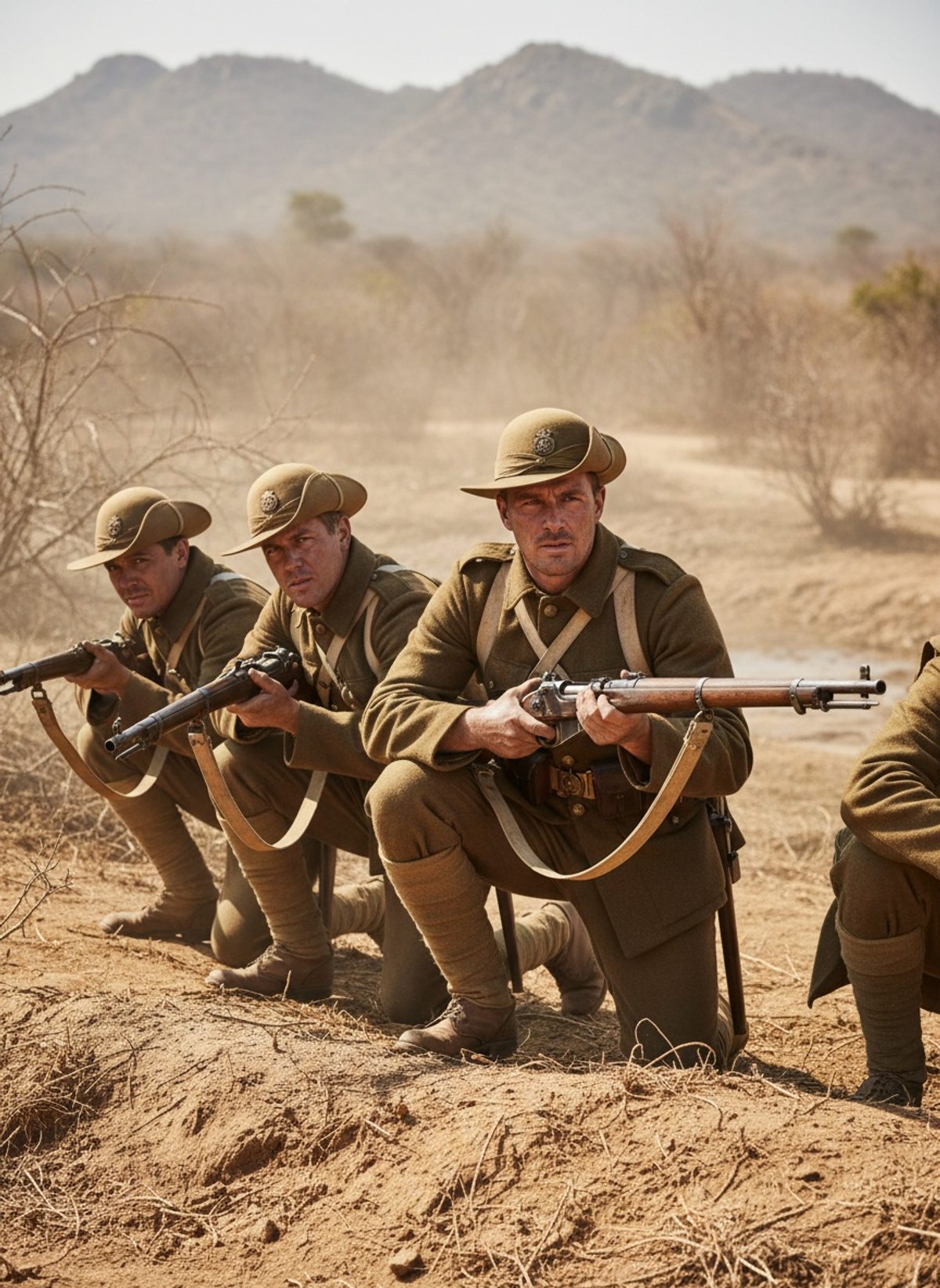
The air crackled with tension as rifle shots echoed from the banks of the Modder River, dust rising in frantic swirls with each explosion. General Piet Cronjé stood resolute among the jagged rocks and scarred trees, the din of war surrounding him like a malevolent symphony. 4,019 Boer fighters under his command mirrored his determination, even as hunger tightened its cruel grip on their stomachs. For days now, this natural fortress had been their refuge and prison, an amphitheater of survival where every move held the weight of destiny.
The Siege in the Riverbed
The scene unfolding at Paardeberg in February 1900 was a dramatic display of strategic entrenchment. The Boers, besieged by British forces led by Lord Roberts, had dug themselves into the rocky riverbed of the Modder River for what they hoped would be tenable resistance. Their choice of terrain was no accident; the river, shallow and wide, provided natural defenses against the onslaught of colonial power. But what the Boers hadn't anticipated was the sheer tenacity of the British resolve—or the unyielding advance that would follow.
For 18 days, the Boers held their ground. Each day brought new challenges as artillery shells rained down, and the encircling British tightened their net. Conditions were grim. Provisions dwindled rapidly as the sun beat down mercilessly on soldier and steed alike. The river, a fickle ally, offered scarce refuge. Day by day, the tight cordon of troops closed in, transforming the riverbed from sanctuary to suffocating trap.
The Weight of History
February 27th bore a dark echo of Britain's military past. It was no arbitrary date that Lord Roberts had chosen to press his advantage; it was calculated precision. Exactly 19 years before, the Boers had secured a stunning victory against the British at Majuba Hill, a defeat that still wounded the pride of those in command. The symbolic resonance of that date was a psychological chess move intended to reclaim honor. As dawn broke on the anniversary of Majuba Hill, both sides were acutely aware of the historical shadow that loomed over their actions.
Read next: The Day a Surgeon's Son Gave a City's Orphans Back the Sun
The decision to force a decisive action that day was deliberate. Lord Roberts knew the significance of delivering a message that echoed through the halls of power. For British forces, the surrender of Cronjé's men was more than just a military victory; it was an opportunity to rewrite the narrative, to expunge the stain of past failure with the ink of triumph.
Breaking the Spine
The moment of surrender was as anti-climactic as it was historic. On that fateful morning, Cronjé, faced with the inescapable tightening noose of British forces, finally acquiesced. To those who watched, it was as though a collective breath had been held and released. The impact of this capitulation rippled far beyond the confines of the battlefield. Despite the Boers' valorous defense, their defeat at Paardeberg signified a turning point in the Second Boer War.
Read next: The Day a Surgeon's Son Faced a Courtroom to Free a Dying Boy
The capture of 4,019 Boer soldiers—the largest single British capture since Yorktown—stripped the Boer Republic of a substantial portion of its fighting force. It was a military and psychological blow from which recovery seemed a distant prospect. The scalp of victory offered a semblance of redemption for the British military, soothing the scars of past humiliations. Yet this pivotal moment was more than a victory to be celebrated; it was a prelude to a conflict that would drag on, altering the fates of both victor and vanquished.
Lessons from a Riverbed
The surrender of Cronjé at Paardeberg reverberates as a cautionary tale in the annals of colonial warfare—a stark reminder of the unpredictable tide of conflict. The calculus of battle is often decided by more than mere numbers or strategic brilliance. It is shaped by the deep undercurrents of legacy, the burden of historical narrative, and the unforgiving march of resilience against time.
The 18 days at Paardeberg offer a mirror reflecting both the might and myopia of imperial power. As the dust settled and the river flowed once more unchallenged, the legacy of those skirmishes lingered in the whispering wind, reminding us of the intertwined fates of oppressor and oppressed. For Britain's empire and the Boer Republic, it was a tale etched in the earth, a chapter in a longer story, one where the battles of the past shape the contours of the future.