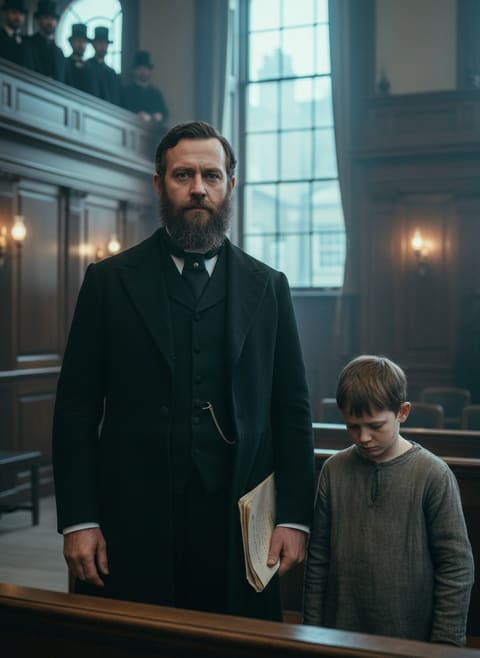
He was a peer of the realm. Yet he spent his life caring for society's forgotten. Anthony Ashley Cooper, better known as the 7th Earl of Shaftesbury, was a man at perpetual odds with the comfortable elite of Victorian England.
The Grime Beneath the Glamour
The majestic spires and magnificent architecture of Victorian London cast long shadows—shadows that concealed the grim plight of society's most vulnerable: the climbing boys. These were children, often no older than six or seven, squeezed into the dirty chimneys of the prosperous city to clean soot from within. Their plight was unimaginable, yet for decades, their cries went unheard amidst the clattering of the industry and progress.
It seemed inconceivable to the compassionate heart of Lord Shaftesbury that the same society which glorified its achievements in the arts and sciences could turn a blind eye to the small figures disappearing into dark, dangerous flues. The reality was stark—those who survived the suffocating tasks often emerged with twisted limbs, respiratory ailments, or worse. It was progress built on perilous lives, lives that Anthony Ashley Cooper swore to change.
The Unyielding Crusade
Shaftesbury had long stood alone in his crusade, a singular voice amongst earls who found his empathy unfashionable. His impassioned condemnation of child labor laws, or the lack thereof, was met with indifference and occasional ridicule. In 1840, he introduced one of many bills intending to regulate the employment of young chimney sweeps. His pleas—urgent and heartfelt—often fell on deaf ears, ignored in the buzzing corridors of power.
Read next: The 18 Days That Broke the Boer Republic's Spine
The peer was relentless, though, traveling to the soot-choked streets to see the conditions firsthand. His resolve was galvanized by the haunting testimonies of the boys themselves—stories of suffocation and entrapment within unforgiving chimney stacks. For thirty years, Shaftesbury fought within the halls of Parliament, not as a nobleman removed from the struggles of the common man, but as a most persistent human rights advocate.
A Heartfelt Plea
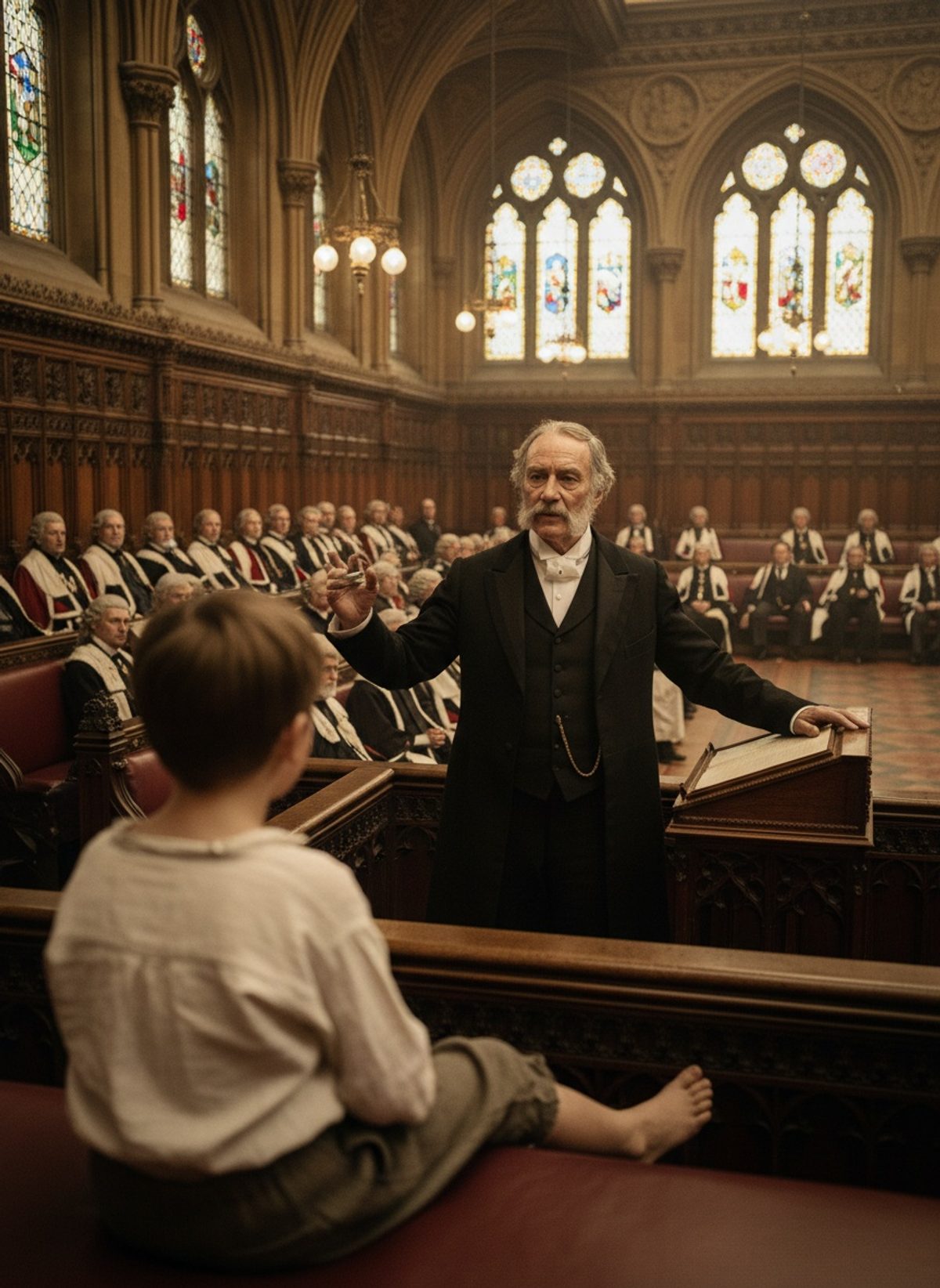
It was the spring of 1875 that finally precipitated a moment of reckoning. Shaftesbury bore his emotions publicly—a rare spectacle in a chamber designed for decorum. The grand architecture of the House of Lords resounded with an uncharacteristic resonance as Shaftesbury began to recount the tragedies by name, echoing through the air that had seldom heard cries of genuine empathy. Each name was a boy lost in the mazes of chimney flues. Each one a poignant reminder of human cost.
His voice crackled through the silence of the esteemed assembly, words interlaced with the raw experiences of the young lives stolen too soon. The listeners, many of whom had successfully ignored the burden of his advocacy for decades, were confronted with the undeniable humanity within the statistics. A weeping chimney boy was brought before them—a living testament to neglect. The weight of injustice bore down, as Lord Shaftesbury implored, "If your hearts do not break for him, they are as bricked as the chimneys he cleans."
Read next: The Day a Surgeon's Son Gave London's Slum Children Clean Water
A Landmark Triumph
This display did not dissolve into the ether of forgotten parliamentarian records; it galvanized change. That same year, the Chimney Sweepers Act of 1875 was passed, finally prohibiting the gruesome practice that had claimed too many young lives. It mandated better working conditions, stipulating for sweeps to be registered and properly regulated—a small yet significant step towards more humane labor practices.
For Shaftesbury, this was not a victory trumpeted in singular triumph, but rather, a somber acknowledgment of lives lost in pursuit of progress. As the ink dried on legislation at long last, it marked the end of a three-decade struggle—a glimmer of justice for the smallest members of society. Yet, the stalwart earl achieved what seemed impossible: his indefatigable efforts ensured that Britain could not ignore the suffering children any longer.
Echoes Through Time
Today, Lord Shaftesbury's dogged fight may be a footnote in the expansive history of the Victorian Era, yet its lessons are woven into the very fabric of societal conscience. It stands as a potent reminder that the call to alleviate injustice, no matter how persistently echoing within seemingly deaf establishments, can precipitate enduring change. His journey makes us question the hidden costs beneath progress and forces societies to reckon with those they leave behind in pursuit of advancement.
In the echoes of young hands smudged with soot and the fade of chimney stacks claimed by time, the tale of Shaftesbury's fight reminds us that empathy, sustained and vociferous, can illuminate even the darkest of paths. Despite his aristocratic ties, he never lost sight of humanity at its core. Perhaps it is that very paradox—a nobleman advocating for the ignoble conditions of children—that keeps his story not just alive, but poignant, reverberating through the ages. In his journey, the past vibrates just enough to whisper that every voice, when raised, no matter how futile it may seem, has the incredible, undeniable potential to effect change.