Most people have never heard of Thomas Barnardo. They should have.
A Cold Awakening
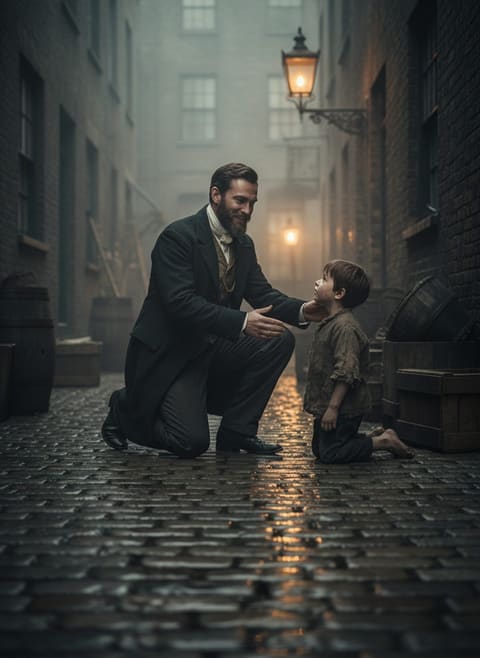
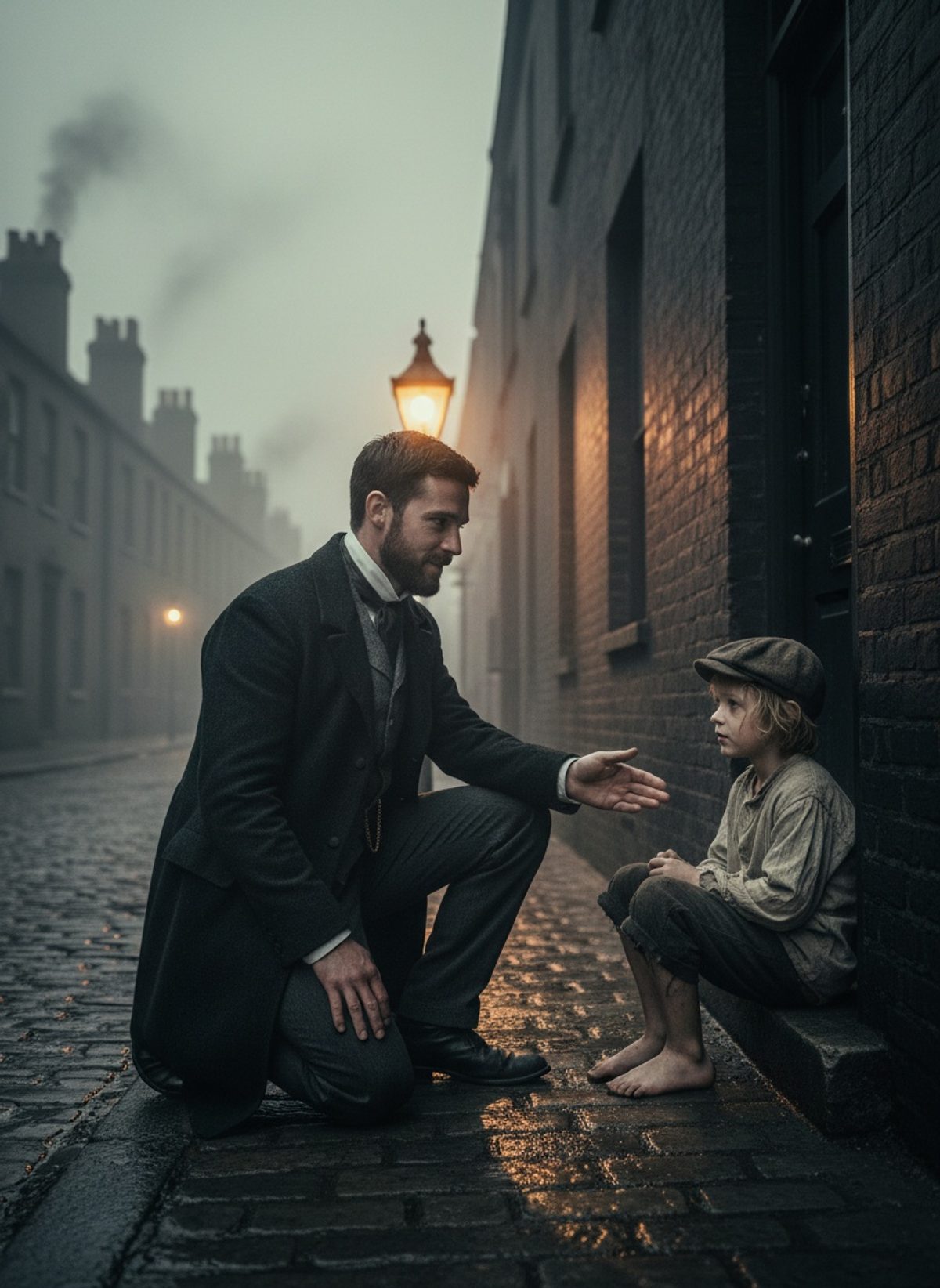
In the icy grip of a London winter, 1858’s East End was a place where hope went to die. It was here, amidst the cobbles slick with grime and piercing fog, that a young medical student named Thomas Barnardo encountered a sight that forever altered the course of his life. Still a mere 20 years old, Thomas walked among the skeletal structures and found human skeletons in the form of ragged children, huddling in doorways, skin ghostly pale and wretchedly thin, teetering on the edge of life itself.
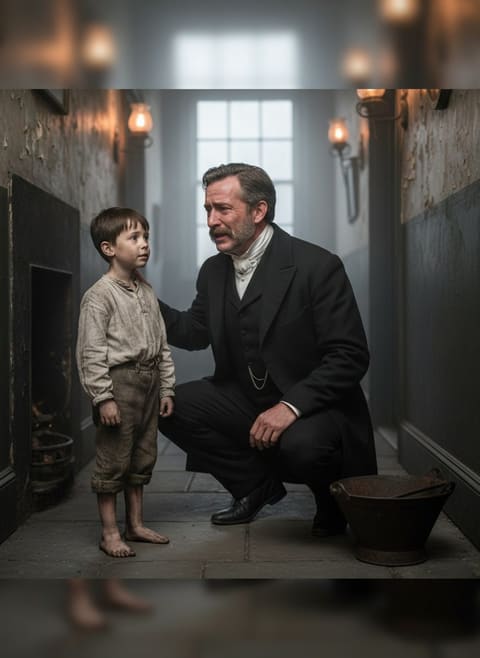
Tommy, as he was known to a family from Dublin, was the son of a surgeon and armed with little more than a medical student's well-intentioned curiosity. Yet, the sight of so many destitute orphans stirred something fierce in him. These children were part of a neglected underworld, forsaken by society and denied the warmth of ever having a place to call home. It was a crisis unfolding unnoticed by most, yet Barnardo's empathetic eyes could not look away.
The Unrealized Vision
As the harsh realities unveiled themselves before him, Barnardo quickly understood that London's approach to poverty and illness was woefully inadequate. There were no spare institutions or hospital beds for these suffering minors. Children, whose innocence should be spent in playground musings, instead succumbed to disease and despondency. Barnardo could have chosen the path of temporary charity, offering a few coins here or a token word there, but he bore visions of something substantial.
Read next: The Day a Surgeon's Son Walked Into a Burning Slum Alone
Despite his youthful inexperience, Barnardo felt destined for a mission he could neither articulate nor entirely grasp himself. In the freezing winter of 1866, compelled by a duty they refused to instill in him back in middle-class Dublin, he did what no one else dared: he stood, resolute, amidst the teeming gutters and declared a mandate to reclaim the lives of these forsaken youngsters. Yet, who would rally to aid a penniless student without authority or plan?
A House of Hope
The answer came in the shape of a home—a haven inspired, if not out of plans and riches, then from necessity and resolve. Barnardo's first major act saw the establishment of The East End Juvenile Mission, soon to evolve into a haven known simply as Barnardo's. Beyond a few beds, it was a fortress where lost children of all creeds could find warmth and, perhaps, a glimpse of a future without the shackles of abject poverty.
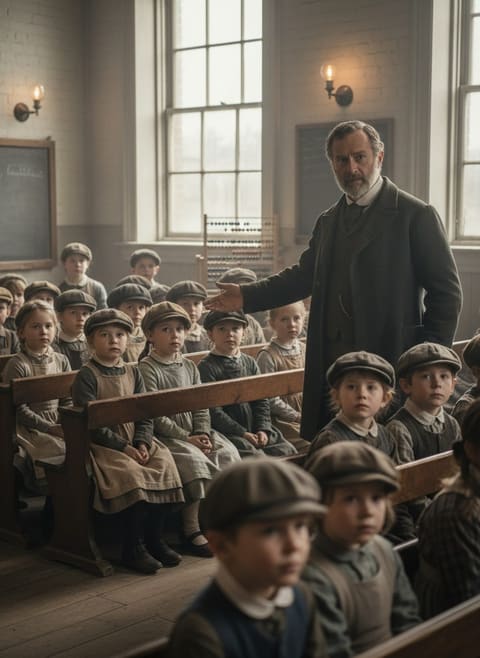
With passionate fervor peculiar to one doubted by naysayers, Barnardo transformed a derelict boarding school into a sanctuary. Without financial assurance or societal mandate, he manifested a space for the neglected; he gave them not just a roof but reinvigorated their stolen childhoods with education and love. London’s East End, once synonymous with despair, began whispering about this miracle man who was extracting life from death and gift-wrapping hope for London's youngest survivors.
The Ripple Effect
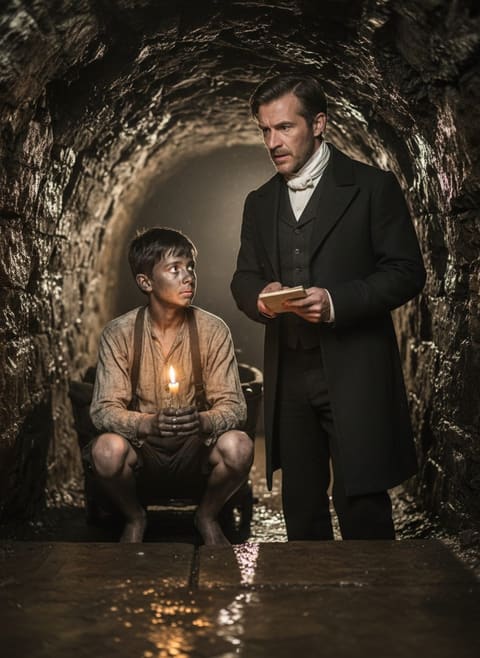
The influence of Barnardo’s mission had tentacular reach, stepping beyond the brick facade of the East End establishment. Sick children found their ailments not only tended but overcome with some medical expertise Barnardo wielded. Orphans discovered in Barnardo a proto-father. These beneficiaries became tomorrow’s saviors as many gave back to society in forms unseen, once nourished under Barnardo's provisions.
Read next: The Day a Surgeon's Daughter Walked Into a Medical School and Won
What Barnardo began had lasting impressions throughout the fog-drenched streets. As news of his work reverberated through alleys and parlors alike, more opened their purses and hearts. Homes like the one Barnardo established sprung forth, inspired by his daring determination, housing tens of thousands more by the time Barnardo’s efforts concluded.
Rekindling the Light
Thomas Barnardo’s narrative is not just that of a man who battled against the gross inequities of his era but is also one illustrating the resounding power of altruism. His actions demonstrated an uncommon resolve to confront society’s ills and left indelible marks on London's landscape. His legacy extends far beyond the sixty thousand young lives he touched; it remains an inspiring blueprint for philanthropic mission on a grand scale.
In an age often obscured by the victorian pursuits of wealth and prestige, Barnardo dared to delve into the murky sector of neglected souls, rescuing the future from the shadows of the narrow East End alleys. His undertaking was vast, complex, and far-reaching, yet he managed to bargain with destiny, bequeathing the sunlight back to the sun-starved orphaned lives of the Victorian Era, reminding us that a single benevolent spirit can ignite lifetime legacies. In doing so, Barnardo did not just build a home; he built something profoundly greater—the unyielding hope of brighter tomorrows.