September 11, 2001. Smoke billowed invincibly into the clear blue sky.
The Old Warrior's Last Voyage
New York City's skyline carried a visible scar in those first devastating hours after the collapse of the Twin Towers. As the city grappled with the chaos and overwhelming loss, an unlikely savior from the past roared back to life. The retired fireboat, once deemed obsolete and sentenced to a fade-away in a scrapyard, would emerge as a city hero one last time.
Years earlier, the fireboat stood as the pride of New York Harbor, a stalwart protector against flames threatening the city's iconic waterfront. Decommissioned in 1994, her future looked bleak as she was relegated to rust in a ship graveyard. But destiny had different plans. In 1999, a group of preservationists, appreciating her historical significance, purchased her for a symbolic dollar, hoping to preserve her legacy through educational harbor cruises.
Her silhouette—the deceptive form of a dragon bound in steel—glided through decade-old memories, carrying with her the whispers of past rescues. Many had forgotten her name, but on September 11, she became not just metal and machinery but a vessel of human spirit and resilience.
Read next: Themistocles Burned Athens. Then He Saved Greece.
A Race to the Front Lines
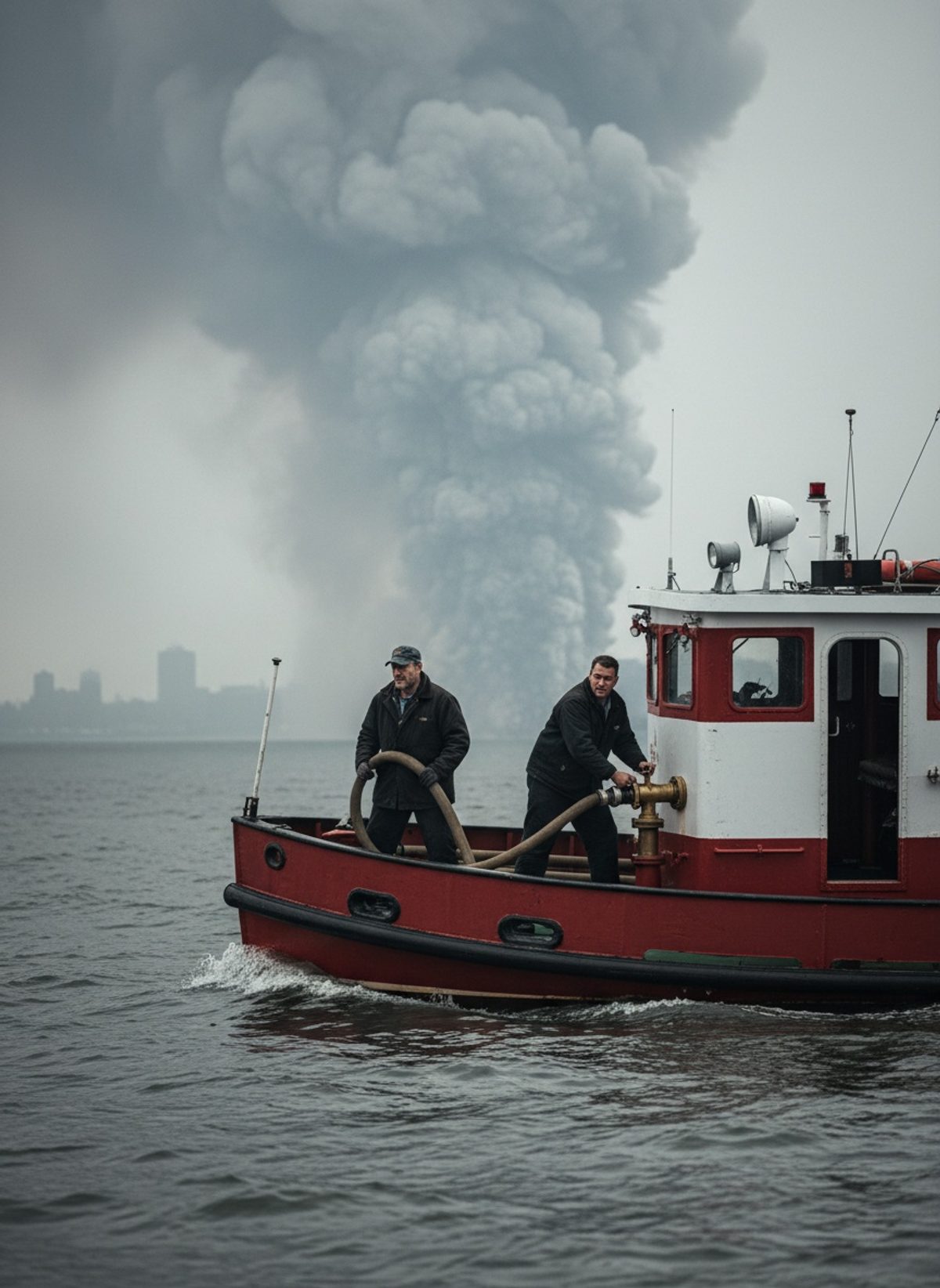
From the perspective of Mike, one of the volunteers onboard that fateful day, the harbor stretched vast and calm. But as news of the attacks reached ears, urgency knit itself into every calloused hand that manned the fireboat. Joined by four fellow volunteers, this skeleton crew brought her roaring back to life and pointed her bow south toward the grim horizon.
As they neared Manhattan, the scene unfolded: with the city's water mains obliterated, a crippling sense of vulnerability loomed over the smoldering ashes. Firefighters on site were desperate, battling blazes with failing equipment and parched reservoirs.
The fireboat's formidable pumps, though dormant for years, were engineered to movement and sound. The group of volunteers, interwoven by common purpose and urgency, worked in unison. They navigated the vessel deftly through the congested harbor navigating toward the inferno, like troubadours racing away from twilight—her engines thrumming a battle hymn against the odds.
The cold slap of water plumed high into the air as the fireboat's hoses cut through soot-laden eddies. With her powerful pumps engaged, she unleashed her torrent, offering an unyielding force against fire's advance. Where pipes had faltered, she bridged a hope. Her diesel heart pounded with the vitality of ten thousand gallons a minute, each droplet a soldier bearing the insignia of faith and rescue.
Into the Eye of the Storm
The fireboat's prolonged service on 9/11 demanded more than the mechanical consistency for which she was famed; it drew on human endurance and solidarity. For 80 hours straight, this magnificent vessel, once bound for obsolescence, pumped lifeblood back into the veins of Lower Manhattan.
In those grueling hours, she became a lifeline not only for firefighting efforts but also for the story of survival itself. New Yorkers—firefighters, police officers, EMS personnel—teamed up with the crew, drawing hope and strength from each blast of water. The legacy she had taught anew—that sometimes the old contain lessons of endurance and strength anew.
As she fought tirelessly through the night, navigating dense smoke and chaos, she carried an unbreakable promise, whispering through each spray of water: New York will stand again. Each cycle of sprays would etch itself into the memory of survivors, echoing the sentiment of the city at large—the beating heart that continues no matter the odds.
A Vessel Etched in Memory
When her work was done and the city’s water system restored, the fireboat returned to her more placid role with quiet dignity. Reflections on the creek showed faint ripples where she sat moored—a witness to the history she had unwittingly become part of. Though no longer a name spoken daily among her fellow vessels, she remained bound forever to the ethos of New York—a torch bearer whose presence reminded many of courage rediscovered.
Here was a testament of resilience—a defiance against the impermanence of utility adulthood taught the world. The humble fireboat, which returned to physical obscurity after her heroic act, left an indelible mark on the tapestry of collective memory. Her story compels us to see the extraordinary within the ordinary, the power of legacy not yet met by modernity's swift progression. It invokes reflection on the roles—often overlooked or forgotten—that each of us plays in shaping a brighter tomorrow, etched not in stone but in acts of compelling humanity.