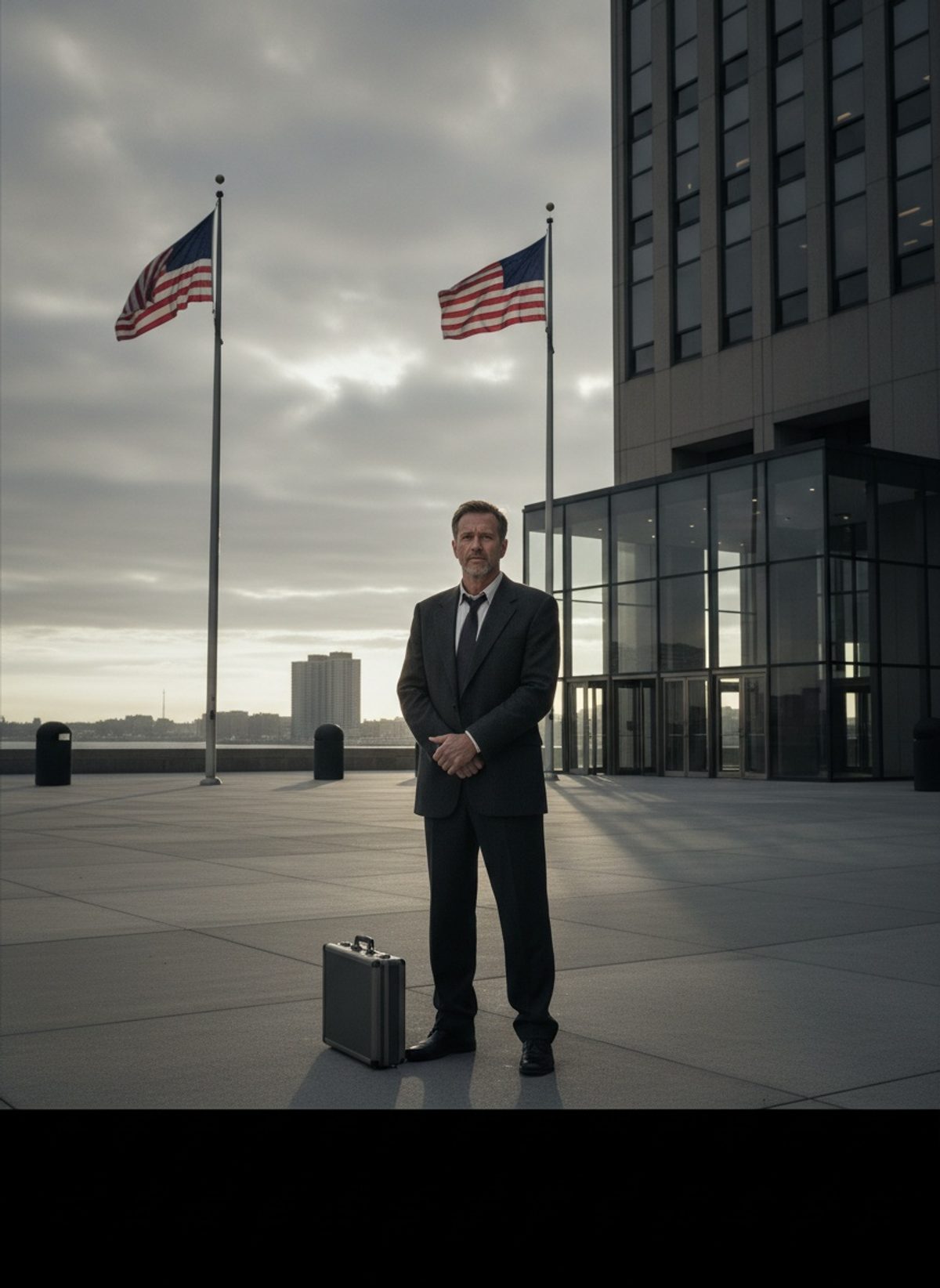
September 11, 2001. The crisp autumn morning painted the cityscape in golden light.
As Howard Lutnick, CEO of Cantor Fitzgerald, walked hand-in-hand with his five-year-old son to his first day of kindergarten, the day brimmed with promise and routine. Yet, as he stood outside the school, a catastrophe of unprecedented scale was unfolding in the heart of Manhattan. By the time Lutnick rushed towards the towering silhouette of the World Trade Center, the realm where he had built a financial fortress was nothing more than a hollow echo. Cantor Fitzgerald was ensconced in the North Tower, occupying the 101st to 105th Floors. When American Airlines Flight 11 struck, everything changed in an instant.
Lutnick, who had been a caretaker of the company since the passing of his mentor B. Gerald Cantor, was now clutching not only the tender hand of his child but also the enormous burden of catastrophic loss — the kind that ripples beyond the debris to unveil the fragility of life and the grit of human resilience.Read next: He Held the City's Fate. He Opened the Gates Himself.
From Catastrophe to Resolve
The attacks extinguished 658 of Lutnick’s colleagues, claiming nearly two-thirds of Cantor Fitzgerald's New York workforce and the life of Lutnick’s own brother, Gary. In the days that followed, the true weight of this loss settled into a heavy silence that clung to the now-emptied desks and corridors of their offices. The relentlessness of 9/11 was a profound reality that Lutnick faced, not just as the head of a surviving firm, but as a man grappling with personal and collective grief.
The immediate aftermath of the attacks was fraught with difficult choices. Lutnick made the controversial decision to halt everybody’s salary to preserve the company's liquidity, a move that drew sharp criticism from victims’ families. Yet he adamantly believed in saving the company as a means to aid those same families. This decision became a turning point. The resilience that he would nurture within Cantor Fitzgerald was born of this crucible, grounded in a promise to rebuild on behalf of those lost.
Lutnick pledged 25 percent of the profits from the firm's rebirth over the next five years to the families of his fallen colleagues, alongside a decade of healthcare coverage. His actions over the ensuing years became a beacon of steadfast loyalty and an example of how corporations can genuinely contribute to healing from tragedy. The generosity ultimately exceeded $180 million distributed to families, an act partly driven by Lutnick's determination to ensure their financial security. In doing so, he transformed a crippled business into a redemptive mission, entwining Cantor Fitzgerald's revival with those it had once provided for.
Reconstructing a Legacy
Undeterred by the magnitude of his challenge, Lutnick moved with a sense of urgency that left no room for inertia. Cantor Fitzgerald emerged from the ashes through strategic pivots, particularly in technology. Lutnick's foresight had led him to develop an electronic trading platform, eSpeed, even prior to the attacks. Its potential became the cornerstone of the firm’s reconstruction. This digital transformation captured the spirit of innovation that kept Cantor Fitzgerald afloat within an evolving market landscape.
In many ways, the revitalized Cantor Fitzgerald mirrored Lutnick’s personal trajectory from vulnerable youth to formidable leader. Having been orphaned at an early age, his life had been a testament to resilience; years earlier, his own path had been shaped by the kindness of strangers like Robert Stevens, who allowed him to attend Haverford College after his parents' deaths waiving his tuition fees. This generosity resonated as he navigated the barren financial fields left by 9/11, seeking to fill those gaps with substantive aide and innovation.
Read next: Cao Cao Had Him Surrounded. He Rode Out Alone.
Lutnick tendered his experiences into opportunities for outreach. He extended Cantor Fitzgerald's mission beyond fiscal matters, creating the Cantor Fitzgerald Relief Fund and establishing Charity Day, an annual event where celebrities and executives would trade in the firm’s name to donate profits to various charities. This blend of remembrance and benevolence forged a legacy defined by an intricate dance between wealth creation and humanitarian concern.
Healing Purposes
As Cantor Fitzgerald recalibrated its focus over the decades, Lutnick maintained personal ties with the families left in the wake of tragedy. Regular memorial services, gatherings, and interactions softened the edges of sorrow, lifting the firm and its people toward a shared purpose. By choosing empathy and understanding, Lutnick turned adversity’s relentless tides into ripples of resilience, while never letting the memory of those lost fade from the company’s ethos.
Lutnick’s journey reveals a profound lesson in determination and healing in the face of unimaginable grief. By rebuilding Cantor Fitzgerald with a heart that honored the fallen, he not only mended a decimated company but rebuilt a community of memory and hope. His complex narrative intertwines loss with philanthropy, transformation with remembrance.
What occurred amidst the flames and dust of September 11, 2001, transcends a tale of annihilation. It highlights a human capacity to regenerate meaning from the vestiges of desolation. Lutnick’s promise to rebuild extended beyond a corporate pledge; it had become one of fidelity to humanity itself. The way his actions blazed through history amid echoing silence poses a reflection poignant to all: how do we rebuild when the very scaffolds of our existence are gone?