September 11, 2001. The sky over Manhattan was impossibly blue, a stark contrast to the chaos that would soon unravel.
The day began like any other for Josephine Harris, a 59-year-old bookkeeper whose routine mirrored countless others navigating the bustling rhythms of New York City. She made her way to work in the North Tower of the World Trade Center, a familiar landscape of steel and glass that dominated the skyline. Little did she know that by the day’s end, she would become part of a harrowing yet miraculous tale of survival.
At 8:46 a.m., the tranquil morning shattered as American Airlines Flight 11 struck the North Tower. In an instant, normalcy was ruptured by turmoil—smoke, fire, and the unbearable fear that took hold of everyone within the 110-story monolith. Panic swept through the building, cascading down its stairways as people rushed to escape their vertical trap.
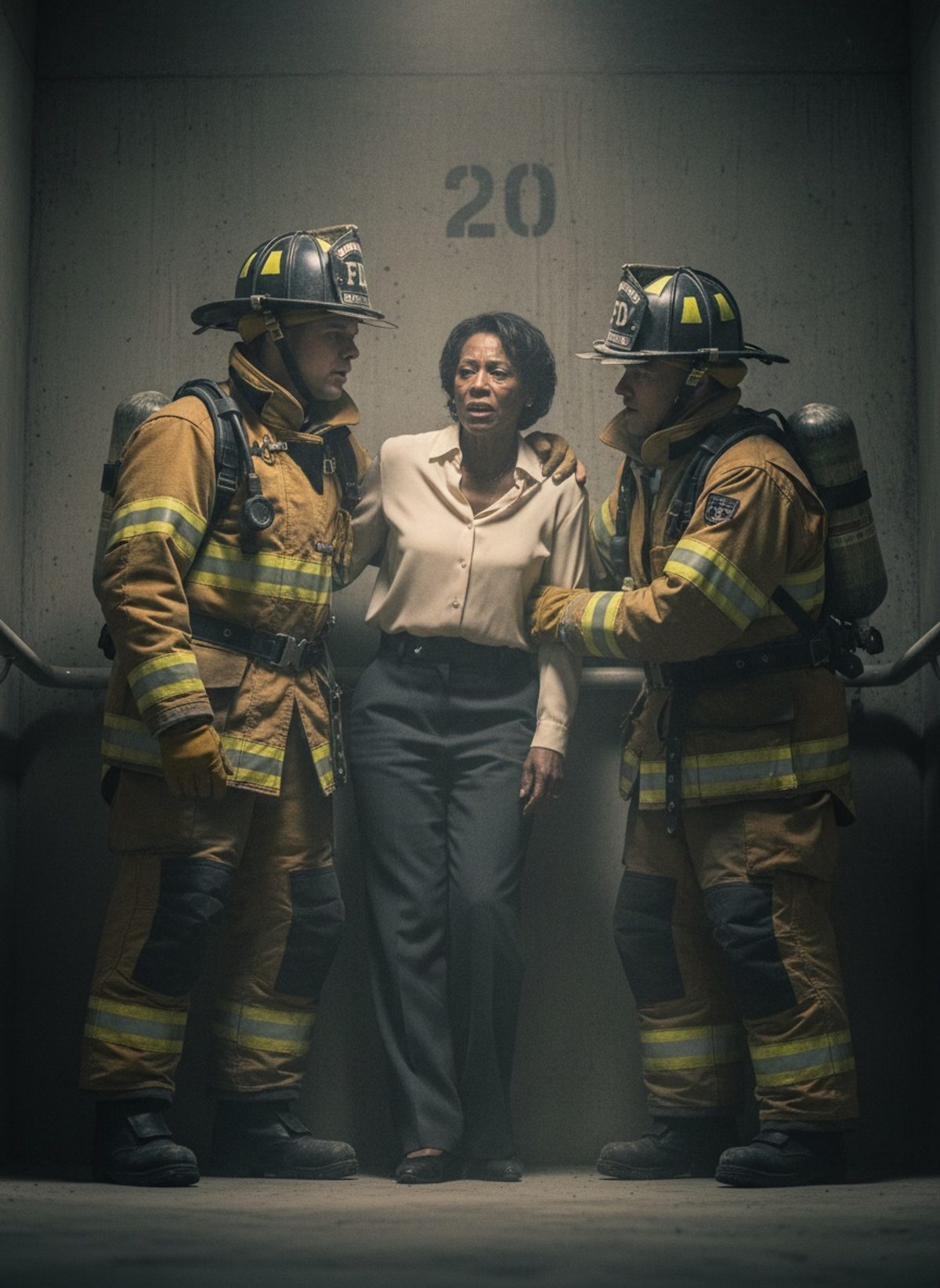
Josephine, like many others, began her descent from the 73rd floor. Navigating down dozens of floors, her concern grew with every step. Her body, weakened by arthritis, grew more fatigued with each passing floor. By the time she reached the 20th, her strength waned; her legs failed her. She could go no further.
Read next: A Wedding Camera Caught the Last Film of Anne Frank
In that moment of exhaustion and despair, she was not alone. Ladder Company 6, a courageous firefighting unit comprised of six men, found themselves in the same stairwell. Panic-stricken evacuees streamed past, while Josephine, resigned to her fate, lingered behind. Yet, something in her plight moved these men. Defying orders and the primal instinct to flee, they chose to stay.
These firefighters—determined and compassionate—surrounded Josephine. They offered her encouragement, some joked to lighten the oppressive certainty that bore down with each moment. Josephine’s presence tethered them, a decision that saved their lives.
As chaos raged outside, the North Tower swayed ominously. At 10:28 a.m., it collapsed with a deafening roar, smothering the world in darkness and debris. Miraculously, the section of the stairwell on the 20th floor, where Josephine and her six champions stayed, held firm amidst the destruction.
The fall of the North Tower was catastrophic; it claimed nearly 1,500 souls who could not escape its collapse. Yet, in this odd twist of fate, the decision to remain with an exhausted, nearly defeated woman, led to the survival of seven individuals. They emerged from the remnants as if reborn, covered in debris but astonishingly alive.
Outside, the scene bore a resemblance to some apocalyptic vision—the once-proud towers reduced to smoldering ash and twisted steel. First responders, aid workers, and civilians battled to comprehend the catastrophe, driven by a desperate search for signs of life.
Read next: He Named the Bear. A Boy Named His Toy. You Know the Rest.
As the day drew painfully to a close, Josephine and the men of Ladder Company 6 became symbols of hope amid the grief. They emerged from that stairwell transformed by the bonds of life-preserving resistance. Their shared ordeal offered a glimmer of light in an otherwise impenetrable darkness.
Their story challenges us to consider the weight of our decisions in moments of crisis. It reminds us of the latent courage found in compassion and how the simplest act of kindness can alter the course of fate. As Josephine Harris paused on that precarious landing, she inadvertently became the pivot upon which life balanced precariously against mortality.
In the days that followed, the world united in sorrow and solidarity, revealing the depths of human resilience. Though Josephine Harris and her rescuers were among the few, their experience underscored a truth woven into the fabric of our shared humanity: in the face of unspeakable horror, it is our ability to hold one another up that brings us through the darkness.
This story of survival is far more than a tale from a tragic day; it is a testament to how compassion and bravery can endure even in humanity’s darkest hours. It compels us to reflect on the decisions we make under duress and the profound impact they can have, not only on our lives but on the course of history itself.