The air was thick with dust, the sun unforgiving as it bathed the desert town of Rosetta in a golden glaze. It was July 1799, during the sweltering height of a North African summer, and the winds from the Mediterranean did little to alleviate the oppressive heat. The makeshift campsite of the French soldiers, nestled in the shifting sands of the Nile Delta, lay peaceful under the sun’s powerful gaze. Yet, beneath the serenity of a cloudless blue sky, history hovered, poised to reveal itself in the most unexpected fashion.
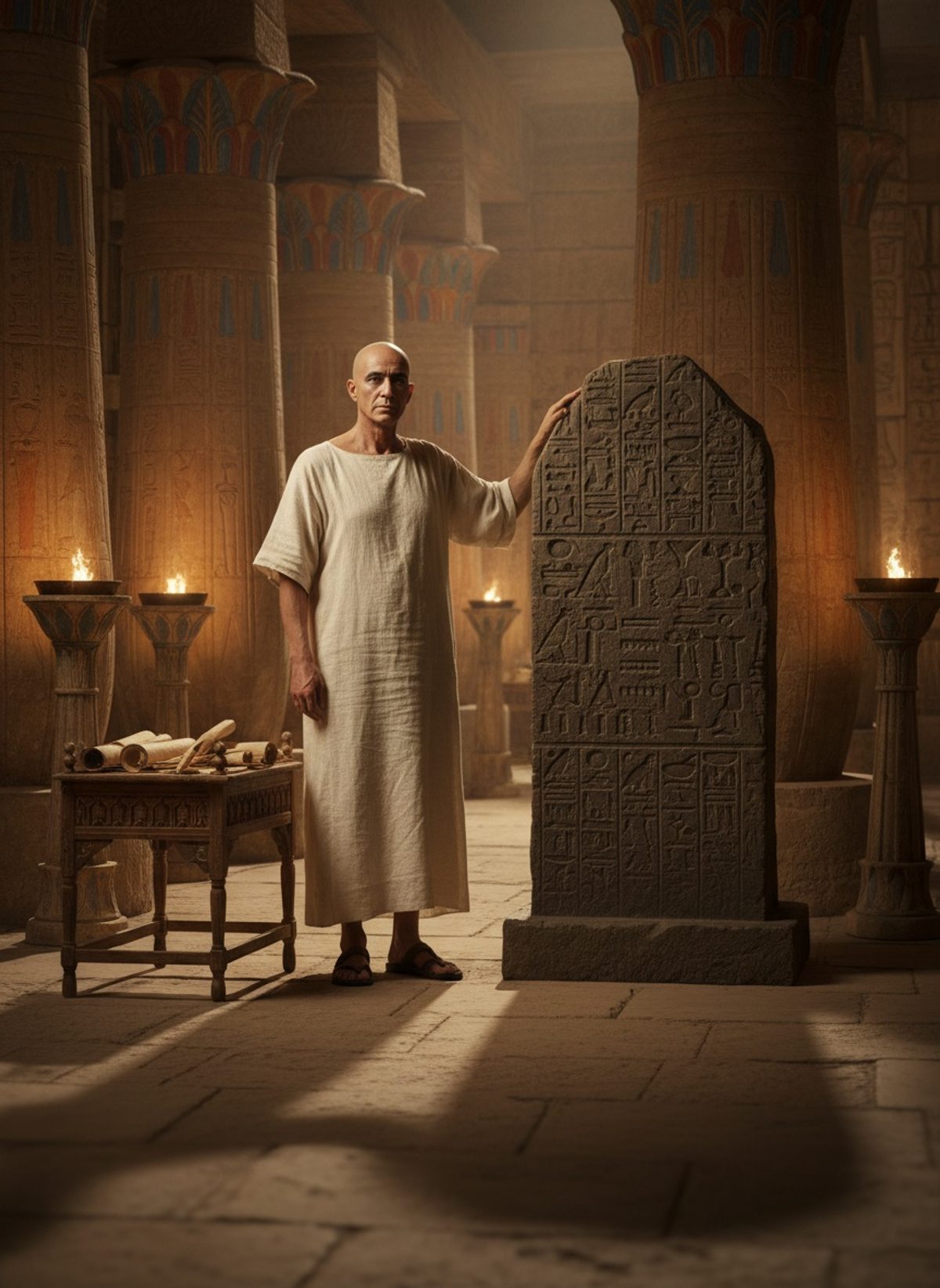
In an unremarkable stretch of mud begrimed earth, a team of soldiers under the command of French officer Pierre-François Bouchard unearthed something extraordinary. It was a massive block of granodiorite, midnight black and dappled with the ancient echoes of a faded script. The artifact they raised from the depths of the Nile's silt bore strange inscriptions running over every side. Bouchard, aware in an instant of the stone’s significance, ordered it to be cleaned and transported. Here lay potential proof of a long-lost tongue, a key to a history shrouded by sands and centuries.
This was the Rosetta Stone—a record that would bridge 17 forgotten centuries. Just three years into a new century, the stone descended into the hands of soldiers swept up in Napoleon Bonaparte’s ambition to conquer Egypt. The military campaign had faltered; rebels were insurrecting, supplies were dwindling. Yet amidst this political turmoil arose this singular artifact, resting heavy in their hands, stubbornly silent and yet full of promise. It was inscribed with a royal decree carved in three different scripts: Greek, Demotic, and Ancient Egyptian hieroglyphs. None had been readable to scholars of the era.
The stakes were enormous. For nearly two millennia, the secrets of Ancient Egypt lay trapped in unreadable hieroglyphics—its obelisks, its tombs, and its own history in stillness, waiting to be reborn. Here offered, at last, was a tantalizing hope: a trilingual provenance that could unpick the mystery of these hieroglyphs—or entangle the meaning even further. With the Rosetta Stone, a puzzle had been handed to Europe’s finest minds, daring them to decode a language unmuttered for centuries. Scholars flocked to the task like moths desperate for light. In so doing, they would forever change the world’s understanding of history itself.
Read next: The Map Was Buried for 1,500 Years. It Changed Everything.
The stone’s script in Greek, the language of philosophers and poets, was clear enough to decipher; it confirmed the stone as a decree issued during the reign of the young king, Ptolemy V, dated to 196 BCE. Below this Greek text lay the elusive scripts that had eluded comprehension across the ages. The language of the pyramids—Egyptian hieroglyphs—stood at the precipice of rediscovery, waiting for a mind as relentless as the sphinx to unravel its enigmas.
It was in the bustling intellectual salons of Europe that the chase for understanding intensified. Among the lingeïs—a cadre of polyglots, linguists, and savants—emerged a name synonymous with unlocking the language of the ancients: Jean-François Champollion, a scholar whose fascination with Egypt was legendary. It was Champollion, after long decades of toil, who finally untied the ancient tongue. Born in Figeac, France, he was a prodigy who devoted himself to Arabic, Coptic, and other Oriental languages—a child of Enlightenment keen on tracing humanity's roots through linguistic family ties.
The decipherment was slow and laborious, grounded in logic yet interwoven with artistic intuition. It required visual gymnastics, a leap from the Greek on the Rosetta Stone to the hieroglyphs matched like mirror to life’s reflections. Piece by piece, Champollion worked through the stone’s inscriptions. By identifying correspondences—certain Greek names found phonetic equivalents within the hieroglyphic text—he revealed what none before him could: that these symbols were more than pictorial art; they encoded sounds and syllables, voices of the ancient, to be articulated once more.
At the heart of Champollion’s magnificent triumph lay a deep respect and appreciation for a long-vanished culture, its achievements, and its voices. It was this empathy, resonating through ink and paper, that drew the first new breaths for hieroglyphs in centuries, restoring the cannon of Ancient Egypt’s language to the world. The landscape of history was drastically altered as soon as this ancient narration reemerged; tombs and texts, once mute, now revealed details of ritual, philosophy, governance—an entire civilisation previously obscured in time.
The story of the Rosetta Stone extends beyond parchment and mineral, unraveling an understanding not simply of words, but of the power of linguistic kinships. This intricately decorated stone, sunken in silt, carried within its tri-script mantle an invitation to bear witness. Its rediscovery reminded the world that beneath layers of silence await stories waiting to awaken. And while geopolitical power plays turned to scholarly collaborations over the Stone, the essence of its existence transcends beyond this—a symbol of resilience and rediscovery, a testament to human curiosity that beliefs and truths can be reconstructed from soft earth and hard rock.
With its newfound clarity and pronounced revelations, the Rosetta Stone serves as more than an historic artifact. It is a symbol, a token urging us to consider the vestiges of what we do not yet know. Time's passing converts the complex to the cryptic. Runnable scripts fade to the unknowable, until some knowledgeable eye revives them, illuminating the shadowed realms within history’s chapters. The Rosetta Stone, discovered beneath a blazing Egyptian sky, whispers of ancient voices once silenced, now echoing still through time’s corridors.