Many believe that the agricultural revolution spelled the end for traditional farming tools. The cas-chrom proves otherwise.
The Stubborn Soil of the Highlands
There are landscapes that defy change, and the rugged terrain of the Scottish Highlands holds steadfast as one of nature's most tenacious pupils. Beneath its windswept grasses and rocky outcrops lies soil that seems impervious to modern machines.
When waves of agricultural reform washed over Britain in the eighteenth century, they crashed and receded from these resilient grounds. The iron ploughs celebrated by reformers faltered here, finding no purchase in the waterlogged, rocky earth. From this soil's defiance emerged the enduring symbol of Highland tenacity: the cas-chrom.
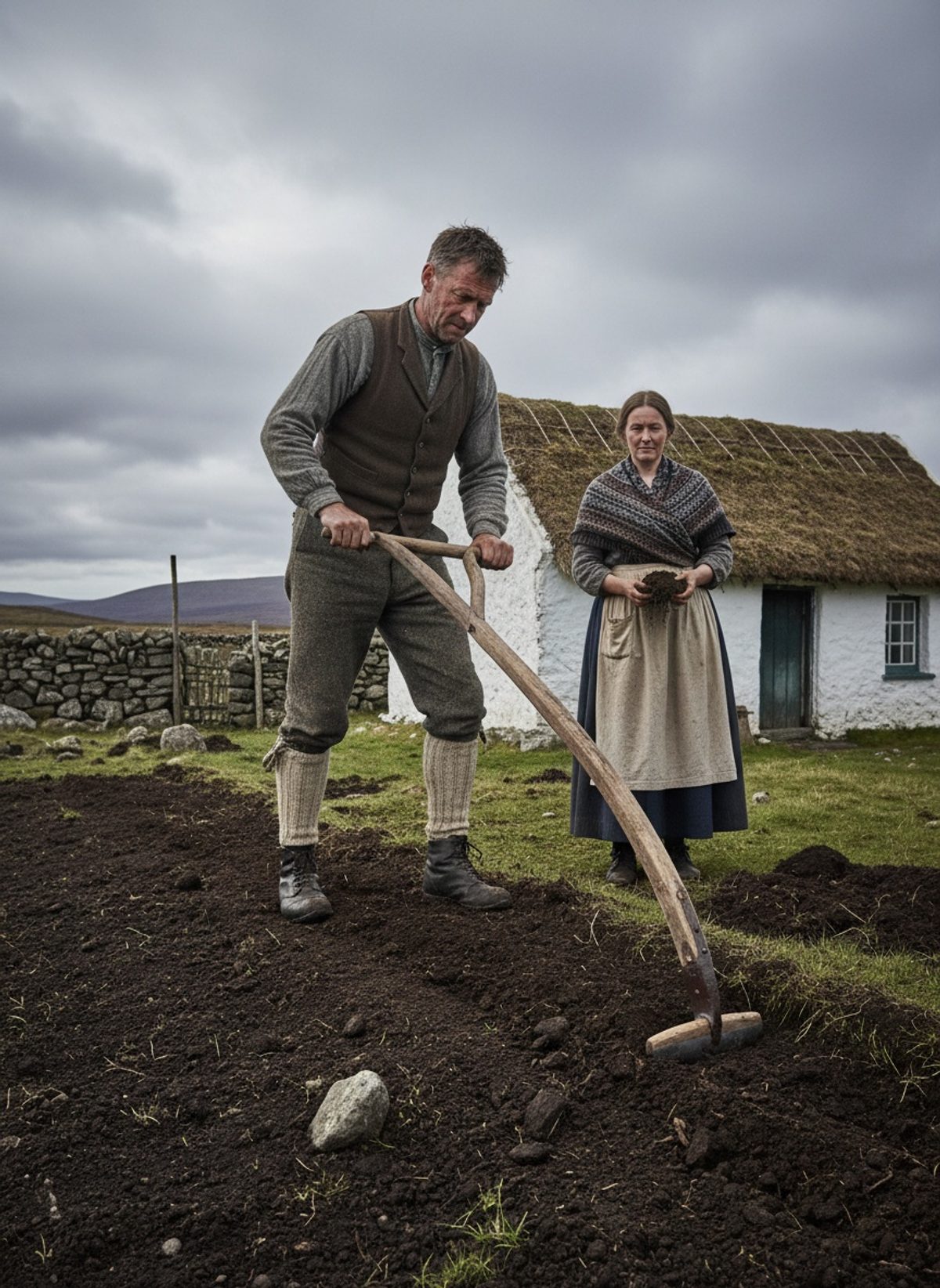
Cas-chrom, a Gaelic term meaning "crooked foot," refers aptly to this unique digging tool, carved out of wood with a metal blade tip. More than the humble assembly of its parts, it embodies a harmonious blend of muscle and land.
Read next: The Black Douglas Who Made Kings Tremble in Their Beds
In the Western Isles, particularly the machair strips facing the relentless Atlantic, it was an indispensable ally. Here, where no beast could pull a plough and dense earth mocked metallic might, the cas-chrom was wielded by hand, allowing Highland farmers a means to cultivate and carve out sustenance.
Picture then a windswept Hebridean morning: the mist gently conceding to sunlight as communities gathered, each person shoulder to shoulder, hands clasping these tools crafted from shared experience and necessity. As they worked, they communicated in rhythmic motions passed down through generations. It was less farming; more an age-old dance, the beats of which resonated against a history unyielding to time's march.
To outsiders, such a tool might look primitive, a relic undeserving of place in a modernising world. Yet, the very elements that once defied the horse and plough now spoke differently to the cas-chrom. It was here, amid the perpetual battle between tradition and innovation, that this unique tool held its ground.
The Dance of the Soil
Through the early twentieth century, the cas-chrom continued to feed communities. These farmers wielded it not out of ignorance of the new but an understanding too intuitive to be taught. The cas-chrom operated in a trinity of tool, soil, and soul. The people knew intuitively how to approach a resistant earth with respect, how to coax where others might command.
Highland landscapes are a kaleidoscope of green and grey hues, sun and shadow, serenity and struggle. The land is a living testament to balance, where stones are not obstacles but partners to be navigated around. Layers of peat require careful handling, demanding the delicate touch that only the angled blade of the cas-chrom could provide. Skillful hands turned these banshees of potential into patches of arable beauty.
While modern agricultural techniques spread rapidly across lower, softer soils, those on the rugged fringes of the British Isles embraced the cas-chrom not as an obligation, but as a birthright. The rhythmic swoop and tuck of the tool would have been familiar to their forebears, creating a tangible connection through time—a thread of continuity that no imported machine could sever.
Echoes of this toil were more than agricultural; they sang of a people entwined with their legacy. Each plunge into the earth was both chore and chorus, affirming their mastery over a land that yielded only to those who came prepared to listen, not dictate.
Read next: The Night the Lords of the Isles Fell and Scotland Changed Forever
Resilience Beyond an Empire
Even as the shadow of the British Empire extended across continents, the cas-chrom stood resolute. Into the 1950s, as history books chronicled the changing tapestry of colonial retreats and political upheavals, the Highlands murmured stories of a different kind of perseverance. It was an understated defiance, as locals clung to a tradition, not out of nostalgia but necessitation—a necessity that innovation respected, for it worked.
Communities found strength not in headline-grabbing revolutions but in understated triumphs of adaptation. The tool persisted because it was singularly fit for purpose, attuned to the very land it cultivated—a partnership centuries in the making.
The tale of the cas-chrom challenges the monologue of progress, reminding us that innovation takes many forms and is not the exclusive domain of the new. Here, amidst the whispers of the heather and stone, lies a truth that modernity sometimes forgets. In a world that often prizes the streamlined, shiny, and uniform, the cas-chrom remains a potent reminder of the power held by custom and community amidst ever-shifting sands.
As we ponder the fate of this tool—not a relic, but a living testament to human adaptability—we find a broader lesson about the nature of endurance itself. It wasn't merely force or technology that shaped the resilience of the Highlanders; it was a deep-seated understanding of balance between past and present, nature and nurture. It's a narrative often omitted from grand histories but rich in wisdom for those willing to look beyond the plough's gleaming edge.