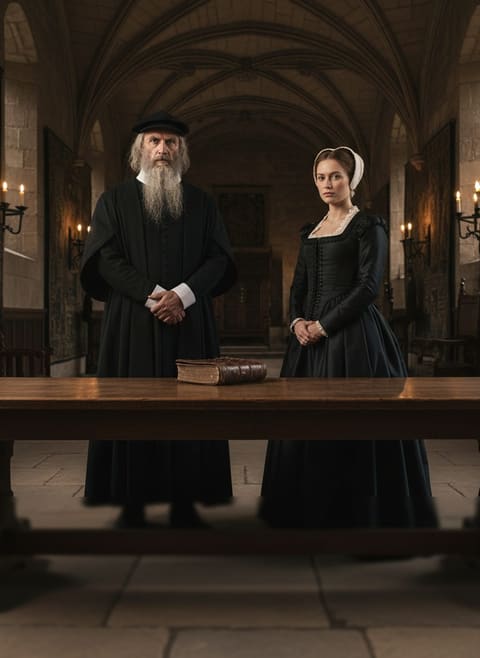
Flora MacDonald was just another farmer's daughter. Or so history would like to forget.
The Unlikely Heroine
The summer of 1746 found Bonnie Prince Charlie, the charismatic Jacobite leader, in dire straits. The Prince, after a series of escapes and evasions, had a bounty of thirty thousand pounds on his head — a king's ransom for anyone bold or desperate enough to turn him in. Bird-like, he flitted from island to island in the Hebrides, hiding from the encroaching net cast by the British army. His cause in ruin after the defeat at Culloden, his very life now hung in the balance. Enter Flora MacDonald, a seemingly ordinary farmer’s daughter with an extraordinary courage that would forever inscribe her name in the annals of Scottish folklore.
Flora met Prince Charlie by chance, through mutual acquaintances determined to whisk him away to safety. She knew the price of being associated with his notorious rebellion: the wrath of the British crown and a possible death sentence for treason. Yet, something in Prince Charlie’s plight stirred a deep well of compassion in Flora. Perhaps she saw in him not the figure of a failed rebellion, but a man in desperate need. Her decision to shelter him was a choice that carried unparalleled risk.
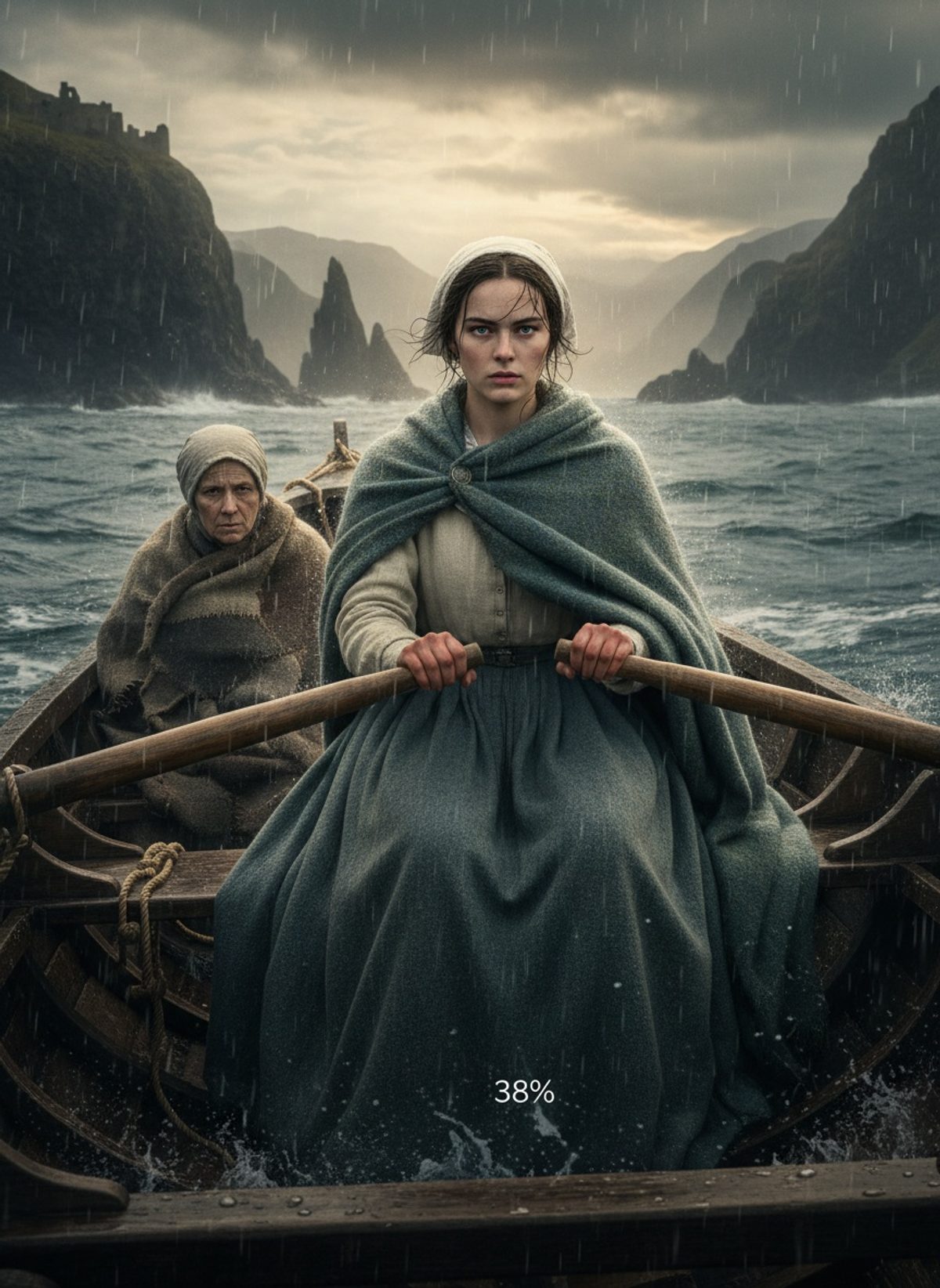
In a desperate ruse crafted with spectral ambition, Flora disguised Charles Edward Stuart as “Betty Burke,” her Irish maid. She had coaxed this audacious plan from the depths of her own inventive spirit, shrewdly considering the gendered prejudices of the time that a woman might be less scrutinized by soldiers and officials. Thus, with the prince clad in petticoats, they set their course across the stormy, vigilant waters that separated them from the Isle of Skye. Beneath the cloud-laden June sky, Flora demonstrated a brazen determination that subverted her diminutive frame. She rowed with doggedness, each stroke of her oar a fierce rebuke to the fear that threatened to engulf them.
Read next: The Day William Wallace Refused to Bow and Faced the Block
The Treacherous Voyage
In the darkened shell of a simple boat, the Prince, weary and shadowed by uncertainty, clung to hope that swayed as easily as the heaving sea. The waters of the Hebrides were merciless — as turbulent as the political tides they mirrored. Breaking through a misty dawn, Flora and her disguised compatriot steered towards the Isle of Skye, a rugged edge of land that promised a chance at redemption. However, the task was perilous. British patrols crisscrossed the waters, watching for suspicious travelers who might harbor the elusive fugitive.
Flora’s rowing, compounded with the weight of her decision, was laborious. But they were not unseen. When a government patrol ship drew near, sharp-eyed and suspicious, they were prepared to defend themselves — two hands on the oars, one hand on fate. A lesser conspirator might have faltered or fled, but Flora's quiet resolve turned her into an unyielding captain of their small vessel. She played her role with startling conviction, weaving a narrative convincing enough to fool the vigilant soldiers. Her gender and presumed innocence were her allies; her demeanor, both earnest and unshakeable, provided shelter from the interrogations.
The simplicity of a young woman's charm and the audacity of her nerve became the vessel for the prince's deliverance. Moving past the patrols unchallenged was both a triumph over authority and a salute to stealth. Soon, the rocky contours of Skye emerged on the horizon, each peak and crag a testament to the land that fed tales of myth and heroism. Flora had achieved the impossible: a daring escape executed with composure and guile.
Read next: The Night a Scottish Castle Became a Stage for the World
Chains and Immortality
Once on Skye, Prince Charlie would eventually make his way to France, leaving Flora to face the inevitable consequences of her daring deed. Her arrest followed swiftly, as expected, and she was taken to the infamous Tower of London. For an entire year, Flora was held, charged with aiding the enemy — a price she bore with the same steadfastness that marked her journey. Her spirit, unbowed despite the fetters of imperial wrath, captivated her captors. It is said that she charmed even the stone-hearted protagonists of her captivity, gaining a reputation for dignified defiance.
But what exactly compelled Flora to help the beleaguered prince? Her loyalty was not to the Jacobite cause but to her own moral compass. Perhaps it was a sense of humanity, a raw defiance of oppression, or simply a singular instance of empathy that drove her actions. The truth is cloaked beneath layers of history and myth, but the significance of her actions reverberates through time. Released after considerable public pressure, Flora returned to Scotland, a heroine immortalized in ballads, legends, and remembrances. She was a woman of ordinary upbringing, who found herself thrust into extraordinary circumstances and rose to meet them with unparalleled valor.
In a world governed by empathy as much as it is by power, Flora MacDonald’s story reminds us of courage's transformative power — the strength of a single act of kindness amid a storm of adversity. Long after buckles and silk give way to dust, it is these stories, woven with threads of quiet rebellion and poignant humanity, that defy the annals of textbooks but echo magnificently in history's hidden hearts. Flora’s name, inscribed in legend, lives not just as a relic of romantic insurrection but as an enduring testament to the gallantry that can rise even from the simplest shores.