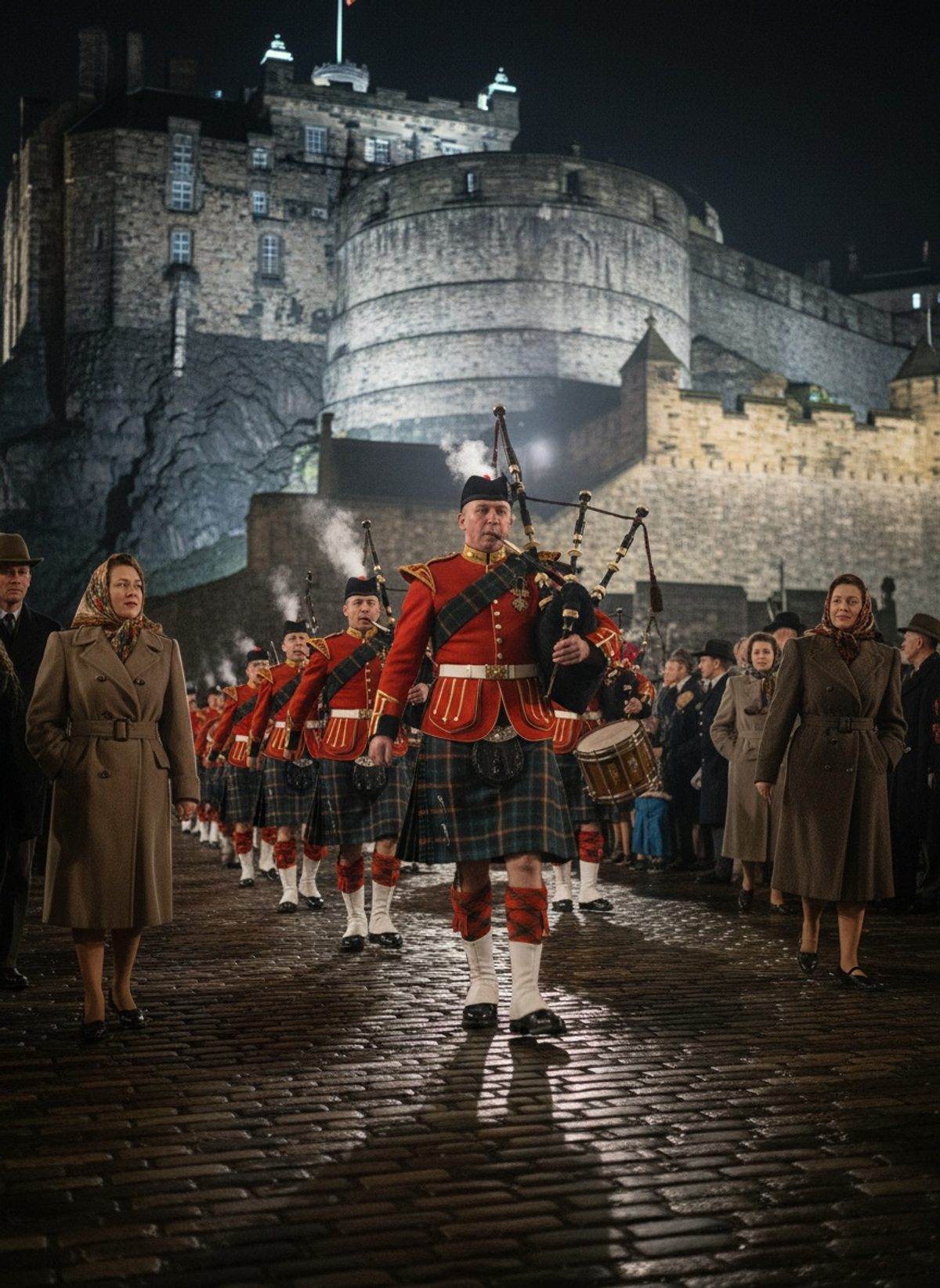
The world’s largest outdoor military spectacle began with humble beginnings. There were no grandstands that night on Edinburgh Castle’s esplanade. Only a small military band performed beneath Scotland’s starlit sky.
The Birth of an Unexpected Spectacle
In the summer of 1950, the Edinburgh Festival was merely in its toddler years, having started just three years prior. The post-war world was still adjusting to a new rhythm, and the festival aimed to bring a sense of normalcy and culture back to life. As an addition to this burgeoning event, a small group of military bands gathered to play on the esplanade of Edinburgh Castle. There were no elaborate plans or expectations. Floodlights did not illuminate their performance; the moon and stars provided the only glow. The musicians stood on the cold stone under the watchful shadow of the ancient fortress, playing with simple dignity as a gentle wind whispered across the highlands.
The decision to incorporate a military element into the festival was modest, almost an afterthought. Yet, it was precisely this that captivated the imaginations of those who saw it. Despite the lack of fanfare, that initial performance sowed the seeds for what would become the Edinburgh Military Tattoo—a phenomenon admired worldwide within a decade. Few could have envisioned how this modest gathering of bands would evolve to span the globe, drawing audiences from over 70 nations.
From Local Event to International Icon
As word of the performance spread, so too did interest in attending it. By the late 1950s, the Edinburgh Tattoo had already outgrown its humble beginnings. The grounds of Edinburgh Castle were transformed year by year, with wooden grandstands appearing and floodlights brought in to light up the castle as darkness cloaked the city. The once intimate performance expanded, grandly showcasing the might and grandeur of military traditions from not just Scotland or the UK but from other nations standing proudly on the world stage.
Read next: The Scottish Castle That Held Out for Three Years for a Dead King
Each summer, the esplanade bustled with the vibrant energy of musicians, dancers, and military personnel, all preparing to put on a grand display of pageantry. The sound of bagpipes echoed off the stone walls, harmonizing with drumbeats that pulsated through the grounds and into the hearts of the audience. Even before mainstream media's intense spotlight and the global village attitude of modern cultural exchange, this event drew spectators who traveled from afar, capturing imaginations and creating lasting memories. By 1950s’ end, it attracted vast throngs, making it a centerpiece of global military traditions.
The Tapestries of Sound and Light
As the years passed, the Tattoo weaved intricate performances, each more elaborate than the last. Fireworks, choreography, and cutting-edge lighting designs enhanced what was already an awe-inspiring sight. A visitor standing atop the esplanade could witness the stunning contrast of traditional military outfits against the contemporary light shows—a tapestry woven with history and innovation.
Massed pipes and drums became a signature, mingling hauntingly Scottish notes with influences from participating nations. Who knew that bagpipes and highland dancers could find harmonious compatriots in unexpected guises, such as Polynesian war dances or military bands from continents afar? Spectators clamored for these annual performances, memories echoing long after the final note faded into the cold night air.
The World Stage Brought Home
What made the Tattoo truly astonishing was its ability to transcend boundaries and pull cultural diversity into the fold of a singular vision. While it began in the heart of Scotland, each participant's heritage reflected the global tapestry of military and cultural heritage. Such were the gatherings that it attracted national figures, statesmen, and ordinary folks yearning to witness the majesty of tradition beautifully entwined with the artistic interpretations of the present.
Read next: The Son of Brunel Who Built a Bridge at the Edge of the World
This annual spectacle became a cultural ambassador of sorts: encouraging pride, delivering awe, and sparking curiosity about distant lands. It showcased an ever-growing mosaic of performers, each bringing their nation’s uniqueness and fostering a spirit of camaraderie. Military protocols found companionship in expressive art, the solemnity of uniform meeting the spirited dance—a reflection of how disparate traditions could thrive beside one another.
A Legacy Writ in Stone and Sound
Though its origins were modest, the Edinburgh Military Tattoo grew to symbolize more than just military heritage. It became a celebration of global unity, a melody binding disparate cultures amid the centuries-old stones of Edinburgh Castle. The esplanade turned into more than just a stage; it became a meeting ground for the world.
Each year more vibrant, the Tattoo continued to grow, outliving its origins as simply an extension of the Edinburgh Festival. To attend was to become a part of something larger, an unwritten pact between performers and audience to preserve history's traditions while breathing new life into them. In the coming years and decades, as audiences fill the stands, they remember a world where differences mingle harmoniously, born from a single night marked by simplicity, confidence, and a whisper of legend.