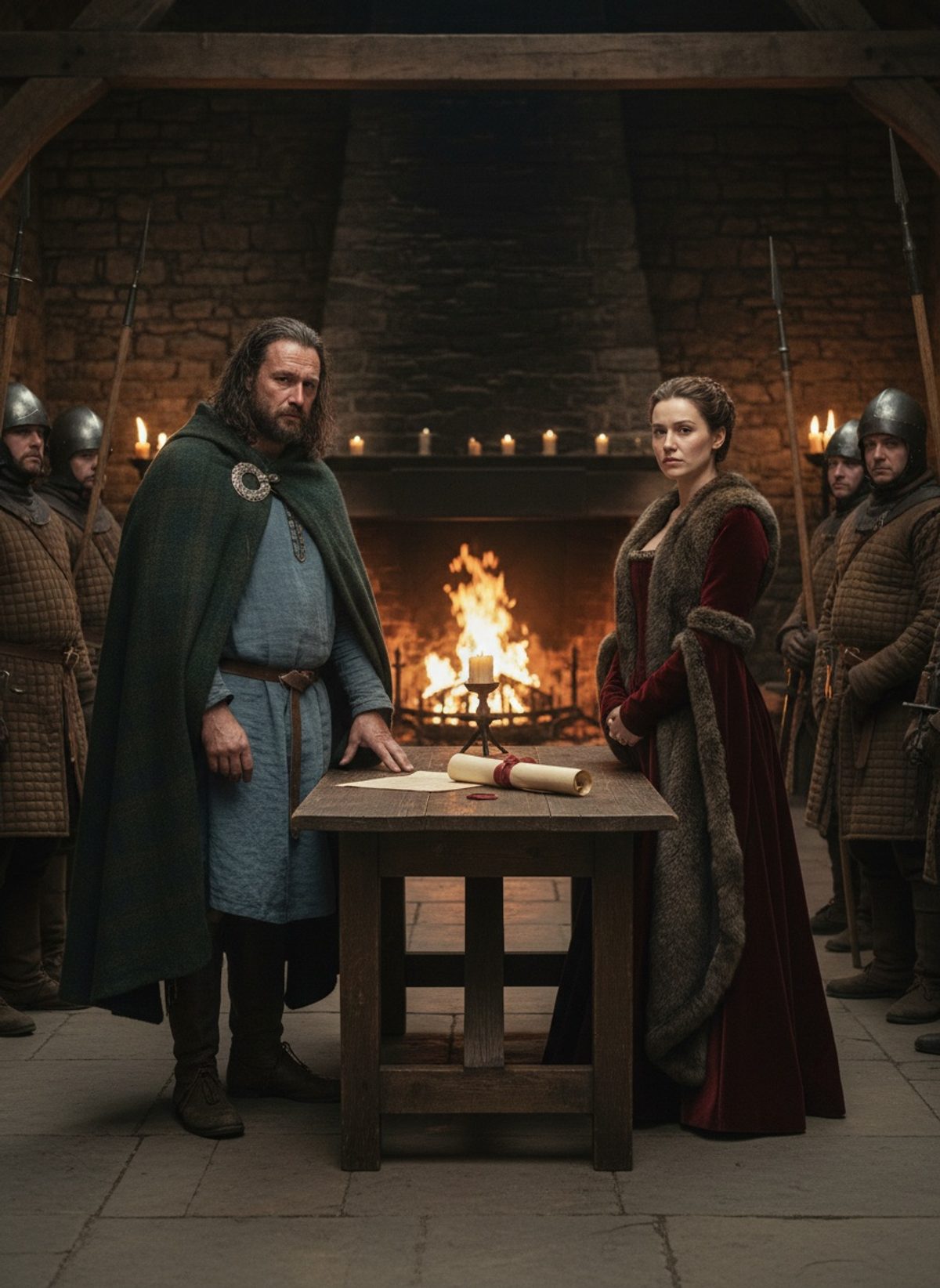
On a damp morning in 1493, the mists rolled in from the sea, shrouding Scotland's western isles in a grey, otherworldly haze. The air was thick with anticipation as the distant cries of seagulls pierced the silence.
Somewhere among these rugged coastlines, marked by heather-covered crags plunging into slate-blue waters, the fate of a noble lineage was about to unravel. In what should be a stronghold of rugged independence, power was slipping through the fingers of a dynasty that once feared neither king nor common foe.
The Rise of a Sea Power
The Lords of the Isles commanded an impressive maritime kingdom for over three centuries. Stretched from the lush green pastures of Kintyre in the south to the rugged islands of Lewis in the north, this realm was more a sea empire than a land kingdom.
Within their domain, the Lords wielded not only shields and swords but influence that rippled far beyond the shores they ruled. This Gaelic lordship, rooted in Norse-Gaelic heritage, was a testament to strategic prowess and maritime mastery.
Read next: The Earl Who Marched North and Never Came Home
But as the 15th century drew to a close, the tides of fortune turned ominously. James IV, the young and astute king of Scotland, peered westwards with intent eyes. The Lords of the Isles, with their Gaelic tongue and autonomous ways, represented a threat to his vision of a unified Scottish crown. Conflict between a centralizing monarchy and a fiercely independent regional power seemed inevitable.
The Fall Without a Fight
The fall of the mighty Lords wasn’t marked by the clamor of clashing swords or the siege of fortress walls. Instead, it was sealed in the quiet halls of diplomacy and decrees.
John MacDonald, the fourth and final Lord of the Isles, found himself entangled in political webs he could not escape. Amid accusations of treason and failed rebellions, the walls closed in around him. His yielding of power to James IV was a silent catastrophe—one that reshaped Scotland's western reaches forever.
For MacDonald, the forfeiture meant the dissolving of a once-proud dominion into fragmented clans, relinquishing control under the watchful eye of the crown. The end came not with a roar but a whimper, as his legacy unraveled with the stroke of a pen. What had taken centuries to build was gone in mere moments, leaving in its wake the unsettling whisper of uncertainty skittering across the Highlands.
Scotland's Western Storm
The absence of the Lords of the Isles created a power vacuum across the west, an unsteady peace teetering on the edge of chaos. Clan wars erupted, merciless as the gales charging through the narrow sea channels of the coast. The McLeans, McLeods, and other clans jostled for power, carving out their own domains from the remnants of the once-united seafaring empire.
The age-old relationships between these clans were fiery, kindled by long-held grudges and rivalries. Absent the stabilizing hand of the Lords, old grievances erupted anew, erupting into not only conflicts but also intense cultural and political upheaval. The Highland way of life was put to the test, like a ship caught in a turbulent maelstrom, struggling to stay afloat.
The Sway of the Crown
In Edinburgh, James IV expanded his influence under the mantle of a centralized Scottish monarchy, gradually ousting unruly chiefs and extending his reach into decrepit keeps once held by the Lords—symbols of an independent power now firmly shackled to the crown's ambitions. It was through careful alliances and strategic marriages that James IV forced the Highland clans into an uneasy concordance under the watch of his loyalists.
Read next: The Day a Scots Girl Rowed Into a Storm and Saved a Prince
Yet, the uneasy peace was but a thin veneer over simmering discontent. The king's moves helped establish firmer governance, but they also sowed seeds of resentment. The transition from an autonomous lordship to royal oversight sought to encroach upon not merely borders, but ways of life steeped in age-old tradition.
Remnants of a Noble Past
The night the Lords of the Isles fell marked not just the end of an era but a profound pivot in Scotland's historical landscape. What had been an autonomous maritime power became a tapestry woven with new threads, yet one stubbornly imbued with Gaelic resolve and memories of autonomy. Through clan conflicts and shifts in power, the vision that the Lords had once embodied persisted stubbornly like the enduring heather that blanketed their lands.
In time, the echoes of their reign blurred into folklore and legend, spoken in the lilting cadence of Gaelic song. It is a story not etched prominently in history books but rather murmured in the crashing tides of Scotland's western seascape—a testament to the resilience of tradition and the enduring force of change.
The Lords of the Isles may have surrendered their sovereignty, yet their legacy still courses through Scotland's veins, a reminder of what was once possible amidst the call of the sea.