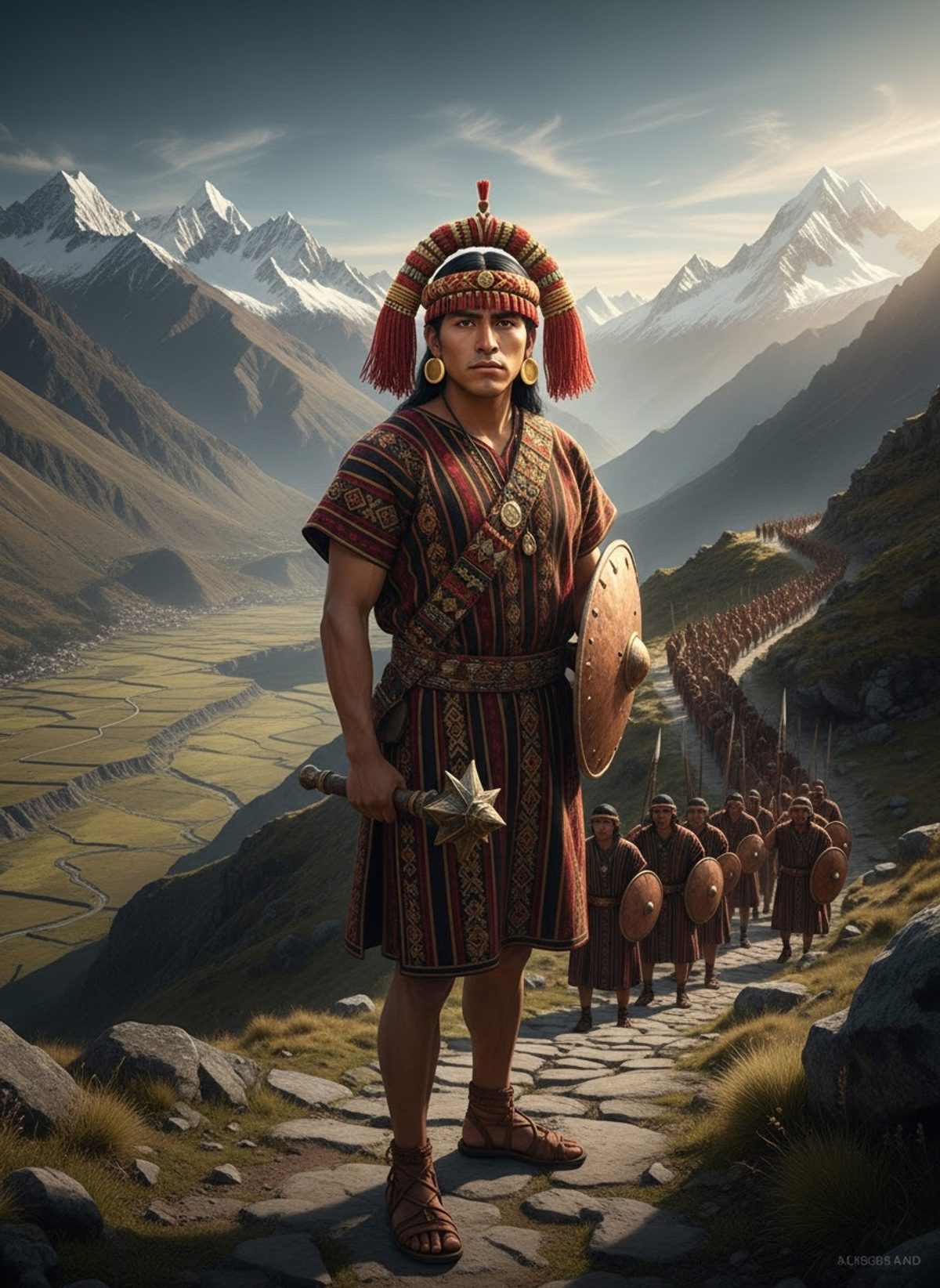
The earth trembled beneath thousands of disciplined strides as Topa Inca and his army snaked through the desolate dunes of a coastal desert. Jagged mountains loomed to their east, cast in the morning sun, while the open Pacific crashed rhythmically to the west. Neither the terrain nor the distance mattered. Their mission was clear: create an empire unrivaled in grandeur and reach.
This was no ordinary campaign for the young prince. It was a conquest that would echo through the ages and reshape the map of South America. Topa Inca was barely twenty when he began his march, yet his exploits across deserts, mountains, and ancient kingdoms would soon define an epoch and earn him an indelible place in history.
Setting North with a Steely Resolve
In 1463, a young prince named Topa Inca, son of the legendary emperor Pachacuti, stood on the precipice of greatness. Tasked by his father to lead the Inca army as Auqui, or crown prince, Topa Inca would launch a series of expeditions that defied imagination and doubled the empire’s territory. From the highlands of Cusco, where fragrant smoke curled up from sacred fires, his forces surged northwards, threading their way through the kingdoms that splattered the Andean landscape.
Among their first targets was the Kingdom of Chimor, centered around the sprawling city of Chan Chan. Encased by formidable adobe walls, Chan Chan seemed impregnable. Yet the army from the south, driven by adrenalin and ambition, encircled the city. Topa Inca’s strategy was precise and unforgiving—the kingdom of Chimor fell, and with it, the largest rival to Inca dominance was absorbed.
Read next: Pachacamac: The Oracle That Ruled the Andes for 1,000 Years
Topa Inca's northward march did not merely extend the borders; it absorbed diverse cultures, customs, and expertise. The prince became particularly fond of Quito, a city in present-day Ecuador, which captured his imagination.
Here, he employed skilled architects from Cusco to breathe new life into the city, ensuring it remained a jewel in the Incan crown. As the Inca forces moved north, Topa Inca developed a reputation not just for conquest, but for cohesion—unifying disparate tribes under a single umbrella of Incan governance.
It was during these campaigns that the very fabric of the Inca Empire, known as Tawantinsuyu, solidified its grasp above the Andes and into valleys unknown to Cusco before. Topa Inca’s acute awareness of governance allowed him to weave a tapestry of laws and taxes stretching from the city of Jauja to the historic lands of Tiwanaku in the south.
Uncharted Frontiers and Unyielding Ambitions
Beyond the familiar mountains, though, the Pacific offered its own mysteries. Rumors swirled of islands brimming with gold, spoken of by sea-faring merchants who bargained along the coast. Drawn by tales of riches across the sea, Topa Inca orchestrated what some historians believe to be one of the earliest voyages of ocean exploration by a South American civilization.
According to chroniclers like Pedro Sarmiento de Gamboa, Topa Inca’s fleet ventured out into the Pacific, seeking the elusive realms of Nina Chumpi and Hawa Chumpi. Though accounts of this expedition are shrouded in myth, the potential journey highlights Topa Inca's far-reaching aspirations. For him, land and sea were merely frontiers to be conquered—a notion practically alien in the era of landlocked empires.
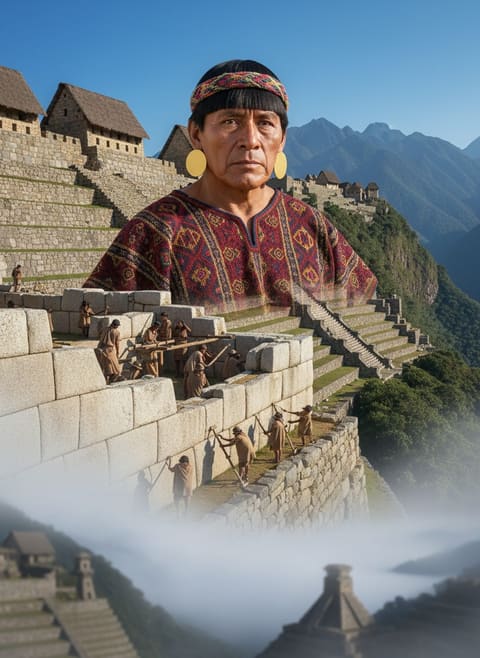
Meanwhile, in the heart of the empire, the monumental fortress of Saksaywaman, conceived by Pachacuti above Cusco, continued construction under Topa Inca’s command. Proclaiming authority and architectural prowess, Saksaywaman would serve as both military bastion and a vibrant reminder of the empire's ingenuity.
Read next: Tlacaelel Rewrote Aztec Myth to Crown a Dying Empire
By the early 1470s, the vast empire stretched from the arid deserts of northern Peru to the fertile valleys of central Chile, encompassing diverse peoples and lush territories that promised resources and tribute. Topa Inca’s success wasn't merely measured in conquered lands, but in the unified strength of an improbably vast realm. His strategic acumen ensured that even as he forged ahead, the dominion he left behind remained secure.
A New Realm Forged
In 1471, with his father Pachacuti’s passing, Topa Inca ascended as Sapa Inca—the sole ruler of this burgeoning empire. His conquests and administration transformed disparate regions into a cohesive entity, fostering a complex network of roads, languages, and exchanges. The vast empire under his control stood as testament not only to martial prowess but to a vision that transcended any single peak or valley.
Yet not all narratives end in peace. Topa Inca’s final days were marred by palace intrigue and familial rifts. His decision to name Titu Cusi Hualpa, later known as Huayna Capac, as his successor incited fury in Chuqui Ocllo, one of his many wives. In a final tragic twist, Topa Inca fell victim to poisoning—an act showcasing that even the mightiest can succumb to personal grievances.
But as Topa Inca Yupanqui's earthly journey concluded somewhere around 1493, his legacy stood unyielding. His march across thousands of miles transformed the landscape, connecting civilizations that had thrived for centuries independently. His story matters not just as a chronicle of conquest, but as a reflection on human ambition and the extraordinary steps taken to knit continents together—an echo of valor that every corner of his empire could resonate with for generations to come.