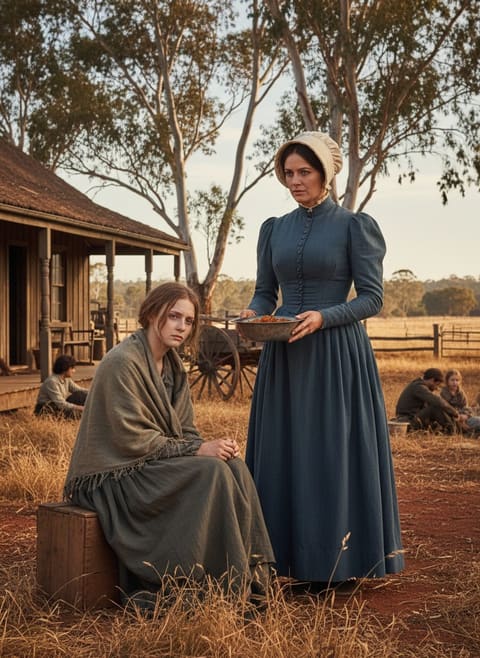
The tang of salt stung the autumn air as the ship groaned to a halt at the Sydney dockside. Above the clamor of the bustling port, a solitary woman with determined eyes met each passenger stepping onto solid ground.
That woman was Caroline Chisholm, embodying resolve amid chaos. Her presence was both comforting and commanding, ready to embrace the flood of women disembarking from the newly arrived vessel. To these travelers, fresh from the deprivation of shipboard life, she offered something precious: hope.
Transforming Desperation into Opportunity
The Sydney of the early 1840s was a place of stark contrasts. For those women arriving alone, it was a city of promise yet poised against the unforgiving edge of colonial neglect. The rapid influx of European settlers had outpaced the city’s ability to accommodate them.
Young women emigrating in search of opportunity often found themselves marooned, possessing only the clothes on their backs, with no kin or shelter to welcome them. At the docks, many faced the grim specter of destitution.
Read next: When Thomas Peel's Settlers Starved on the Swan River, 1830
Caroline Chisholm, an English-born humanitarian, recognized this crisis brewing beneath the colonial enterprise. Each day, she made her way to the busy dockside—an arena of noise and movement, where diverse accents filled the air and seagulls cried overhead. But amid this vibrant chaos, Chisholm carved a refuge of order and care.
She was not merely a charitable soul moved by pity; she had a plan rooted in practicality. With assured gestures, she provided food to the hungry, clothes to those shivering in the uncertain climate, and, crucially, news of employment opportunities.
By opening her heart and her home, Chisholm helped transform despair into opportunity. She organized an employment registry, meticulously matching skills with vacancies throughout the colonies. Her work was expansive and carefully orchestrated. It was a testament to her conviction that these women, given the chance, would become inseparable from the very fabric of a burgeoning society.
The Network of Empowerment
Chisholm's actions extended beyond the bank of the Parramatta River, her reach expanding into Sydney and beyond. She established a shelter, turning part of Sydney’s bustling dockside into a sanctuary where new arrivals could rest and gather strength. It was a thoughtful counterbalance to the city’s harsher edges, a place where these women ventured from fear into the familiarity of human compassion.
She introduced them to the growing network of settlers and employers who required their vigor and skills. These were not mere acts of charity but deliberate connections, akin to the cogs of a machine, enhancing the colony’s economic pulse. Chisholm knew that a job was not just a means to survive but a tether to the communities they would eventually build.
Word of Chisholm’s success spread, and soon her advocacy drew the patronage of prominent figures in the colony and beyond. Clergy, merchants, and officials alike were inspired by this passionate woman challenging the accepted narratives of what these courageous émigrées could achieve. They lent their support, providing resources and contacts. With each new ally, Chisholm fortified her reputation as a beacon of empowerment, and her work left ripples that influenced social policies far into the future.
Read next: When John Macarthur's Wife Kept a Colony Alive, 1801
Legacy Written in Lives
Despite the distance of time, Chisholm’s story resonates because she illuminated the spaces between society's status quo, harnessing the potential within the forgotten corners of the world. For each young woman given direction and dignity, Chisholm offered more than temporary aid. She gave them the chance to rewrite their own narratives. Her actions were predicated on simple yet revolutionary kindness—compassion married to determination.
By the time Caroline Chisholm left Australia to continue her work elsewhere, she had impacted countless lives. Thousands of young women, who might have faded into history unremarked, instead became mothers, leaders, and pillars of their communities. They cultivated the land of promise that Australia strived to be, each contributing to a nation ever-evolving.
Today, as we look back at the Victorian era in colonial Australia, Chisholm’s legacy challenges us to reconsider the role of individual agency in shaping history. Her life invites reflection on the significance of empathy and action, urging us not to overlook the faces in the crowd who, like those women on the Sydney docks, stand at the cusp of transformation.
As we journey forward, her story reminds us to navigate with both heart and tenacity, and perhaps most crucially, to always turn the dockside into a home for those who dare to step off the boat.