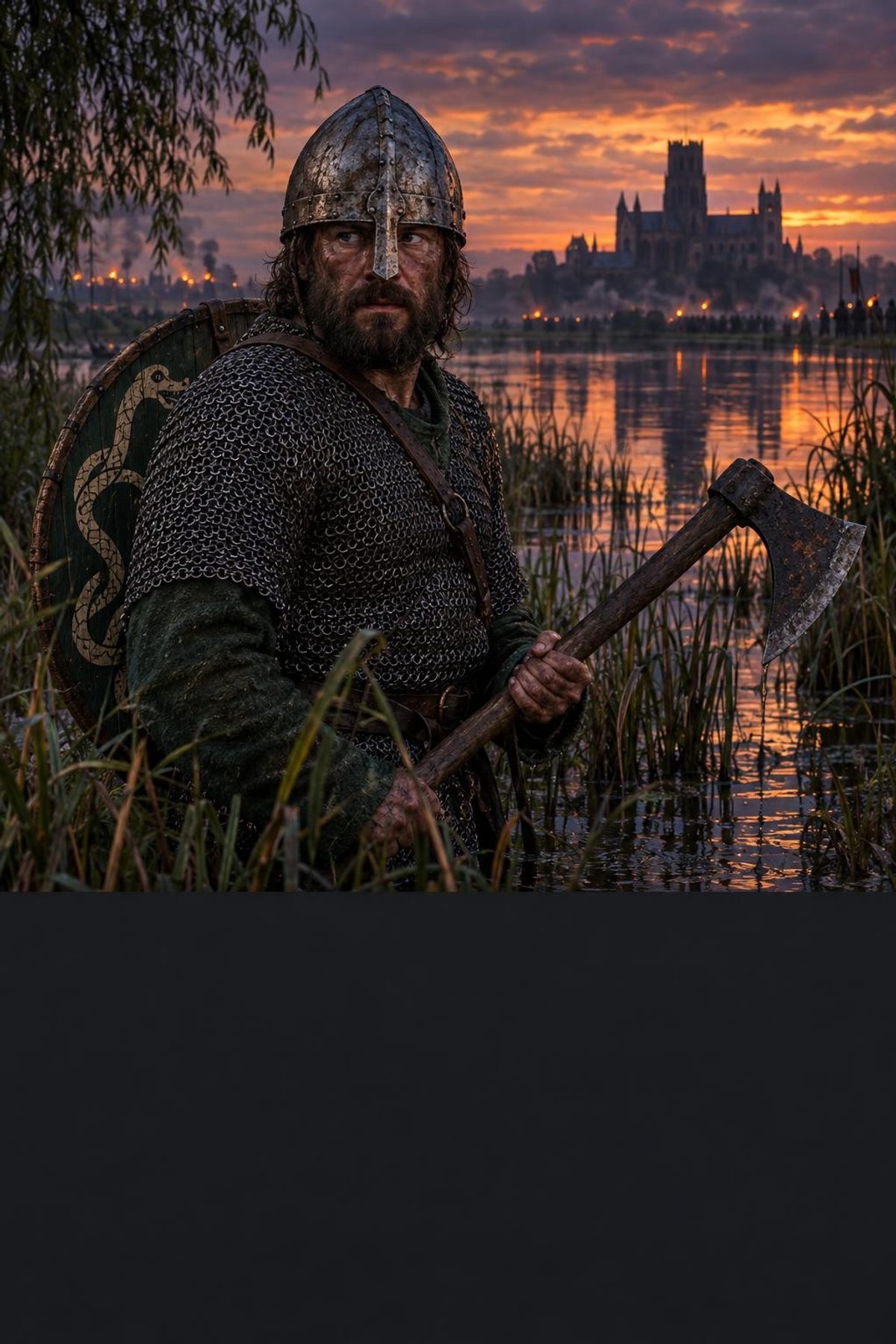
Hereward the Wake was a man wrapped in mystery, and surprisingly, he might not have ever intended to be a legendary hero at all. Tales suggest he was an outlaw even before the Norman Conquest, living more by circumstance than by choice. Yet when the tides of history swept over his homeland, he became the face of a last defiant stand against the encroaching Normans, a symbol of resistance in a world rapidly succumbing to change.
Rebel with a Cause
The year was 1071, and England lay under the iron grip of William the Conqueror. His reign was marked by the brutal imposition of Norman rule over a Saxon populace that had once been proudly independent.
Yet in the densely woven marshlands of East Anglia, lies a historical anomaly where William's power did not fully stretch: the Isle of Ely. This labyrinth of fens and waters served as the backdrop for the legend of Hereward the Wake, a name whispered in Saxon households as a rebel who stood against the might of the Normans.
Hereward’s legacy began not on the shores of Ely, but in tales of exile and return. Banished during Edward the Confessor's reign and wandering through the European continent, he acquired the uncanny ability to adapt and thrive. Upon his return, he did not find the homeland he once knew, but a country occupied by foreign rulers.
Read next: When Wat Tyler Faced the King and Almost Won, 1381
To Hereward, the Normans were not mere conquerors, but foreign usurpers of his rightful heritage. With a keen understanding of guerrilla warfare, he leveraged Ely’s natural defences, turning the watery maze into a fortress that rebuffed the Duke of Normandy for years.
The community of Ely, comprising local Saxons and disaffected nobles alike, braced for the inevitable. Hereward’s men, a ragtag group of soldiers, exiles, and ordinary folk, looked to their leader not just for commands, but for hope; a hope enshrined in the tales of Arthurian knights and ancient heroes.
For a time, it seemed as though Hereward could achieve the impossible. His skirmishes, laden with both cunning and courage, unnerved even the most seasoned of Norman commanders. But no legend is without its shadows, its darker elements, as betrayal would soon cast its ominous shade over the Fens.
The Isles Fight Back
As summer blazed its course across the English landscape, King William’s patience wearied thin. His frustration was not simply with a remote outpost of resistance, but with what it represented—a living challenge to his authority.
The capture of Ely was not merely a military objective; it was an assertion of the inevitable dominance of the Norman yoke over the Saxon spirit. Thus, a formidable siege began, involving the construction of an immense causeway that slowly crept across the waters, an engineering feat that defied nature itself.
The Saxons, inspired by their leader, combated this advance with relentless fervour. In the stealthy waters of Ely, Hereward’s men launched repeated raids, burning materials, and capturing supplies. These audacious attacks sustained their morale and presented a genuine threat to the siege’s success. But the Norman kings were relentless, using their vast resources to orchestrate a campaign of attrition. The fall of Ely seemed only a matter of time.
Yet when the culmination came, it was not by direct confrontation that Hereward lost his stronghold, but through the treachery of a local monk. Promised safe conduct, the monk revealed passageways through the quagmire to the Normans, undermining the natural defences and rendering an air of inevitability to the island's capture.
Read next: When Bhikaji Cama Unfurled India's Flag Over Stuttgart, 1907
Even so, the fall of Ely did not conclude with the capture of its defiant leader. Hereward and a small band of followers escaped, fading into the very fens that had sheltered them for so long.
The Enigma of Disappearance
What happened to Hereward after the fall of Ely remains one of medieval England’s most tantalizing mysteries. While some accounts claim he was killed shortly after the siege, others suggest that he slipped through the Norman net and continued a fugitive life, perhaps even making peace with King William under certain arrangements. Regardless, the specifics of Hereward's ultimate fate meld with folklore and legend, making tangible facts elusive.
The Isle of Ely stands unburdened by its role in history; marsh and reeds whisper secrets lost in time. Hereward's name echoes in those whispers, a saga of resistance, defiance, and endurance against insurmountable odds.
As the years flowed by, the Normans established firm control over England, yet the fires of regression continued to smoulder in the hearts of the subjugated Saxons. Hereward’s tale outlasted his physical presence, an enduring narrative retold in countless forms, encapsulating the spirit of a people who dared to hope.
As readers today, we must reflect why Hereward the Wake still resonates down the corridors of time. Perhaps it is because his story is not purely about individual heroism, but rather the power of a collective will—a testament to human resilience amidst inevitable change. It begs the question of what might happen when—against overwhelming forces—a nation and its people refuse to bow, holding their dignity and dreams tightly as their most treasured assets.