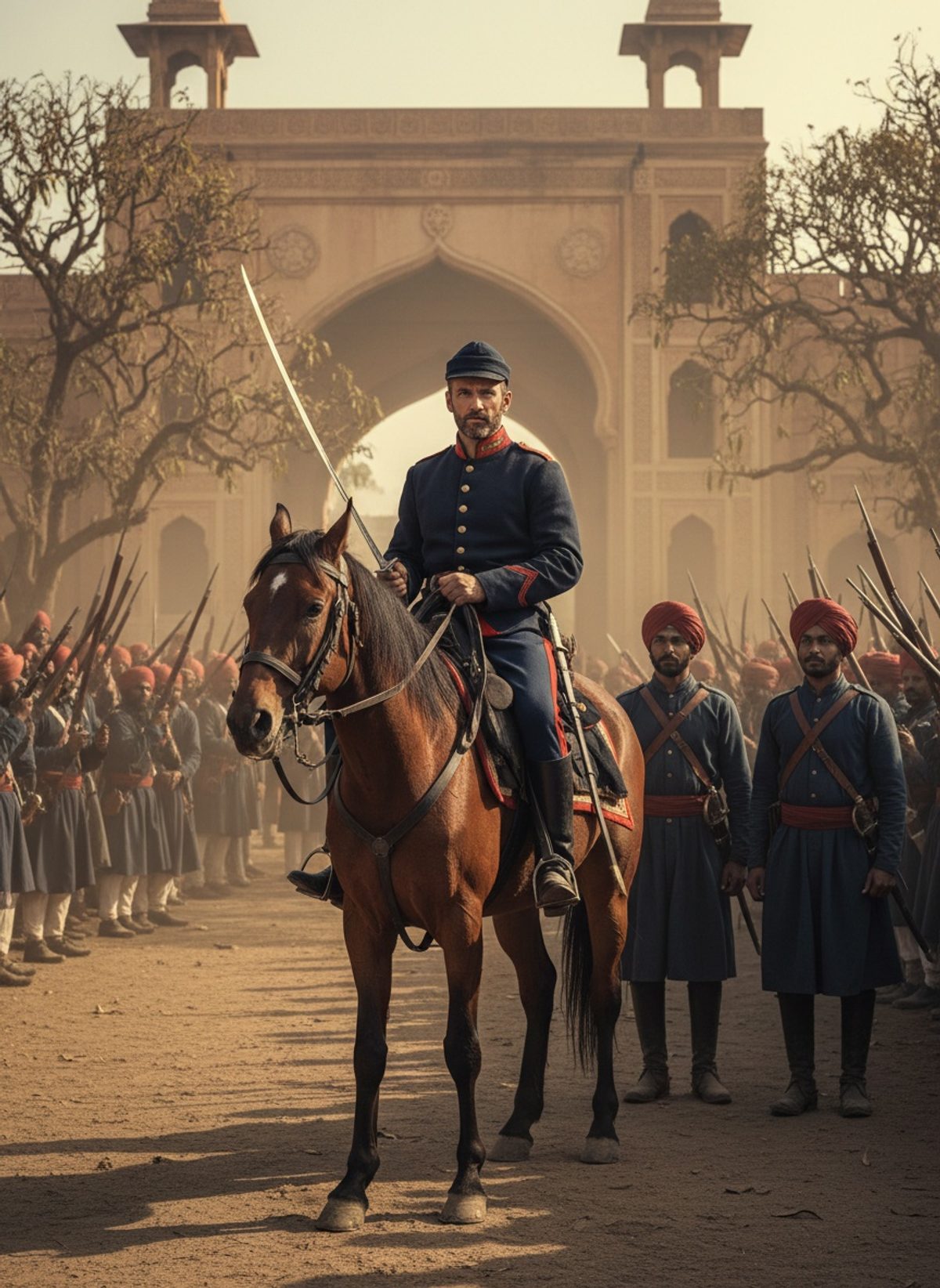
Delhi had fallen. The echoes of gunfire had barely faded when a lone British officer defied common sense by riding into the heart of a city still smoldering from conflict.
Into the Lion's Den
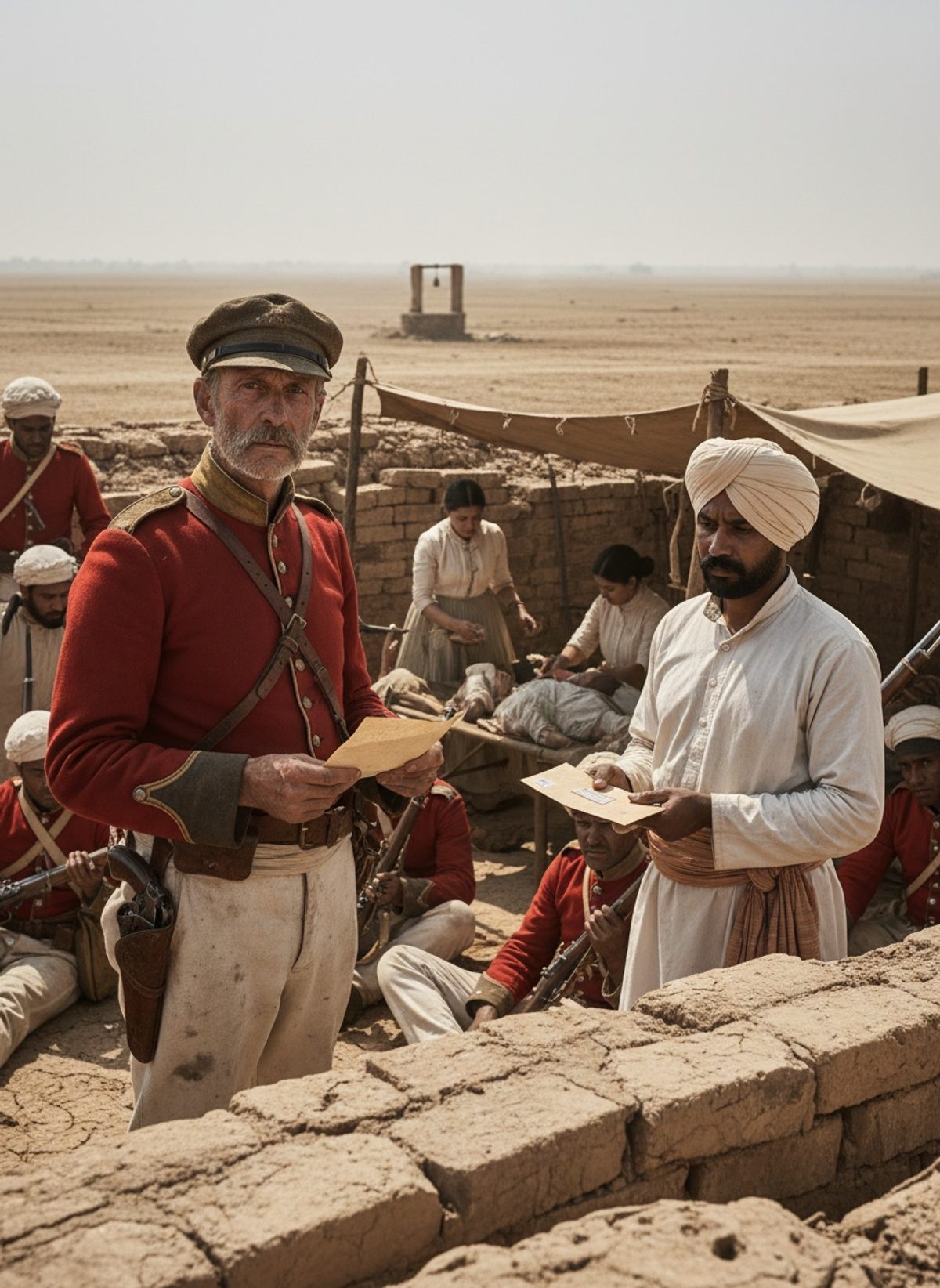
It was September 1857. The Indian Rebellion, a seismic backlash against British rule, had engulfed the subcontinent in violence. Delhi, a grand city full of history and the seat of the last vestiges of Mughal power, had fallen into chaos. The British, asserting control, faced the daunting task of consolidating their grip amidst the ruins. In this volatile environment, few would have dared to do what William Hodson did.
As the commander of Hodson's Horse, an irregular cavalry unit known as much for its prowess as its unpredictability, Hodson was no stranger to audacity. But even by his standards, this was bold. He rode out not with a battalion or even a company, but a mere handful of men. Their mission was clear but dangerous: to apprehend the remaining Mughal princes, the rightful heirs to a dynasty that once ruled over vast stretches of the Indian subcontinent. The stakes were high, and the odds were against him.
The path to the princes was fraught with danger – the city's labyrinthine lanes were teeming with armed retainers and supporters, vengeful and desperate after weeks of siege. Yet, despite the formidable task, Hodson exuded an air of command that seemed to part the human tide before him. His reputation, a mix of respect and fear, did much of the work. Those who might have struck at a lesser officer paused, unsure in the face of his unflinching resolve.
Read next: When Nain Singh Walked Into Tibet and Never Told a Soul
The Princes Under Siege
At the center of the drama were Bahadur Shah Zafar's sons and grandson, the last flickers of the Mughal dynasty's imperial flame. Their existence was not only symbolic; it was a point of national pride for rebels, who rallied under their banner. Surrender for these princes meant the extinguishing of centuries of heritage and the dreams of those who clamored for a free and sovereign India.
When Hodson approached the princes, he did not do so with cannons blazing or swords drawn. Instead, he harnessed the power of nerve and negotiation. Hodson demanded their surrender, not with threats, but with the cold, pragmatic promise of safe passage. His mastery of psychological warfare was apparent – he understood the weight of his actions, not just militarily, but in the cultural and political spheres. He wasn’t merely capturing men; he was dismantling a banner of resistance.
As word spread that Hodson himself was dealing with the princes, a throng gathered. Hundreds, if not a thousand, people watched the exchange with bated breath. Many were armed, tempted to take up a futile but reckless stand. Hodson, mounted and alone but for his small troop, faced the multitude and did what few could: he disarmed their spirit, not with violence, but sheer authoritative presence. The princes surrendered, their heads bowed under the weight of history, walking into the custody of their captor, while Delhi's remaining populace watched, resigned and resentful.
The Aftermath and Echoes of Empire
In accepting the princes' surrender, William Hodson had done more than secure captives; he had struck a decisive blow to the rebellion's morale. The act seemed straightforward, but its ramifications rippled outwards. It demonstrated to the rebelling masses the might of the British Empire, an empire capable of taming not just armies, but the symbolic heart of its foes.
Hodson's decision to take on such a personal and perilous mission without explicit orders highlights the intricate web of individual decision-making entwined with grand historical narratives. It was a reminder of how individual acts of bravery or hubris can shape the course of events, something often glossed over in more traditional accounts of history.
Even within British ranks, reactions to Hodson's actions were mixed. To some, he was a hero, a testament to the superiority and cunning of the British officer class. To others, his insubordination was reckless, a gamble that could have easily tipped into disaster. On the Indian side, the capture and subsequent execution of the princes were both a tragic indignity and a foreboding sign of the era's grim realities.
The story of Hodson and the capture of the last Mughal princes is more than an anecdote of military history; it is a narrative of the nexus of power, prestige, and personality. In a world straddling tradition and modernity, strength wasn't just measured by the size of an army but by the depth of an individual’s resolve. This, as much as any grand battle or sweeping policy, shaped the history of the subcontinent during those turbulent times.