Edmund Burke is not the first name that comes to mind when recounting the defiant figures of history. Yet, in 1788, he became the voice that carried tremors across an empire.
The Commons' Call to Justice
In the winter of 1788, a cold, austere Westminster Hall was the arena for a drama unlike any Britain's political stage had known. The Prime Minister's matters of state felt mundane compared to the spectacle unfolding: the impeachment trial of Warren Hastings, the once-resolute Governor-General of Bengal. Hastings stood accused of heinous maladministration and corruption, casting shadows of doubt over Britain's imperial conscience.
Edmund Burke, a formidable figure in the House of Commons, committed himself to the task of prosecution with a fervor rarely seen among his peers. Equipped with copious documents, testimonies, and a fiery rhetoric honed over years, Burke embarked on a quest for accountability that was both principled and unprecedented. The chamber was thick with tension as men of influence, from noble lords to political upstarts, gathered to witness Burke's oration. For nine days, Burke mesmerized his audience, weaving a compelling narrative of betrayal and exploitation, painting Hastings as a man who had leveraged an entire subcontinent to his advantage.
Depictions of Distant Lands
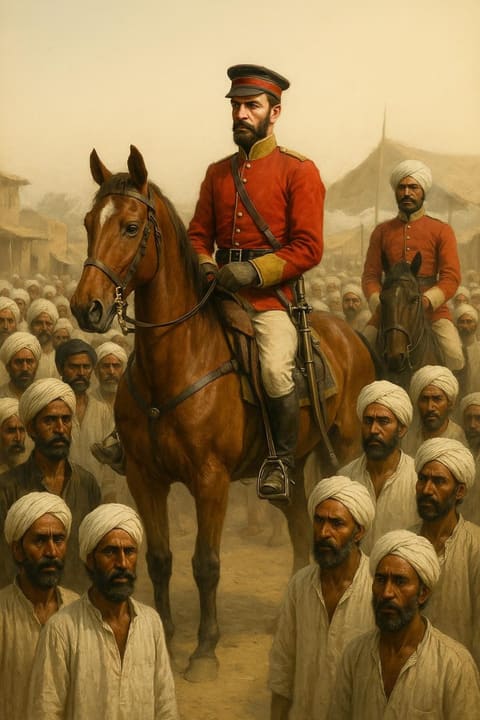
Burke's eloquence was matched only by the vividness with which he transported England's elite to the Indian subcontinent. With words as his brush, he depicted a land rich with color, tradition, and a delicate fabric of society torn by the Company's expansionist zeal. He evoked the sacred Ganges flowing through Bengal, its banks now the site of greedy machinations. For those seated within Westminster Hall, many of whom had only read of India in travelers' accounts, Burke's narratives offered an unprecedented window into the complexities of British rule half a world away.
Read next: When Cornelia Sorabji Crossed the Zenana Wall, 1904
His speeches were not mere accusations but an indictment of imperial policy itself. He scrutinized the mechanisms of colonial governance, highlighting systematic failures that allowed individuals like Hastings to thrive at the expense of the local populace. Burke cataloged excesses, from unjust imprisonment to expropriated wealth, casting doubt on the moral grounds of Britain’s dominion.
A Man Vs. An Empire
The trial also presented a profound personal drama, with Hastings, known for his administrative prowess and complex diplomacy, now reduced to a figure in the crosshairs of national outrage. Defiant yet composed, Hastings faced Burke's unrelenting discourse that swayed public opinion, turning tides against the machinery of empire that had once upheld him.
Read next: When Nolan Carried the Order That Doomed the Light Brigade
As the days of argumentation rolled into one another, Burke's efforts seemed Herculean. He approached each day with vigor, bridging the ideological divides within Parliament to focus on the ethical core of British rule. But not everyone was easily swayed. Hastings' supporters pointed to his achievements in maintaining stability in the colony. Nonetheless, Burke's perseverance underlined a critical discourse on governance and morality that left Westminster, and indeed all of Britain, questioning the righteousness of its imperialist ventures.
The Trials That Change Empires
While the trial itself concluded years later with Hastings' acquittal, Burke’s relentless crusade left an indelible mark on the British ethos. It thrusted ethical conversations about colonial rule into the public consciousness, far beyond the confines of Westminster Hall. This move towards greater accountability redefined how power was exercised on foreign shores, echoing through subsequent generations of politicians and reformers.
The tale of Edmund Burke and Warren Hastings is that of an empire held to account by a conscience. Burke’s audacious stand served as a cathartic moment for Britain, forcing a confrontation with the realities of imperial dominion. As Britain’s presence on the world stage increased, so did the imperative for dialogue on justice and integrity. This trial underscores the profound effect a voice can have when it calls for the reevaluation of the status quo, showing that even the mightiest empires could not escape the reckoning of their deeds.