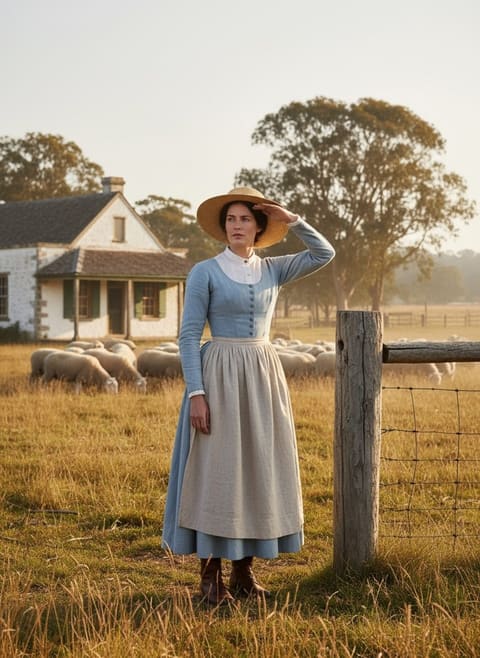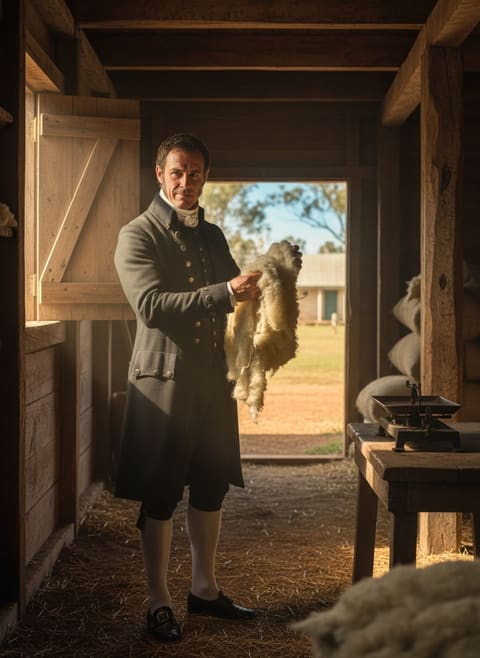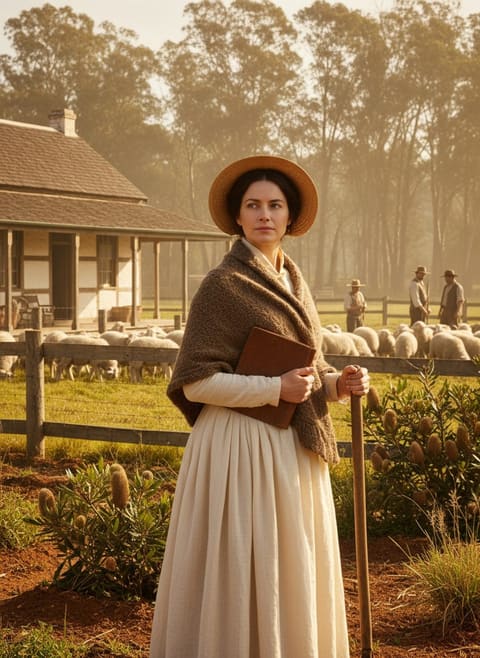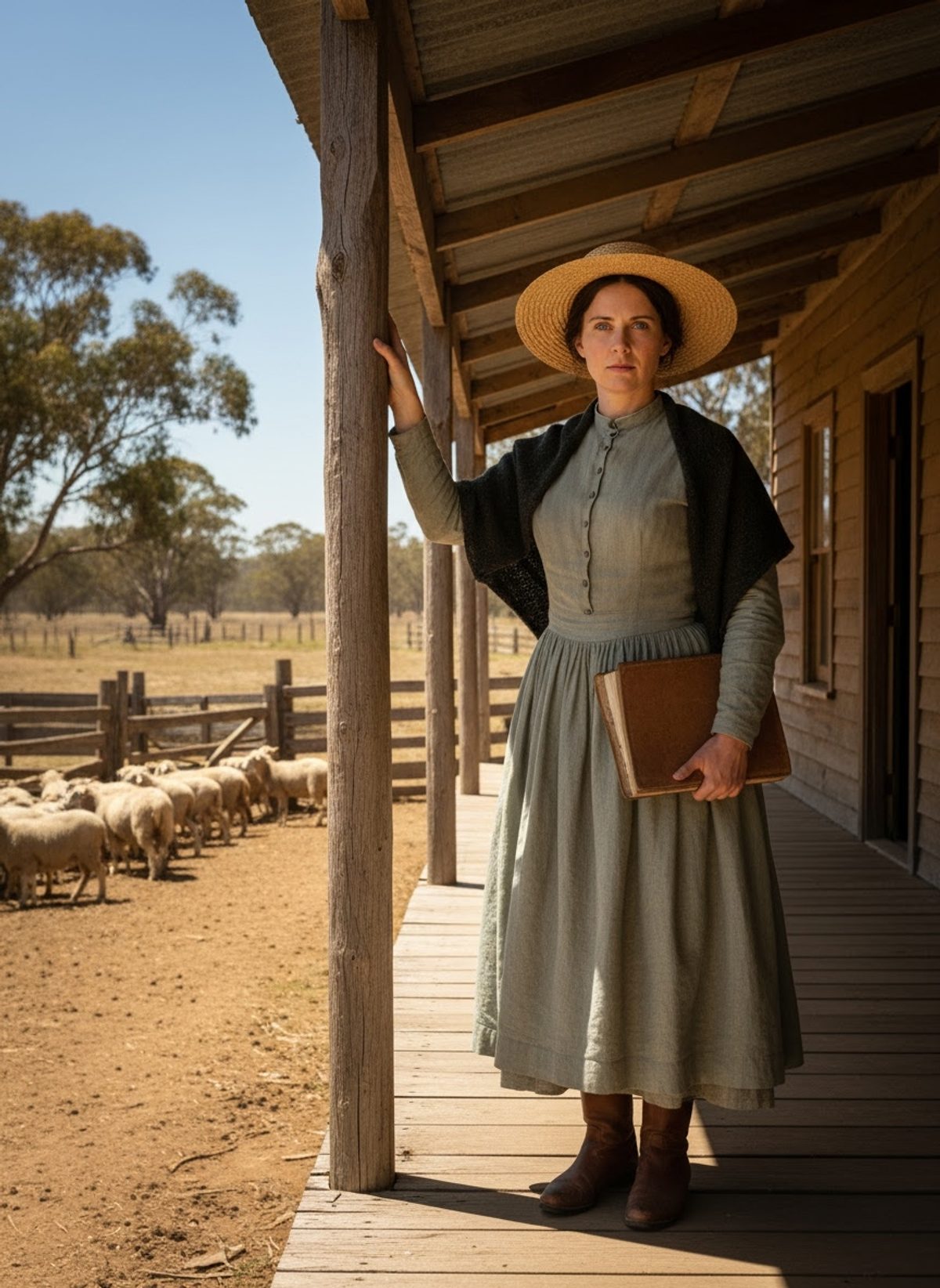
Elizabeth Macarthur was a woman of resourceful determination. She spoke little of her own achievements, yet quietly carved an empire in the harsh frontiers of New South Wales.
A Woman Alone with a Dream
When John Macarthur was seized and sailed off to England in 1801, Elizabeth found herself alone in a foreign land. The dry, rugged station in New South Wales seemed an unlikely place for a pioneering venture. She stood with seven children, two hundred merino sheep, and not a single trusted advisor.
Despite the isolation, Elizabeth was determined to turn her husband's vision into reality. John had been obsessed with the idea of breeding fine wool in Australia, and Elizabeth shared this ambition. The few dozen merino sheep grazing her land were more than mere livestock; they were the seeds of a prosperous future. Navigating a world dominated by men, she was both mother and manager, skilled in balancing the intricacies of family and enterprise.
Elizabeth's Unyielding Innovations
The early 19th century was an unforgiving time for women in business, particularly on the edge of the empire. The arid landscape required an inventive spirit, and Elizabeth had plenty of it. Mentally cataloging each sheep, Elizabeth learnt to judge the finest wool from an evolving flock, always improving each year's yield.
Read next: When John Macarthur's Merinos Changed Australia Forever, 1797
She transcended mere survival. Elizabeth adapted the latest European agricultural techniques she read about and experimented with novel sheep breeding methods. Her vision extended beyond the wool itself; she saw the broader picture, recognising the potential in the sprawling Australian landscape where others saw barren terrain.
In her letters to John, she wrote not just of domestic life but of strategy and progress. Her words conveyed a depth of understanding of wool production that would have surprised any established graziers back in England. Her husband, detained by bureaucratic affairs, surely marveled at the reports of a flourishing merino flock increasing in both number and quality under her stewardship.
From Wilderness to Empire
By 1809, when John returned to New South Wales, Elizabeth had not only maintained the farm but propelled it to new heights. She oversaw the number of sheep expand from a modest flock to an operation of unprecedented scale and sophistication. Her success laid the foundation for an industry that would become Australia's economic backbone.
The challenge was immense. Elizabeth managed overseers, negotiated trade, and dealt with the raw difficulty of isolation. Few could have anticipated that her efforts would provide critical support to a nascent colony, demonstrating the transformative power of wool. As she continued to weave her determined efforts into the fabric of the colony, colonial authorities began to take note.
Read next: When Thomas Peel's Settlers Starved on the Swan River, 1830
The Wool Wanderer
Elizabeth's vision extended far beyond the boundaries of her property. Her unyielding commitment to wool production earned her respect and unanticipated influence. She had proven that merino wool was superbly suited to the Australian climate, creating a bounty of opportunity for other settlers.
The burgeoning wool industry ultimately became vital to the colony's economy, with the product eagerly sent across the oceans to eager markets in Europe. Even as John's name was associated with the success, those in the know recognized Elizabeth's indispensable role. Her contributions were influential in making the land "beyond the seas" into a hub of wool production.
Elizabeth Macarthur's tale is not merely one of enterprise or survival. It's a vivid reminder of how visionaries thrive on the fringes of history, crafting a legacy that changes fortunes irrevocably. Her experience illustrates that history is sometimes shaped not by the loudest voices, but by those with unwavering resolve and quiet ambition. Without Elizabeth's hand, Australia's golden fleece might never have seen its day in the sun.