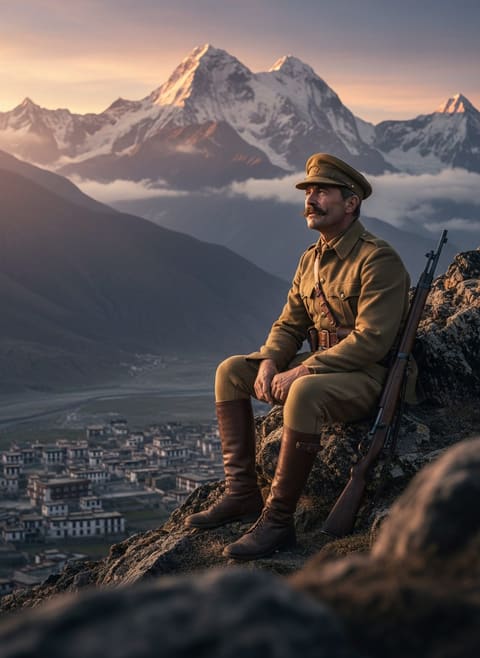
He was twenty-three years old. He had commanded armies, but his destiny had never hinged on the capriciousness of Indian skies before.
The Gathering Storm
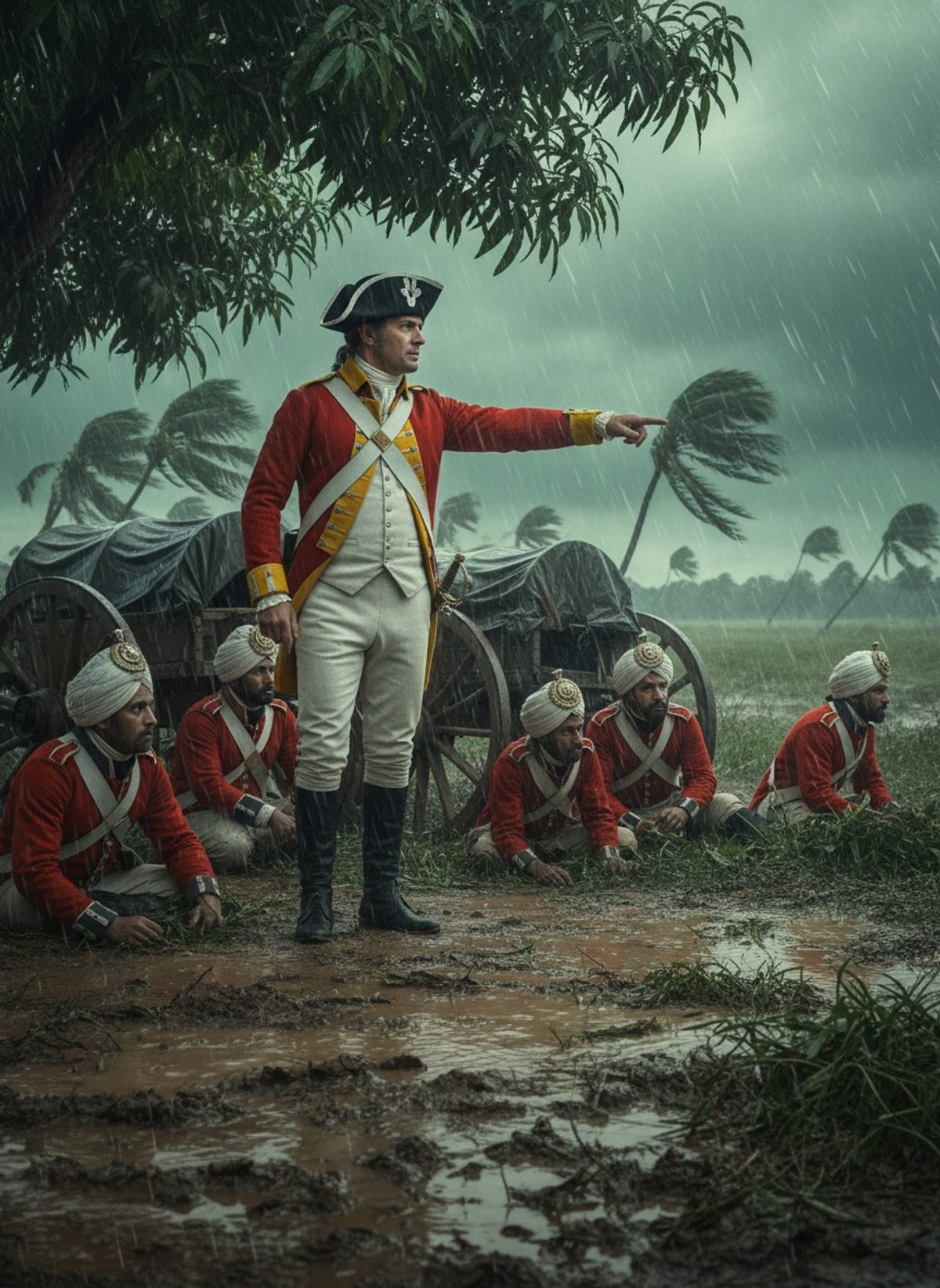
The dawn of June 23, 1757, found the plains of Plassey cloaked under a heavy curtain of monsoon clouds. The looming battle between Siraj ud-Daulah, the Nawab of Bengal, and British Colonel Robert Clive was set to determine control over one of the wealthiest regions in India. Despite being outnumbered ten to one, Clive and his small, but well-coordinated force were buoyed by more than just British resolve — they were favored by fate itself. In a land where the monsoon touches every aspect of life, these seasonal rains would unwittingly become the silent adjudicators of imperial rule.
The Weight of Numbers
Siraj ud-Daulah could boast an army significantly larger than Clive’s. At his disposal were well-armed troops, skilled tacticians, and the reassuring knowledge of numerical superiority. Yet, the Nawab’s strength would be tested not by British steel alone but by nature. The very rains that nurtured Bengal’s bountiful fields now threatened to quench the firepower of his artillery. As the first drops began to fall, little did the Nawab's forces realize that the heavens would turn against them in so cruel a fashion. What should have been a battle on the ground was about to transform into a contest of weathered wit and unforeseeable luck.
A Deluge of Consequences
As the monsoon storm broke over the battlefield, Siraj ud-Daulah’s forces, buried in the humidity and heat, found themselves beleaguered by more than Clive’s advancing army. The gunpowder that lay exposed on the battlefield rapidly transformed into useless paste under the torrent. An army without its firepower quickly spiraled into disarray. Clive, cunning in his calculation, had taken the precautionary step of sheathing his supplies under waxed tarpaulins. His muskets and cannon remained dry, their efficiency unimpaired. This foresight, simple yet profoundly strategic, underscored the differences in leadership and preparedness between the two commanders.
Read next: When John Hanning Speke Found the Source of the Nile, 1858
The Thunderous Silence
While Siraj ud-Daulah’s hopes melted away with each drop of rain, the initial shock was matched only by the rumblings of doubt across his ranks. It was under this fortuitous cover that Robert Clive orchestrated a calculated advance. Stories from the plains speak of the eerie silence that blanketed Plassey save for the drumming rain, which was broken only by the crack of British gunfire. Clive's men, a concentrated force of discipline and determination, seized the moment as the Nawab's forces faltered. Within mere hours of the heavens opening, the tide of Indian destiny had been irreversibly redirected.
Echoes Beyond the Rains
Though the battle was muddled by the rain and confusion, its echoes rippled far beyond the muddy fields of Plassey. This conflict did not mark the true beginning of the British Empire in India, but it certainly laid the bedrock for what was to follow. In an empire forged as much by accident as ambition, Clive’s success in the storm made British dominance inevitable — a supremacy that would reshape the subcontinent for centuries. As we reflect on this pivotal moment, it is a stark reminder of how delicate the threads of history can be, shaped by the simplest of elements. This story serves as a testament not just to strategic acumen but to humanity’s often tenuous dance with nature. In the monsoon’s wake, the British found more than victory; they found opportunity cloaked in the guise of chance, forever altering the fate of a nation.