The cries of seabirds echoed over the windswept bay, their calls mingling with the crashing waves against the rugged coastline. The dawn light cast a golden hue across Sydney Cove, where the unfamiliar flora stared back at their would-be conquerors, resilient yet serene. Beneath the South Pacific sky, an air of anticipation clung to the sandy shore, broken only by the rustle of leaves from the dense eucalyptus groves beyond. It was here, in the vast emptiness of a land that seemed both timeless and untouched, that Captain Arthur Phillip raised the Union Jack, marking a geopolitical pivot that would reverberate through the annals of history.
The Moment of Arrival
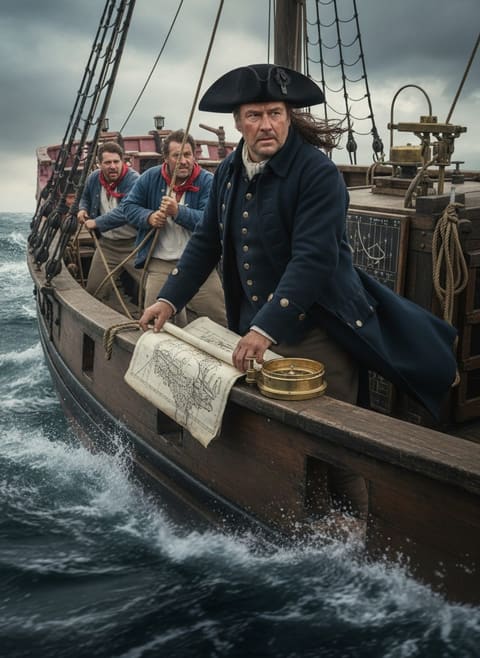
On that fateful day in January 1788, the sight of the First Fleet's eleven ships dotting the horizon was a spectacle unseen by any who had come before in this part of the world. The ships, each a character in its own right, had endured a grueling voyage from Portsmouth, their wooden hulls having creaked and heaved across the storm-laden Southern Ocean. Yet, despite the hardship suffered over the long months at sea, including the ebb and flow of morale, the fleet had completed its duty to the Crown—delivering a contingent of humans to an undiscovered land, ready to seed a new outpost of the British Empire.
Arthur Phillip, the pragmatic leader of this endeavor, faced the silent shores with measured relief. The successful crossing of a world was trial enough, but it was this sandy, scarcely populated cove that now tested his resolve. Even among his most hopeful, a question lingered—what challenges would this new world present and how could they overcome them?
A Vision of Empire
Phillip’s mission was clear: establish a penal colony that would alleviate the overcrowded British prisons while also extending the empire's strategic reach across the globe. As Phillip took in the unspoiled vistas of coves and headlands, his mind must have flickered to the magnitude of the task at hand. The First Fleet, including over a thousand souls, offered a snapshot of British society. Amongst their ranks were convicts, marines, and officials, all united, perhaps reluctantly, in a singular purpose.
Read next: When William Adams Became the First Western Samurai, 1600
In one swift motion, the raising of the Union Jack symbolically plucked Australia from obscurity and placed it firmly within the geopolitical game of the great powers. For Phillip, this land was not just a solution to Britain's penal woes; it was a stage upon which to project British power and values. Yet, to those who called this vast continent home, known by many names but never thought of as New South Wales, the implications would be long and traumatic.
More Than a Symbol
As the flag billowed in the sea breeze, a scattered cheer arose from the gathered settlers, marines adding their voices to the exclamations of relief and patriotism. Yet, to the untrained eye, the scene seemed deceptively simple. The reality beneath this veil was complex—a combination of resolve, survival, and, above all, hope.
The Union Jack’s ascent was more than a simple act of possession. It was a precursor to the sweeping changes about to unfold across the continent. The British administration, helmed by Phillip, faced myriad challenges that included the provision of food, the establishment of order, and the diplomacy required with the Indigenous populations who had inhabited these lands for thousands of years.
Truthfully, the Norfolk pine that served as the first flagpole bore witness to this paradox—a start filled as much with uncertainty as with strength. It was a moment that encapsulated the audacity of imperial ambition and the momentous task of nation-building.
The Human Element
Within the hearts of the settlers, visions of possibility danced—a mix of noble aspirations and desperate necessity. For the convicts, this foreign shore held promises of life beyond the shadows of past misdemeanors. For many, it was a chance for a blank slate—a prospect that beguiled more than it daunted.
The responsibilities laid upon Phillip and his officers demanded a blend of compassion and calculation. Ensuring the survival of this nascent colony involved intricate logistics and unyielding determination. The task of transforming Sydney Cove from a desolate spot into a habitable settlement tested their limits, but it was the resilience of human spirit that ultimately forged connections, pushing them beyond mere survival to create community.
Read next: When Two Explorers Vanished Into the Congo, 1887
While the Union Jack fluttered high, it underscored the striking divergence between the European newcomers and the Indigenous peoples. The clash of cultures yielded a saga replete with drama, conflict, and, at times, mutual incomprehension—an arena wherein history often finds both tragedy and tenacity.
A New Chapter Unfolds
When the tide of empire first lapped against Australia’s shores, it set into motion a sequence of events that transformed the continent’s destiny. For Arthur Phillip and his bedraggled band of mariners and prisoners, that January morning marked the beginning of a novel so intricate and variegated that its final chapters are still being written today.
The flag raised by Phillip symbolized far more than imperial ambition—it embodied the volatile vicissitudes of exploration, settlement, and cross-cultural encounters. It set into motion narratives that included growth and innovation, alongside conflict and resilience. The significance of that single act extends beyond the simple colonial ambitions of the Georgian Empire, resonating into discussions about heritage, identity, and reconciliation.
As we consider the implications of that historical moment, it forces us to reflect on the paradoxes of progress—to witness the interplay of strength and vulnerability, victory and loss. Phillip's raising of the Union Jack at Sydney Cove was not just a bookmark in the Empire-building narrative; it was the prelude to the extraordinary, complex tapestry of modern Australia.