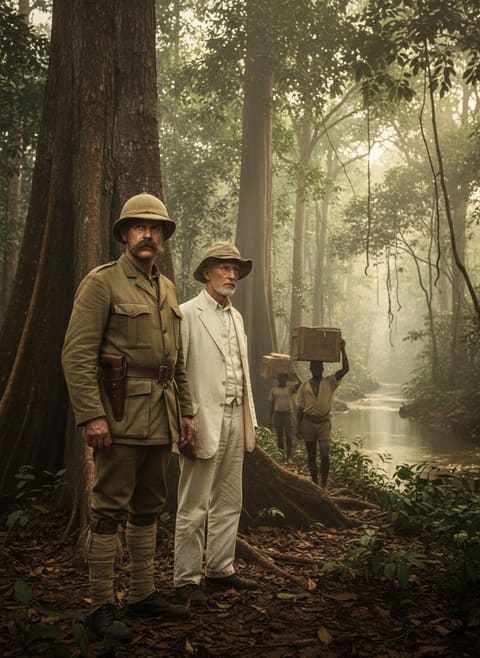
Wet leaves brushed against his face as Stamford Raffles pushed deeper into the dense green, the earthy scent of decay mingling with the salty breeze that drifted in from the sea. As his boots squelched through the muddy undergrowth, he paused to listen to the murmur of the jungle mixing with the distant chimes of a bustling port city. Just five years ago, this very spot had been a place where the world seemed to end — a forlorn patch of land where tangled roots and stagnant waters reigned. Now, behind him, rose a city in the making, a living testament to vision amidst adversity.
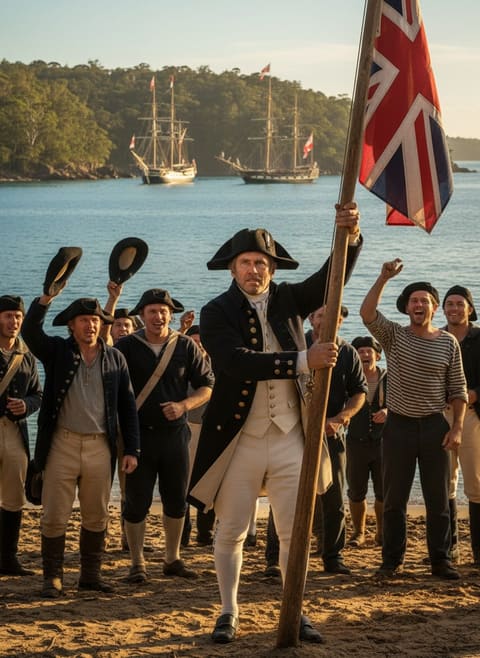
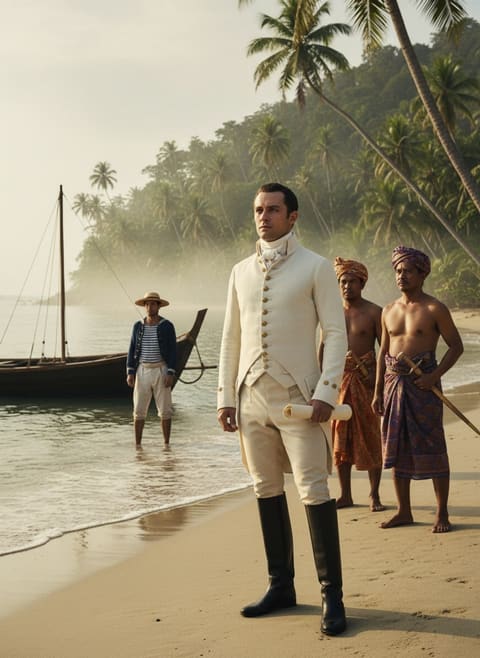
Raffles had faced skepticism and doubt when he first arrived on the shores of Singapore in 1819. Armed with nothing but a worn-out ship and a skeleton crew, he carried with him the ambition that the East India Company lacked. The British, fumbling in their colonial expansion, had overlooked this small island at the edge of the Malay Peninsula. Yet, Raffles saw potential where others saw only swamp and jungle. He envisioned a bustling trading hub at the crossroads of Asia — a free port that could draw merchants from every corner of the world.
The challenges of transforming Singapore were immense. Every decision, every building constructed, was made against a backdrop of uncertainty. Disease and danger lurked in the wet, feverish air. Supplies were scarce, and resources stretched thin. But Raffles pressed on, driven by an unwavering belief in his dream. His radical idea of free trade — of a harbor without taxes and restrictions — was a defiance of the mercantile norm, and slowly, the island began to hum with economic life.
The native Temenggong and the Sultan of Johor endorsed his plans, allowing him to establish an official presence in April 1819. This alliance was crucial, yet it was Raffles' tireless diplomacy and negotiation skills that forged it. He envisioned not just a British stronghold but a pluralistic city where Chinese, Malays, Indians, and Europeans could thrive. Under his careful governance, the population swelled to ten thousand within years, a kaleidoscope of culture and commerce flourishing from the mud.
Read next: When John Hanning Speke Found the Source of the Nile, 1858
Raffles' plans for Singapore were set against the colonial backdrop of the early 19th century, a time when the powers of Europe scrambled to carve territories across the globe. The Dutch, longtime rivals of the British in the region, had cast their eyes on the lucrative trading routes of Southeast Asia. It was Raffles' audacity and diplomatic finesse that secured the British foothold in Singapore, a move that reshaped global trade routes for the coming age.
Yet, as the city expanded beyond his wildest dreams, Raffles found himself increasingly isolated from the very powers that had sanctioned his mission. The East India Company viewed his venture with skepticism, wary of the expenditure and unconvinced of its long-term value. When orders came from London in 1824, summoning him back from the city he had painstakingly pieced together, Raffles saw it for what it was — a recall tinged with disappointment, a failure to grasp the magnitude of what he had accomplished.
He stood by the water's edge that day, alone in thought, contemplating the journey home and leaving behind the city he loved. The waves lapped at the shore, a reminder of the broader world to which Singapore was now irrevocably linked. His creation was a place where sailors and traders would sail in from the far reaches of Arabia and China, bringing with them the spices, silks, and stories that knitted civilizations together across time.
Read next: When Younghusband Rode Into Lhasa and Wept Alone, 1904
No accolades awaited him; no notice from the crown or his peers. Raffles had given the world a thriving port city, yet as he prepared to leave, the silence of acknowledgment cut deeper than any jungle thorn. His radical vision had not yet been fully appreciated, its transformative power still unfolding on the global stage. After all, he had laid the groundwork for what would become one of the greatest megacities on earth, a beacon of commerce and colonial endeavor.
The tale of Stamford Raffles and his singular vision for Singapore remains more than an episode of colonial ambition. It is a narrative of perseverance against the odds and a testament to the audacity required to reshape the world. The seeds he planted in that bustling port would outlive his departure, growing into an empire of trade and influence that extended its reach worldwide.
As he finally turned away from the shoreline, heading toward the ship that would carry him back to an indifferent London, the irony of his achievements was not lost. Raffles' legacy is a reminder that sometimes, the architects of change walk unsung amidst the very world they helped create. Their stories, left out of history's textbooks, continue to shape the landscapes we inherit — challenging us to see potential in places long overlooked, to forge ahead with visions as yet unformed.