November 11th, 1921, seemed like any other day. But for Britain and its empire, it was a day when remembrance found a symbol.
The Seed of an Idea
The world of 1921 was a tinderbox of grief and recovery. The Great War had left its indelible mark across continents, with entire generations bearing emotional and physical scars—scars that didn’t heal as easily as the empire hoped. In this climate, the story of the poppy begins with a French widow, Madame Anna Guérin. Following the war, Guérin saw the brilliance of the poppy as a symbol of remembrance and renewal and moved to enact her vision.
Guérin's experience during the war was one of personal and public loss. She believed a simple paper poppy could speak volumes, not only commemorating the fallen but providing real support to those left behind. Her vision crossed paths with Moina Michael, an American academic, who had been deeply moved by John McCrae's poem, "In Flanders Fields."
Michael championed the poppy within the United States, leading campaigns to adopt it as a symbol of remembrance. It was Madame Guérin who took up the mantle in Europe, seeing in the poppy an opportunity to help her war-torn homeland while uniting the grief-stricken nations.
Read next: When Princess Charlotte's Death Nearly Broke an Empire, 1817
A Bold Gamble
In the fall of 1921, the newly formed Royal British Legion faced a daunting task: raising funds for the countless veterans who returned home broken. The streets of Britain were filled with men who bore the physical and mental injuries of war, often out of work and desperate.
Into this void stepped the Legion, formed by the unification of four veterans’ associations. They turned Madame Guérin’s idea into action by ordering nine million poppies, made by French widows whose lives had been upended by the same conflict.
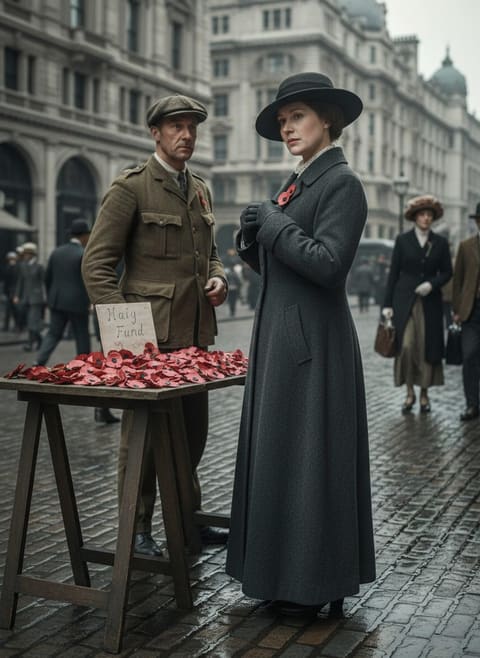
This was no small endeavor; it was a logistical gamble. These poppies, simple scarlet flowers crafted from paper, would be sold across Britain, raising money for the veterans’ funding. The gamble paid off spectacularly. On the first day of sales, these poppies sold out within days—a clear signal that they had tapped into something far greater than anticipated.
The Red Flower Blooms
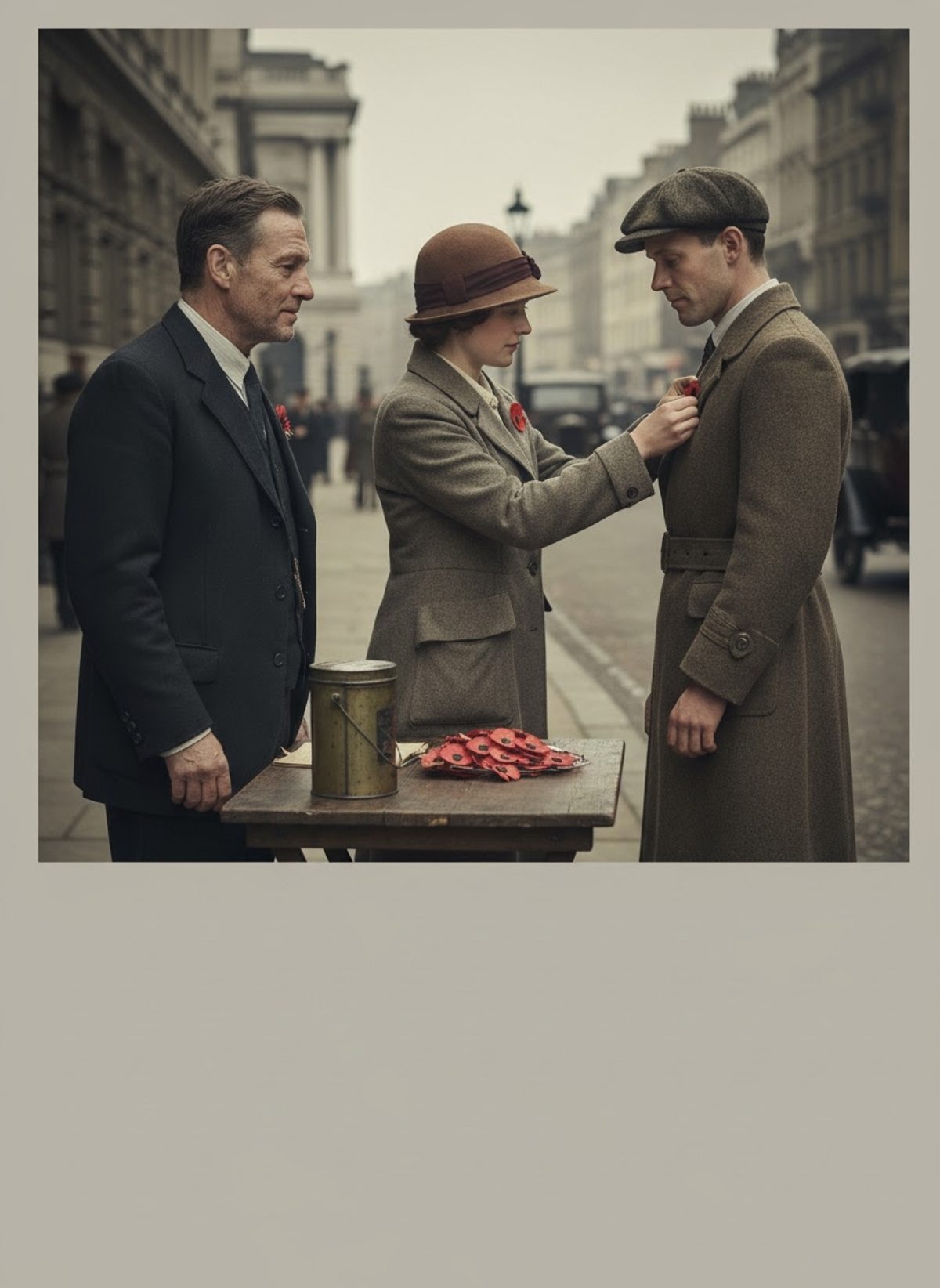
Imagine Britain in November 1921, where every lapel in sight bore a vivid poppy. The impact was immediate and profound, as if the fabric of society itself had intertwined with these delicate symbols. The sight of millions of red poppies was an acknowledgment of sacrifice, but also a communal promise of support. Communities came together, the dialogue between the living and the memories of the fallen made starkly visual.
Read next: When the Empire Promised Its Dead a Name on the Wall, 1920
Critics might have viewed these poppies as sentimental tokens, but to the soldiers and their families, these paper flowers spoke volumes. They represented not just remembrance, but active support—a promise that their sacrifice would not be forgotten, nor would the veterans be left to drift into obscurity. The poppy became more than a fundraising tool; it became a potent symbol driving social change and collective memory.
A Symbol that Transcends
The whirlwind success of those first poppy sales led to a tradition that survives to this day. Each November, the British Legion features these poppies prominently, raising millions for veterans in need and reminding new generations of the costs of war. Across the empire and eventually the Commonwealth, the poppy grew from a humble token into an emblem of resilience. Nations around the world adopted it, expanding its significance far beyond Britain’s shores.
One can reflect on the moment when the poppy found its place in the hearts of millions. In an era shadowed by the enormity of grief, this simple act of remembrance gave shape to the sorrow and hope of an entire empire.
It provided a tangible way for individuals to express their support and acknowledge the enormity of the sacrifices made. As we wear these poppies today, we are reminded of the shared sacrifices that transcend generations and borders, connecting us to a past that still resonates in the present.