July 1, 1920. A gentle breeze whispered through the chalky fields of France where workmen toiled in silence.
The Unyielding Vision of Fabian Ware
Amidst the lingering air of a war not long past, one figure remained restless in his determination to confront an overwhelming tragedy. Fabian Ware, a former Red Cross volunteer, was disturbed by the harsh reality that more than 700,000 soldiers from the British Empire had vanished without a trace; their fates known only to the shell-ridden earth.
Ware was moved by the relentless courage of these men and appalled by the notion that they might be forgotten. Thus, he vowed to give voice to the silence and build a solemn promise of remembrance.
In the aftermath of World War I, the world was a labyrinth of graves and memories shattered by conflict. Ware knew that to honor these men was to transcend the traditional boundaries of rank and line, making no distinction between the officer or the private in the realm of death.
Read next: When English Law Sailed to India and Never Left, 1858
This egalitarian approach was radical at a time when distinctions of class and rank pervaded even the funerary customs. Ware rallied support to form the Imperial War Graves Commission (IWGC) in 1917, revolutionizing the concept of military commemoration.
The Fields Transformed
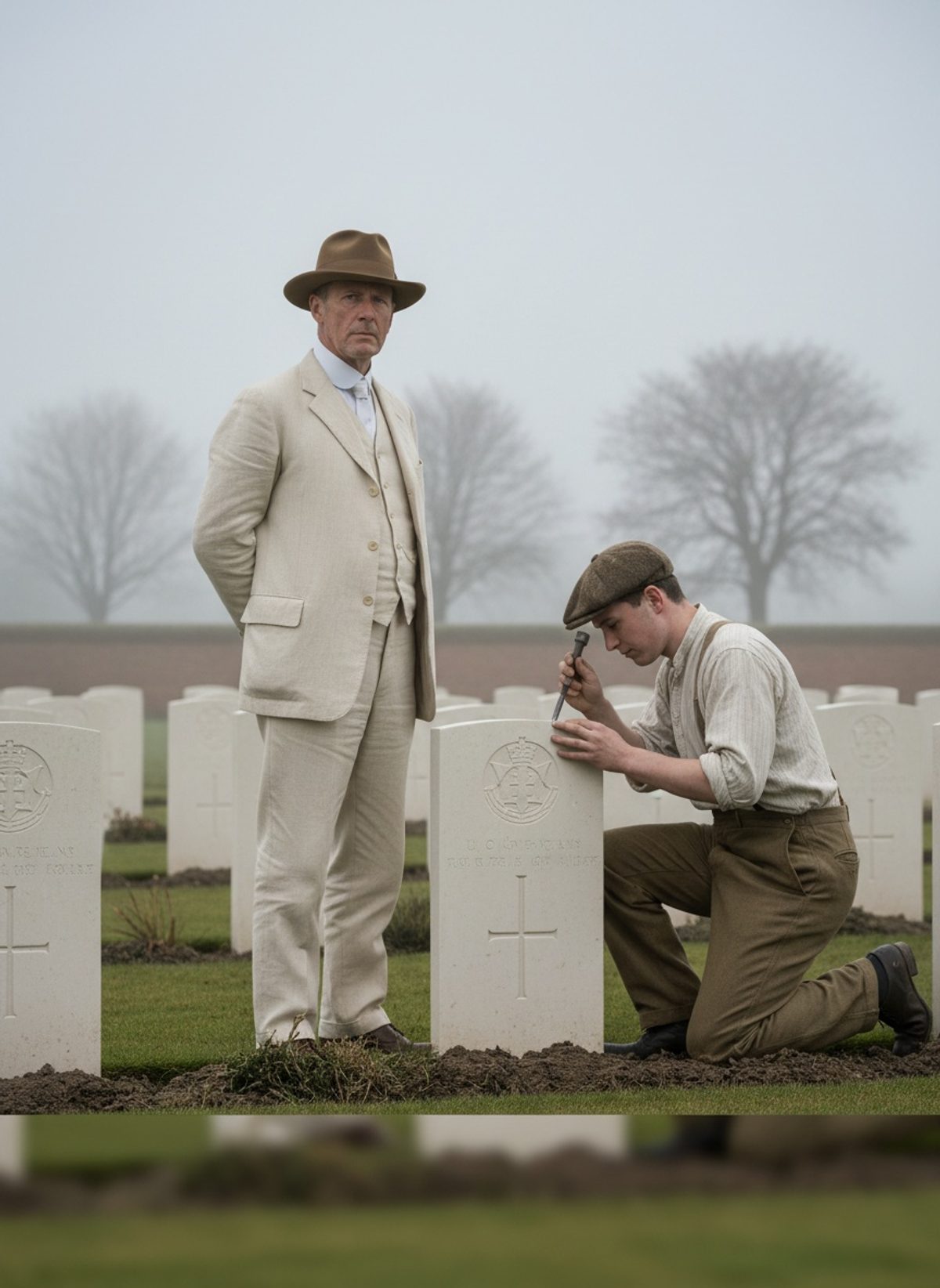
Under Ware's guidance, the commission embarked on an unprecedented mission. With the weight of solemn responsibility, they began the meticulous task of documenting all who had perished. Across the vast expanse of the Western Front, teams of surveyors and laborers set about their labor, the fields morphing from battlegrounds into sacred landscapes. The men who toiled here transformed fallen dreams into enduring legacies, their chisels and spades serving as instruments of both mourning and celebration.
Amidst the silent workers rose the headstones, uniform and steadfast, engraved with names that were fiercely preserved against the oblivion of time. These stones told no tales of rank or status; each was the equal of the other, a testament to the unity of sacrifice. The IWGC ensured that their sacred promise was fulfilled across a hundred cemeteries, offering solace to the living that their loved ones were not entirely lost.
Challenging Traditions, Creating Legacy
Beyond merely memorializing lives lost, Ware's vision was bound by an ethos that disrupted the societal norms of his day. Equality, in the face of death, became a cornerstone of how the First World War would be remembered. This philosophy was not without its detractors. Critics argued for differentiation to honor the ranks that existed in life. Yet, Ware's belief was unwavering—death rendered such differences moot.
Read next: When the Poppy Fields of Flanders Came Home to Britain
As the IWGC grew, it became an emblem of perseverance and an acknowledgment of collective sacrifice. Despite difficulties, Ware's resolve forged a fresh discourse about commemoration itself. The commission extended its vision beyond physical graves, enshrining names upon memorials for those with no known graves. These acts ensured that no individual faded into obscurity, their stories distilled into the granite and marble for future generations to ponder.
Why Their Memory Matters
July 1, 1920, marked not just a day of dignity restored to the soldiers but a herald of a new mode in commemorative history. The work of Fabian Ware and the Imperial War Graves Commission transcended its original mandate, evolving into a blueprint for remembering even beyond the World War. Ware's endeavor was more than the creation of stone edifices—it was a commitment to the past and a moral responsibility to those who served.
Tales of war often focus on the conflicts and upheavals, but this narrative reminds us of the solemn pledge to the individuals who lay forgotten. Their memory, etched upon the annals of history, insists we recognize the humanity amidst strife.
As each name is read aloud, a promise fulfilled echoes across generations. In understanding the gravity of Ware's work, we gain insight into how society can honor sacrifice: with equality, dignity, and an unyielding pledge to never let names fade quietly into history.