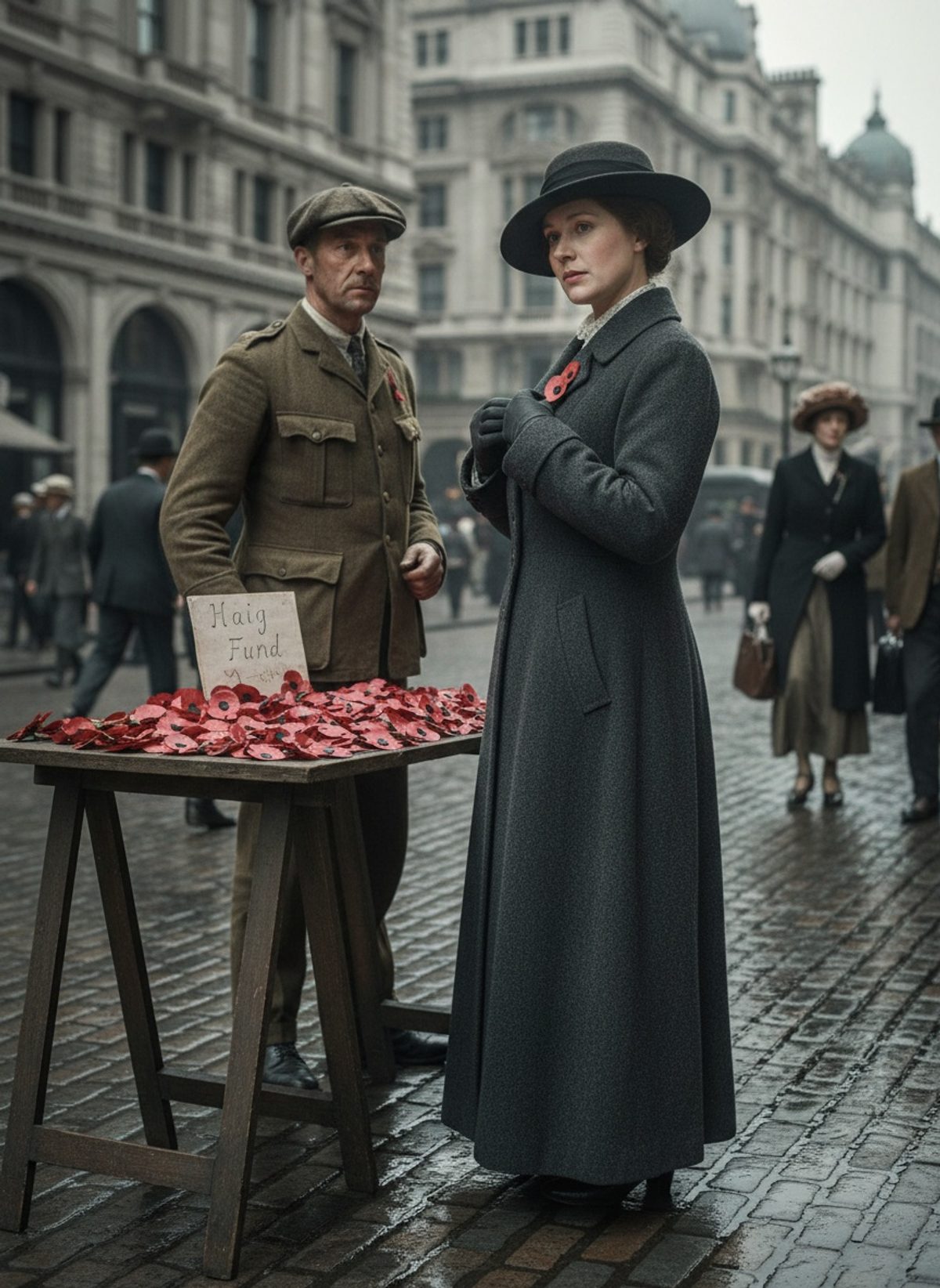
A chill wind swept across the poppy fields of Flanders, the scarlet petals fluttering like whispered secrets among the graves. As the sun dipped below the horizon, the fields were cast in a deep crimson glow, mirroring the memory of lives lost. Among the quiet rows of white crosses, a lone figure knelt, the soft earth beneath her fingers mingling with the blood-red blossoms. Here, on these sacred grounds, was where the symbol of an Empire’s grief took root.
The Seed of Remembrance
When the echoes of war finally retreated into silence in 1918, what remained was devastation and despair. The sheer scale of loss was overwhelming; families throughout the British Empire were shattered. It was said that every British street had been touched by the Great War, with the absence of sons, brothers, fathers, and friends casting a shadow over the nation. Despite the armistice, there was no single monument capable of encapsulating the widespread grief. This is where nature offered its own poignant tribute: the poppy.
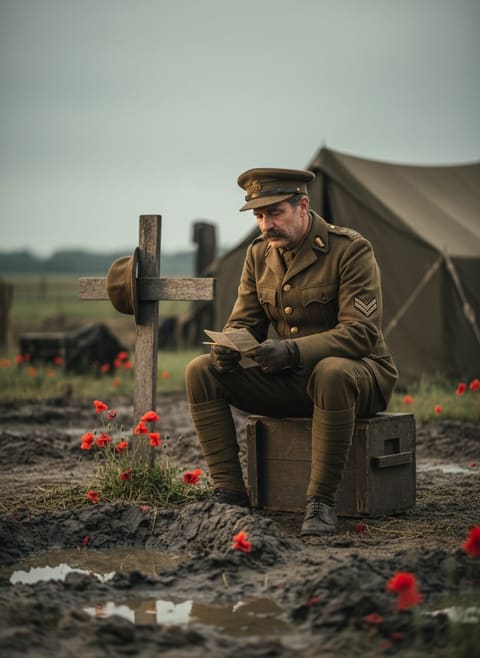
During the brutal battles in the region of Flanders, the poppy bloomed resiliently in the trampled soil and churned mud. These flowers were no ordinary guests to the war-torn land. Their seeds, long dormant, were agitated by the sounds of conflict, emerging as ghostly red specters that sprouted among the fallen soldiers. The imagery was immortalized in John McCrae’s haunting poem "In Flanders Fields," which captured the somber beauty of life and death intertwined in those blood-stained fields.
A Symbol Spreads Across an Empire
The transformation of the poppy from a wildflower to a national symbol occurred quite organically, yet its impact was substantial. The story goes that American professor Moina Michael, inspired by McCrae's poem, started wearing a poppy in remembrance in 1918. Her idea quickly crossed the Atlantic, and within just a few years, it took root in Britain with the establishment of the first Poppy Appeal in 1921.
Read next: When English Law Made a Slave a Free Man, 1772
That year, the poppy transcended its physical form to become a symbol across the entire British Empire. By November 11th, 1921, the fields were awash not just with poppies from the earth but with paper and silk replicas worn by millions. These modest accessories became a way for individuals to carry a piece of Flanders, a tangible connection to lost loved ones and a unified expression of collective mourning.
The appeal, organized to raise funds for returning veterans who bore not just physical wounds but psychological scars, was an overnight triumph. In a single week, the nation embraced the cause, recognizing not only the remembrance but the solidarity and support it represented for the brave yet broken men returning home.
Nurturing Hope from Sorrow
The impact of the first poppy campaign far exceeded expectations. As coins clinked into collection boxes, it was a sound that resonated deeply with the purpose. The funds gathered through this initiative went directly into assisting countless veterans, offering them help with skills training, medical assistance, and housing. For a generation scarred by war, the poppy symbolized not just commemoration, but a step towards healing.
The poppy, simple yet poignant, offered a unifying approach that physical monuments could not. Where marble and stone might stand imposing and distant, this small flower rested gently against the heart. It allowed people, especially those who had never stepped foot on the front lines, to shoulder the mantle of remembrance and carry it forward with quiet dignity.
Read next: When English Law Made the Whole World Speak Its Name
A Legacy Rooted in the Earth
Over the years, the poppy has become an enduring symbol of remembrance, its significance renewed with every generation that wears it. In schools and institutions across Britain, storytelling and education about the wearers of the poppies bring forth narratives that textbooks may overlook. The lives of ordinary people swept into extraordinary circumstances, each petal telling a story of hopes, dreams, and aspirations forever laid in the fields of Flanders.
The beauty of the poppy lies not only in its vivid color but in its symbolism — a reminder that from death and destruction, life and hope can emerge. It is an emblem that honors sacrifice yet encourages the living to persevere; a flower that is both a reminder of the past and a call to build a better future.
Why the Poppy Still Blooms
The small red flower, a moment of remembrance plucked from Flanders' fields, remains significant over a century later. As years pass and the living memory of WWI fades, the poppy continues to be a powerful beacon of what is remembered and cherished. It invites each new generation to reflect on the stories, sacrifices, and humanity intertwined with the history of an Empire reshaped through conflict.
The poppy blooms anew each November, asking us to remember those who fell, live with gratitude, and strive for peace. While monuments stand tall, the poppy lives quietly on lapels, a simple reminder of what was surrendered for the world we now inherit. In this, its message is eternal: a promise against forgetting, a commitment to peace, and a tribute to the enduring struggle for hope and healing.