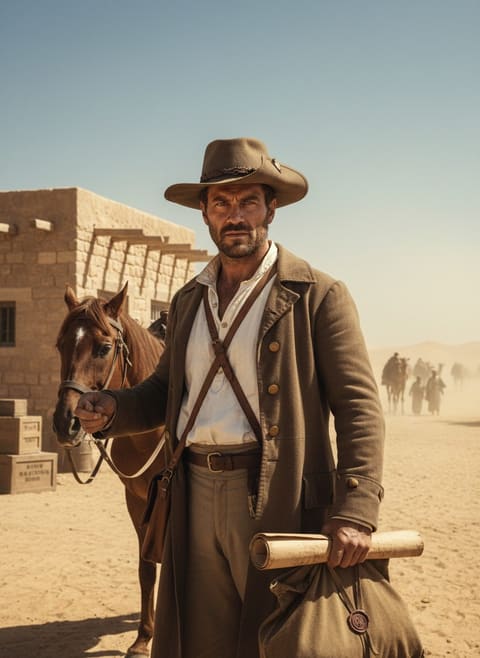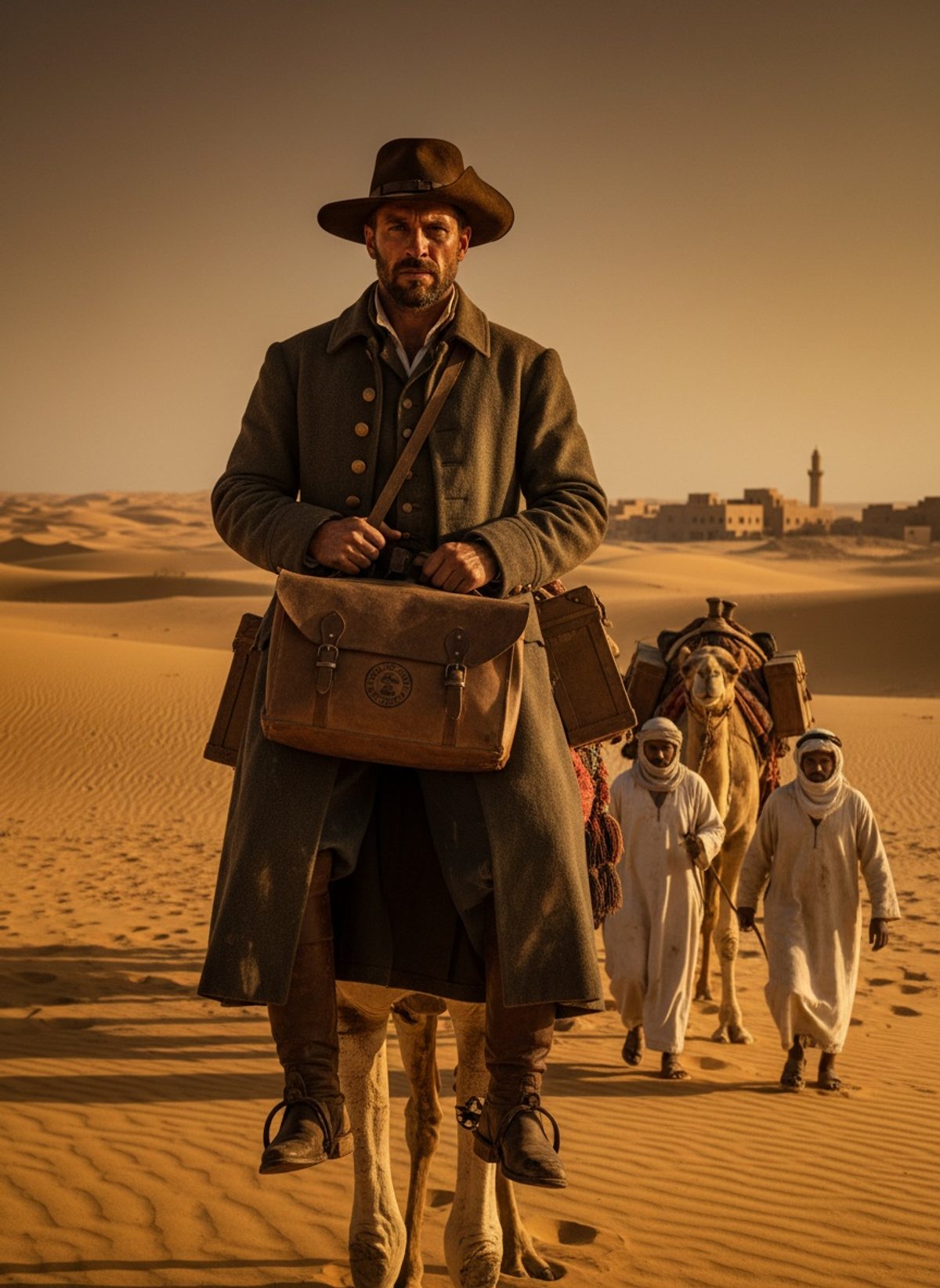
The relentless sun beat down on the sand dunes of Egypt, casting a mirage over the undulating expanse that appeared endless. The air shimmered with heat, a quiet intensity broken only by the rhythmic pounding of hooves against the desert floor. Amidst this barren vastness, a solitary figure, a man with determination etching lines deeper than his years, urged his horse onward. This was not just a ride through the desert; this was a race against time and tradition – a challenge to the established order of communication across the British Empire.
In 1835, before steamships whispered promises of progress on the seas, a letter sent from the heart of the Empire in London to the bustling city of Bombay could easily take four months to arrive. Such delays were the norm, as the mail navigated the sprawling sea routes around the Cape of Good Hope. For the officials who managed the far-flung reaches of the British Empire, this lag in communication posed significant issues, often leaving decisions untimely and responses delayed. But Lieutenant Thomas Waghorn, a former Navy officer turned postal agent, envisioned a swifter path laying somewhere in the heartland less traveled.
Thomas Waghorn was not a man bound by the barriers of convention. Born with a spirit restless enough to challenge the norms, he believed fervently in the power of overland travel through Egypt. The notion seemed almost heretical at the time. Crossing Egypt by land, as audacious as it appeared, could cut the delivery time in half. But there was no history, no established paths marked out for such an endeavor through the deserts where only sporadic caravans dared venture.
Armed with nothing but a plan and unyielding resolve, Waghorn set out on his mission. The logistics of traversing such a route were formidable. He had to navigate not just the physical geography but the geopolitical complexities of a region dotted with the remnants of Ottoman influence and ancient legacies. Yet, these challenges only fueled his adventurous spirit. The task demanded resources beyond financial and political means; it required an understanding of the terrain, respect for local customs, and a strategy to deal with the climatic and logistical challenges presented by the desert itself.
Read next: When Josiah Harlan Bluffed a Kingdom in Britain's Shadow, 1838
Waghorn's daring escapades were marked by various elements of ingenuity, as he utilized the Nile's flow to aid his mission. Past the bustling markets and enigmatic ruins along the Nile’s banks, he made arrangements with local guides who proved invaluable. They were the pulse of local knowledge and survival, knowing the language of the sand and stars, the hidden wells that dotted the scorched earth, and the intricate social codes that governed the lands.
As his journey unfolded, he discovered an unexpected ally in the unforgiving landscape: the Red Sea. By navigating the overland stretch between the Mediterranean to the Red Sea and then to the Indian Ocean, Waghorn found that he could indeed halve the communications time. His passage didn't just test stamina but resilience — covering vast treks of inhospitable land while encountering cultures linked by history more ancient than the Empire he served.
Read next: When Thomas Lipton Sailed Into New York and Undersold the World, 1893
Thus, through Waghorn’s vision and perseverance, the Overland Route was carved from an impossibility. His endeavors were not merely about proving a point but a tangible transformation in the way British India connected to its administrative nerve center. The pathway he pioneered would later become a celebrated postal route, adopted, adapted, and expanded upon. It bore not only letters and parcels but concepts and ideas that flowed freely between continents, facilitating a tapestry of colonial connectivity.
Waghorn’s success proved that logistics and ingenuity often made a successful marriage. In time, his overland route inspired others and was integrated into the developing structure of global communication networks. Steamships and later the Suez Canal would allow more efficient sea passages, yet, Waghorn’s legacy lay in how he redefined the possible, challenging the limits of his era with a vision that merged boldness with practicality.
Today, as emails and instant messages traverse the globe in seconds, it’s easy to take for granted the seamless fabric of communication that guides our lives. The story of Thomas Waghorn reminds us of a time when one man's journey could redefine worlds. His spirit and tenacity illustrate the human capacity to link divided horizons, an endeavor as timeless as the silent desert that bore witness to his improbable race against time.