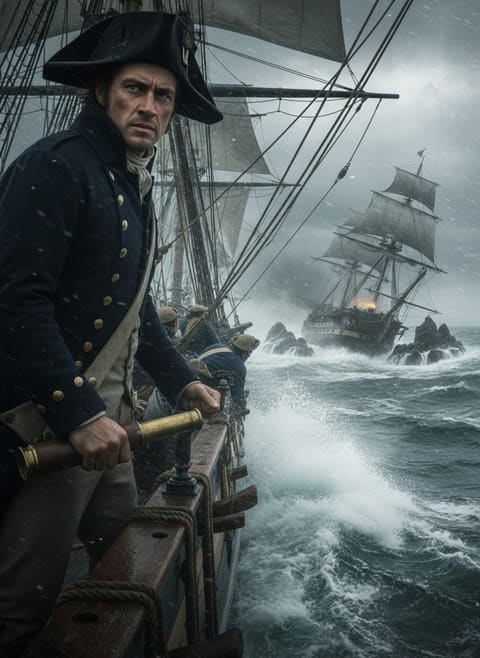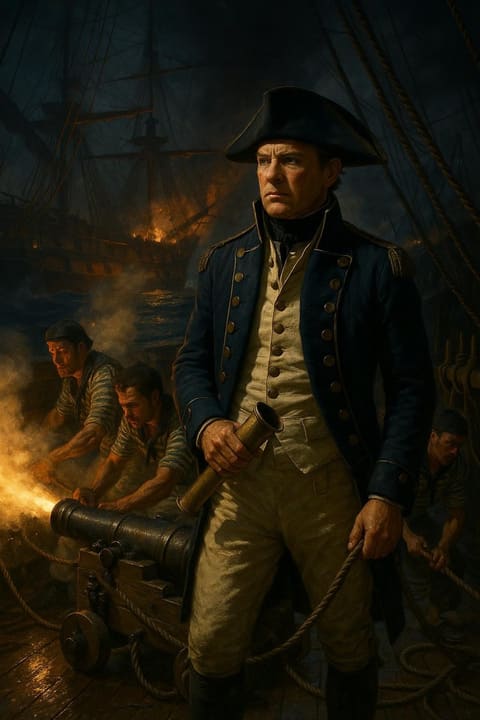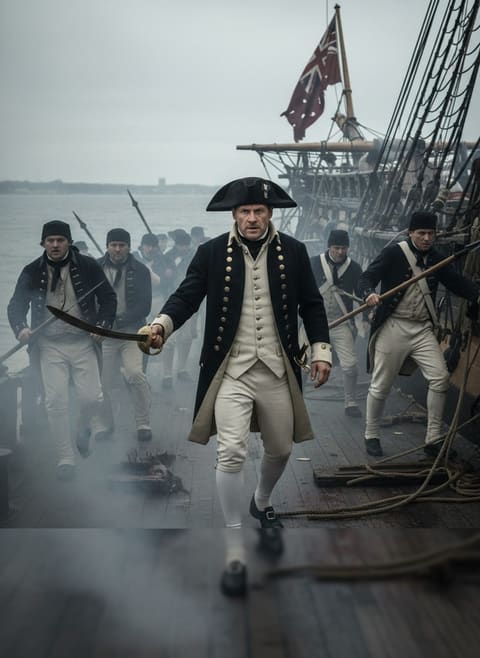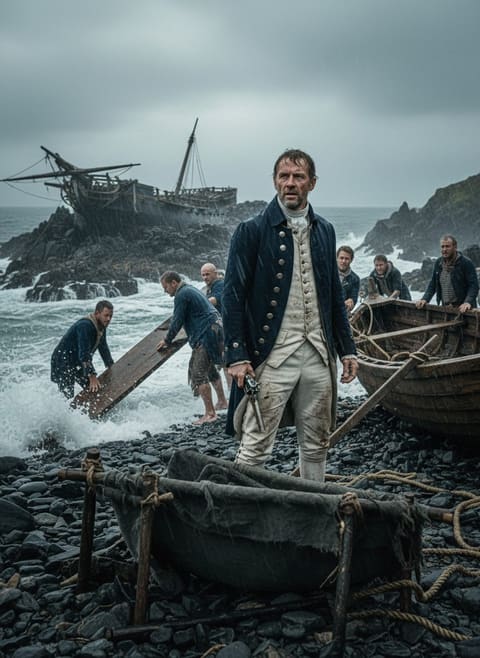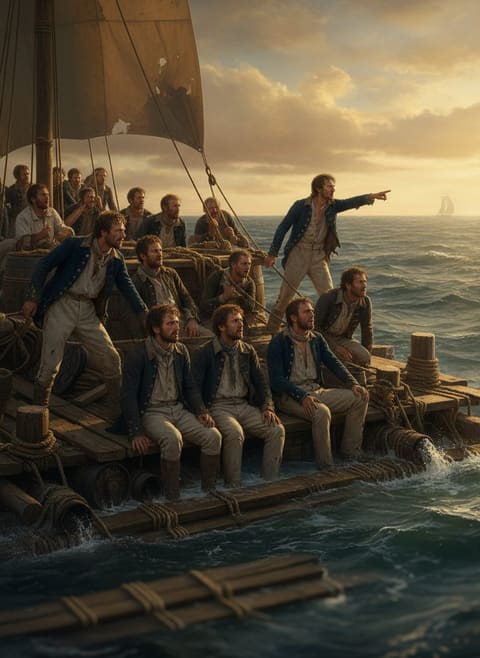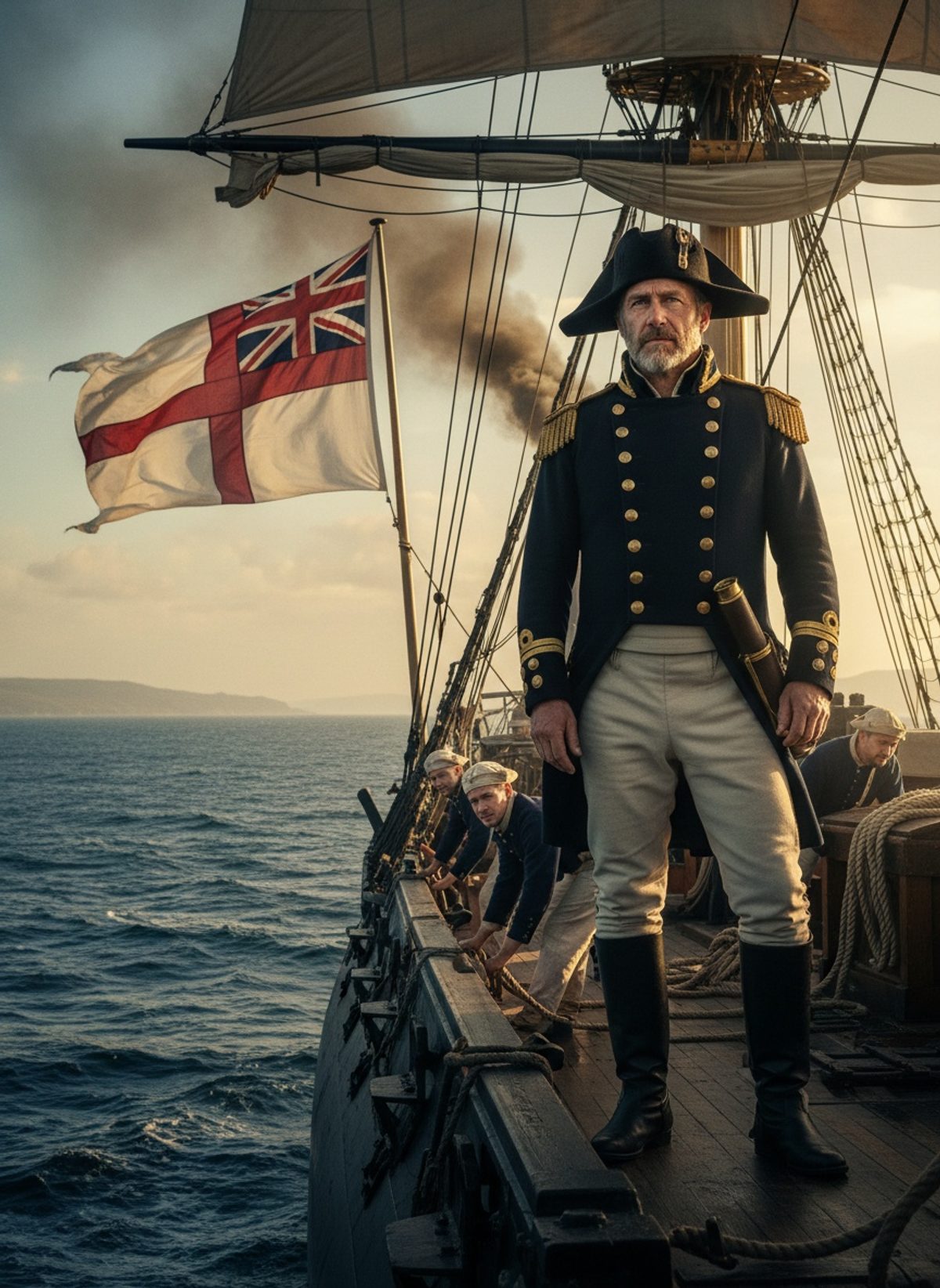
The salt spray bit into his face as the HMS Undaunted cut through the waves of the Caribbean Sea. Captain Henry Warren stood firm, eyes locked on the horizon where a shadow had darted. He knew the chase was far from over; pirates plagued these waters, and it was his duty to stamp them out. The creaking timbers and humming tension filled the air as the Royal Navy vessel surged forward, a lone sentinel enforcing peace in a world constantly teetering on the brink of chaos.
Guardians of the Sea Lanes
After the cannon smoke cleared from Waterloo's battlefield in 1815, a new kind of battle began. This was not a conflict of armies and trenches, but a relentless campaign to secure the global waterways. The Royal Navy, already renowned for its mastery of the sea, now undertook a mission unlike any other. By patrolling trade routes from the Caribbean to the waters of Canton, the Navy ensured the safety of maritime commerce upon which the world increasingly relied.
Far-flung outposts, like those of Bermuda or Malta, became strategic lynchpins in this vast policing effort. The British frigates and their immutable presence were a deterrent to the piracy that threatened to choke every burgeoning trade route. Armed with the latest naval technology and spearheaded by officers seasoned in the Napoleonic Wars, Britain's ships became a force to be reckoned with. Merchants, regardless of nationality, sailed with a sense of security, unwittingly thanks to the costs borne by British coffers.
The Unseen Costs of Peace
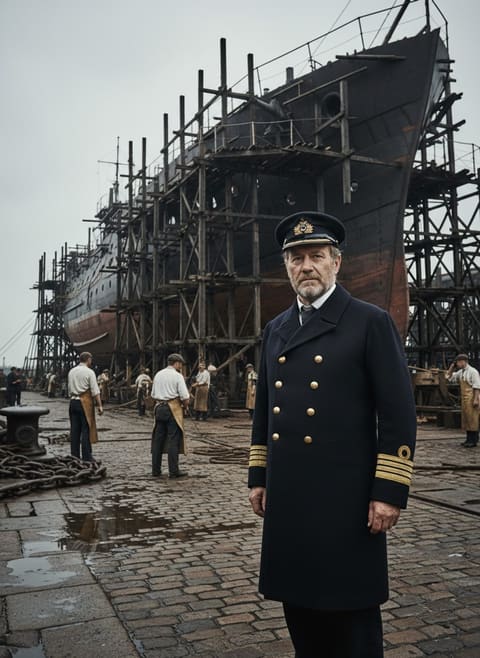
The price of such global stewardship was staggering. Britain found herself footing a bill that she would struggle to present to the rest of the world. The Royal Navy's budget was gargantuan, eclipsing the combined contributions of any potential allies. Dockyards thrummed with activity, a hive of constant construction and repair, ensuring the ever-ready presence of ironclad ships in every ocean under British sovereignty.
Read next: When Piper Findlater Played On With Two Bullets in Him, 1897
This drive for naval dominance was not without its strains. The economic impact was felt deeply at home, challenging fiscal policies and stirring the pot of political discourse. Taxpayers often balked at the burden, yet the catch-22 of relinquishing control over the high seas was a risk too great to entertain. Britain's naval hegemony bought a truly global peace, unnoticed and unthanked by those who perhaps benefited most.
Enforcers of Moral Seas
Beyond safeguarding trade, the Royal Navy embarked on a moral crusade during these years – the suppression of the transatlantic slave trade. Driven by a burgeoning abolitionist movement and national pride, British ships patrolled the African coast with orders to intercept slavers and free those held in human bondage. This moral commitment was formidable, stemming from Britain's own legislative abolition of slavery.
Blockades were set, slave ships seized, and countless lives yielded to freedom in the shadows of history. Yet it was a thankless undertaking, often criticized for its intrusiveness and laden with the perfunctory gaze of other nations who shirked responsibility. These were the costs of maintaining not just a peace of commerce, but a peace of conscience.
Read next: When Cochrane Bluffed a Fleet With a Single Frigate, 1801
A Peace That Shaped the World
The vast oceanic empire forged by Britain was not merely an exercise in imperialist ambition; it was the critical infrastructure underpinning an era of relative global peace and flourishing trade. By underwriting the security of the seas, Britain enabled the rest of the world to engage in the burgeoning Industrial Revolution without fear of maritime disruptions.
Despite the lacking gratitude and heavy financial burden, the century following Waterloo saw unprecedented economic integration, with international trade networks blossoming under the shadow of British naval power. If there was discontent over the cost, it was subdued by the realization of the alternative: a fractured global market, vulnerable at every node.
In those sunlit days of 1914, just before the drums of another kind of war loomed, Britain's sacrifice had sown seeds that would germinate into the modern global economy. The silent tribute of peacekeepers lies not in grand monuments or flowers laid at their feet, but in the everyday reality of a world that sailed onward — in safe waters, unwitting beneficiaries of Britain's solitary watchfulness. A world that, perhaps unknowingly, owed its tranquil days to those steely-eyed captains on mist-covered decks.