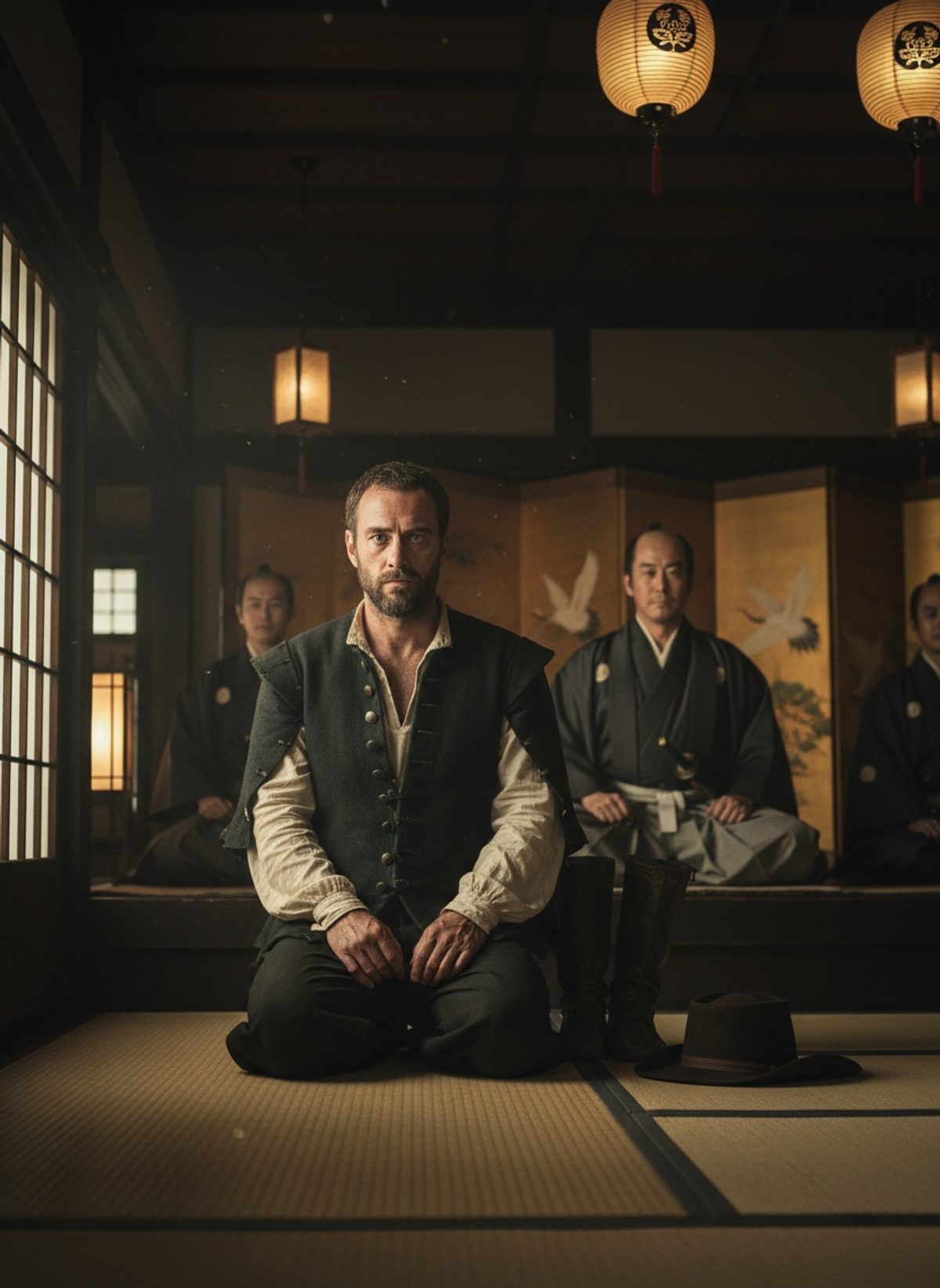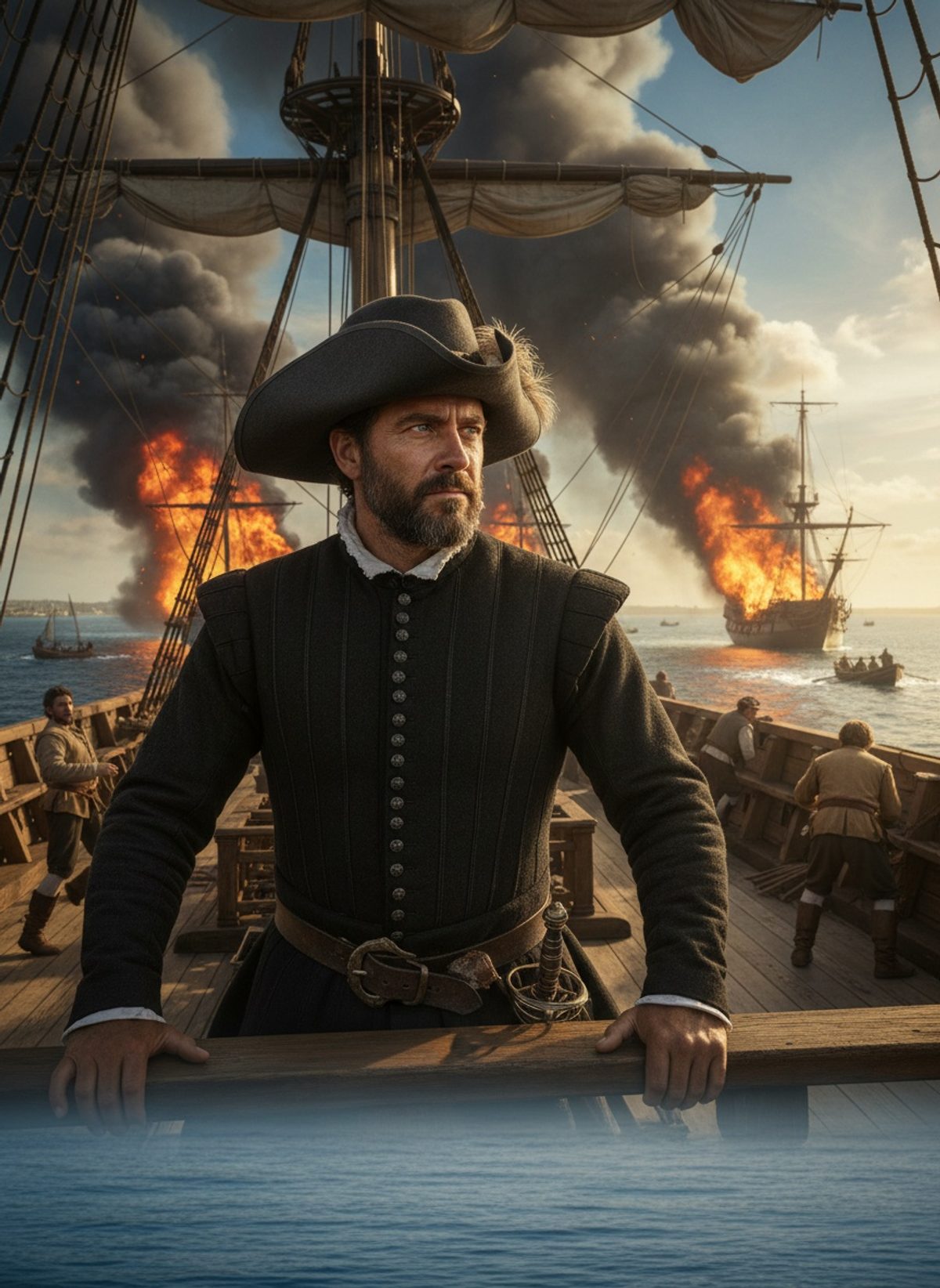
The Japanese coastline in April 1600 was a wild mosaic of craggy outcroppings and verdant hills dipping into azure waters. Cherry blossoms cascaded over the rugged terrain, barely tinged by the salt breeze, while the distant rumble of waves provided a ceaseless symphony. It was here, amid these formidable shores, that the battered remnants of a Dutch vessel washed ashore. Among those who staggered onto the strange, foreign beach was an English pilot, William Adams. The stakes of his arrival were high: Imperial tides were shifting, and in the audience chamber of the most powerful man in Japan, a defining moment for England's maritime future was about to unfold.
William Adams was no ordinary seafarer. Born in the humble Kentish town of Gillingham, he had charted courses through treacherous waters both in maps and in life. His journey aboard the Dutch ship, De Liefde, a vessel fraught with hardship and disease, had ultimately left him stranded on Japanese soil. Here was a man who had survived the mighty Pacific crossing at a time when European maps barely acknowledged the full expanse of these mysterious, far-eastern lands. His expertise, now laid at the doorstep of Japan's burgeoning Tokugawa shogunate, would soon illuminate pathways previously cloaked in obscurity for the English crown.
As Adams and his beleaguered shipmates made landfall, they found themselves swept into a landscape where ancient traditions mingled with whispers of Western incursion. Under Tokugawa Ieyasu, a powerful daimyo with an eye towards consolidation, Japan stood on the cusp of dramatic transformation. Ieyasu's ambitions reached far beyond the territorial disputes and clan rivalries that were the norm. Visionary that he was, he sensed opportunity in Adams's navigational knowledge and foreign perspective—an unexpected resource amidst the wreckage.
Summoned to Ieyasu's command post, Adams's introduction to the inner workings of a cultural and political world so different from his own took place against the backdrop of hushed voices and elaborate tatami-mat rooms. Ieyasu, a man whose every gesture was calculated and deliberate, did not immediately demand Adams's life as many Europeans might have feared upon encountering unknown lands. Instead, he sought knowledge. What unfolded was a dialogue colored with curiosity and caution—a conversation that spanned languages and worlds.
Read next: When William Adams Refused a King's Fortune to Go Home
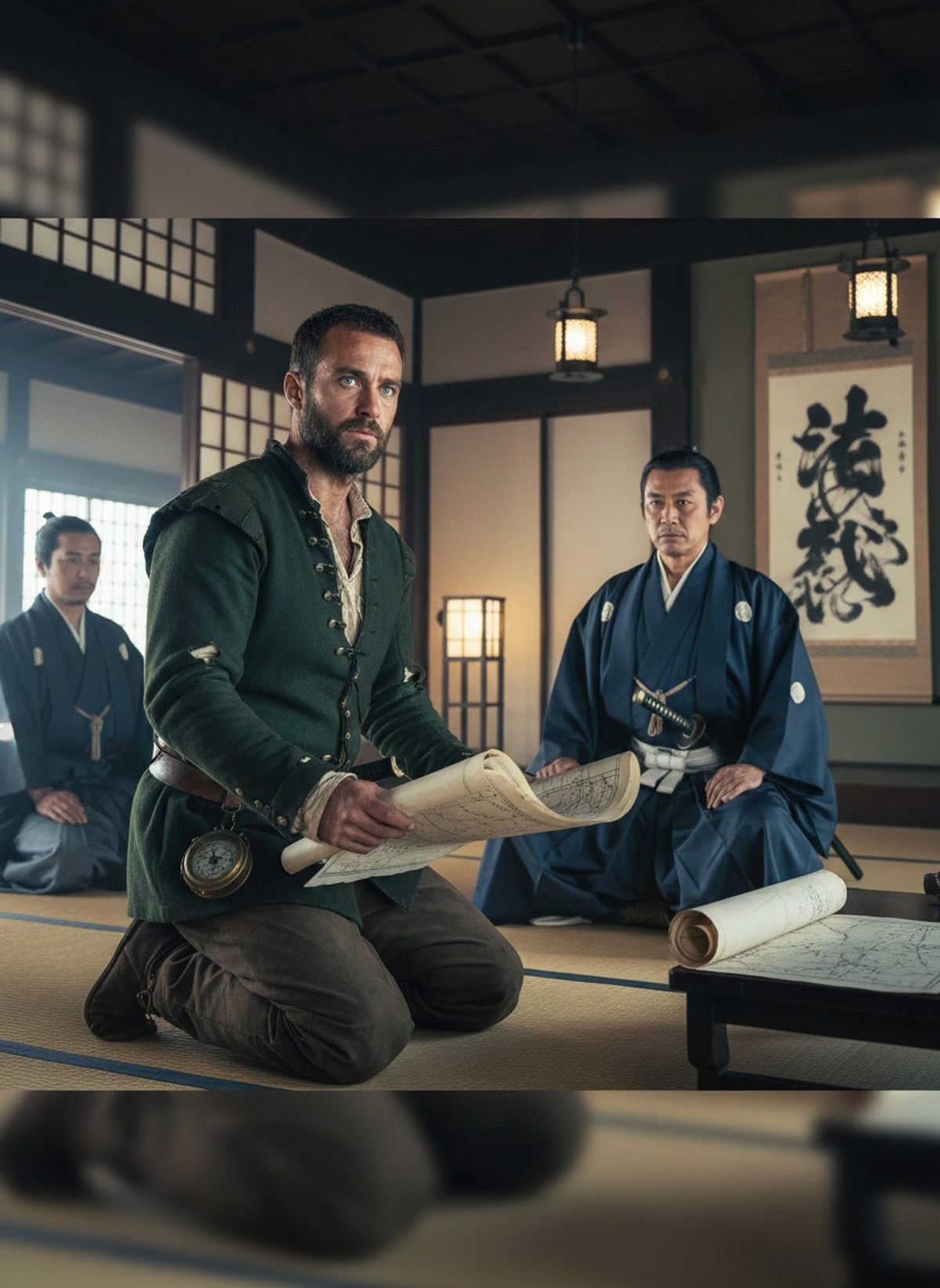
With meticulous adaptation and keen perception, Adams conveyed to Tokugawa a new vision of the globe. While the astrolabe and his understanding of astral navigation bridged his dialogue with the Japanese, it was the maps he could draw that profoundly intrigued Ieyasu. These maps were not just ink on parchment; they were keys to a continent, empowering both the navigator and his observers to reconceive their roles on the world stage. Adams, through his engineering acumen—once his profession in England—drew coastlines that promised routes of trade, cultural exchange, and potential dominance.
By candlelight, his hands glided over sheets of vellum. The compass, a simple yet sophisticated instrument of exploration, guided him in depicting coastlines, ports, and the undulating currents around Japan. These sketches, perhaps the first of their kind by a European, were not merely translations of the water's edge into scrolls of ephemeral strategy; they were strategic assets in the nascent geopolitical fabric of the 17th century.
The maps Adams created culminated in more than navigation. They heralded the beginning of England's Pacific ventures, laying down markers of influence that would later guide the East India Company to Japan's fortresses of potential. It was a subtle, yet profound shift—one that reflected in Ieyasu's eventual granting of trading privileges to the English. Western incursion, up till then carried by Portuguese galleons and Spanish fleets, now bore the distinctly English touch. With Adams, the balance of power in Japan's foreign relations began to tilt, if ever so slightly, towards the newly emerging empire of the British Isles.
Yet, Adams’s own journey was not solely one of diplomacy or cartography. It was an immersion into the ethos of a culture that accepted him into its folds. He learned the language, adopted Japanese customs, and became known as Miura Anjin. His unlikely trajectory, from seafaring pilot to envoy and advisor, was also a personal metamorphosis, revealing the permeability of identity at a time when European nationalism was calcifying.
In the following years, as Adams secured the favor of Ieyasu, the seeds of an enduring relationship between England and Japan took root. His life unfolded between two worlds, illustrating symbiosis rather than supremacy. Adams married into local society, establishing a continuity that outlasted his own lifetime. His narratives became the bedrock of further English expeditions, even as the world outside Japan seethed in the throes of imperial ambition.
Through the salt-stiffened sails of historical progression, Adams’s story reveals an often-overlooked facet of empire: the spaces where cross-cultural dialogues, rather than conquest, shaped the legacies of nations. His charts navigated far more than the Pacific breeze; they traced the contours of an emerging global awareness. In those charts lay the promise of empire unbounded, a necessary adaptation rather than a rigid expansion.
History books record the rise and fall of empires through wars and treaties, but narratives like Adams's invite reflection on the subtle exchanges that truly define a civilization’s footprint. His journey serves as a poignant testament to the transformative power of human connection—mapping a world that, once vast and unknowable, gradually became traversed and linked by those brave enough to bridge unfamiliar shores.