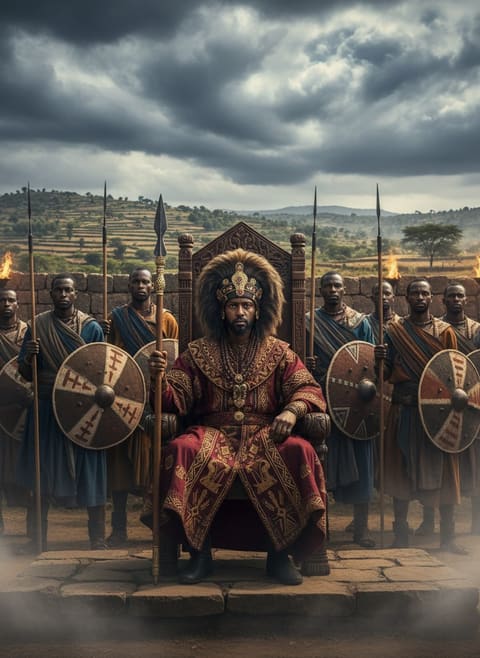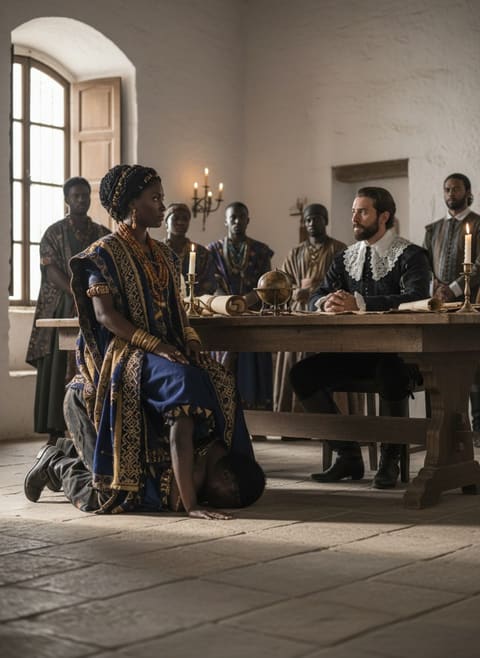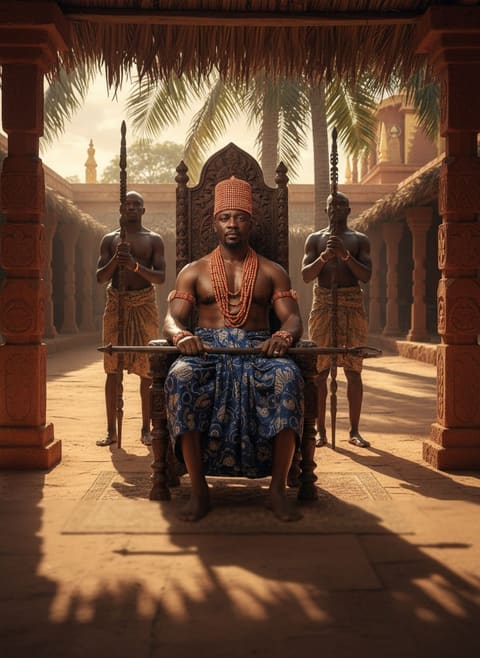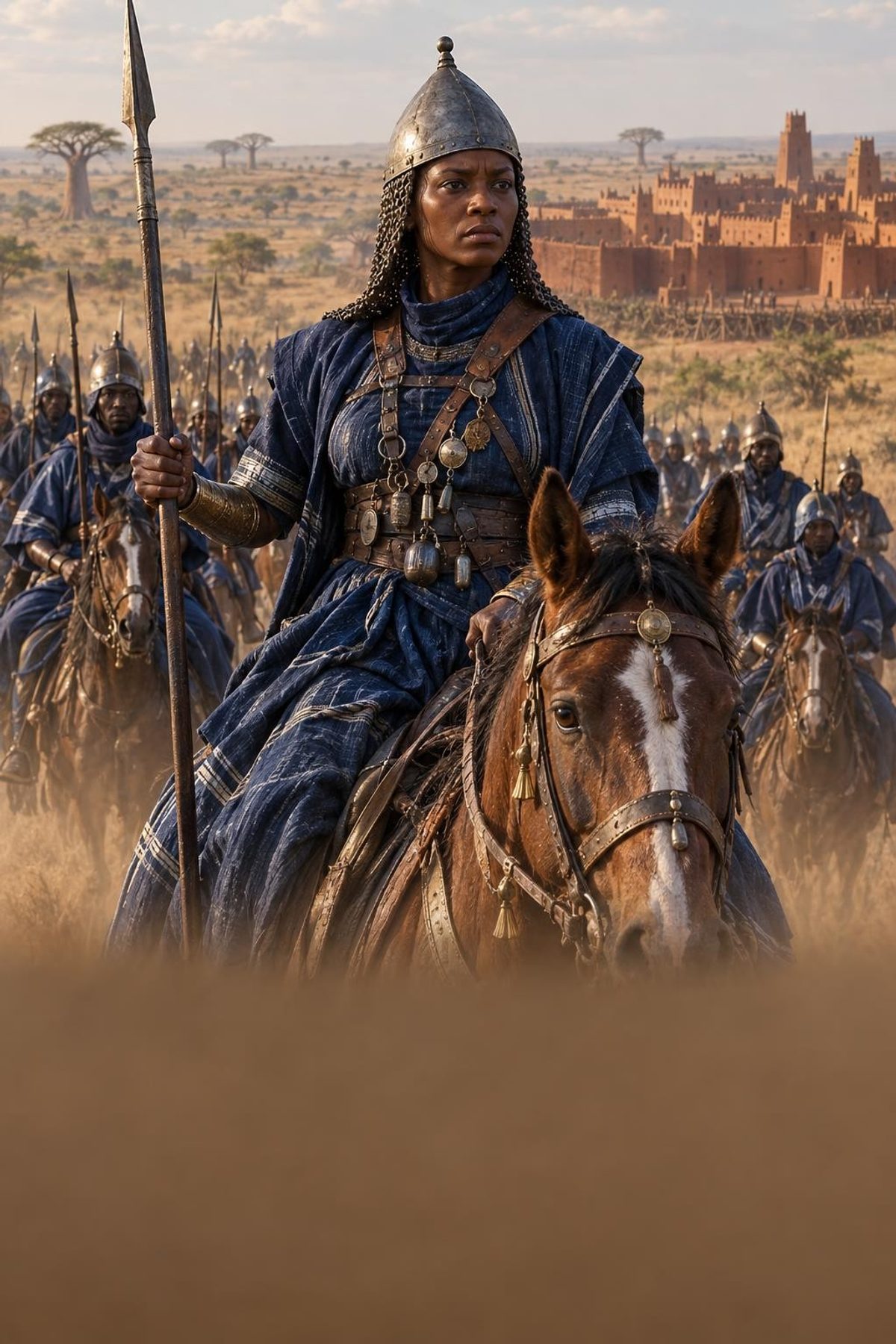
She was thirty-eight years old. Her spear had already seen more battles than most men are told stories of in their lifetime. This was the beginning of the reign of Amina of Zazzau, the warrior queen who would shape northern Nigeria with the force of her will and the edge of her sword.
The Unexpected Queen
In 1576, the gates of Zazzau—known today as Zaria—swung open not for a noble prince but for a woman trained in the rigors of warfare. Amina of Zazzau, known for her intrepid spirit and martial prowess, took the throne of the Hausa city-state at a time when few could have imagined a woman in such a position of power. Her ascension was seen as an anomaly, but her reign would soon become legend.
From an early age, Amina had honed her skills in combat, standing out as a formidable presence on the battlefield. She was part of the royal family, and her early education emphasized the tactics and strategies that would later define her rule. Upon her brother Karama’s death, she took up the mantle of her ancestors, prepared to lead not just as a ruler but as one of Africa’s most daring military strategists.
Amina quickly shattered preconceived notions of governance. Her early years on the throne saw her solidify her power at home before setting her sights on expansion. The ethos of her rule could be summed up in one word: conquest. The lands around Zazzau would soon bear witness to a type of governance not seen before.
Read next: Sundiata Keita Rose From Paralysis to Found the Mali Empire
An Empire of Stone and Sand
Amina’s campaigns were unprecedented in their reach. She led her cavalry south and east, cutting through the Sahel like a hot knife through butter. The cities she conquered—from Bauchi to Kano—were numerous, and each conquest brought Amina more tribute, her coffers swelling with silk and slaves presented as tokens of submission.
But Amina did not just conquer. Her true architectural legacy remains one for the ages; in every city she claimed, she built walls—ganuwar Amina—constructions of stone and earth that still bear her name. These fortifications served as bulwarks that protected her newly acquired lands, and some of them remarkably endure even today.
The ganuwa, or walls, were not mere military fortifications. They symbolized a new era where stability was enforced through strength. The walls stood as a testament to the control Amina held over her realm, each brick a story of both defiance and domination.
No King But a Queen
As Amina’s armies marched on, her fame spread throughout the region. She was offered marriage proposals from the rulers she defeated, who hoped that by joining forces they might share in her power. But any hope of adding Amina to a patriarchal narrative was swiftly dashed. She accepted their gifts but refused every hand in marriage. She understood that to marry would mean to relinquish control—a compromise she could not afford.
This decision marked Amina not only as a powerful leader but as a figure of personal autonomy during a time when such agency for a woman was radically unconventional. The queen married the land instead of any man, her heart belonging solely to her dream of an empire.
Read next: Yusuf ibn Tashfin Crossed the Sahara to Save Muslim Spain
The Legacy of a Warrior
The chronicles of Queen Amina cover a reign that lasted 34 years, a span where she redefined what a leader could be in more ways than one. Her mastery over both cavalry and politics allowed her to carve out an empire and an enduring legacy, one in which the echoes of her campaigns can still be traced in the cultural memory of Nigeria.
Her life and rule challenge modern perspectives about gender in leadership roles. It serves as a stark reminder of the possibilities that arise when skill, strategy, and boldness collide, regardless of societal expectations regarding who should wield power.
The tale of Amina of Zazzau is an evocative chapter in history that forces a reevaluation of our understanding of leadership in history, especially in the role women played—hidden in stories far older than the textbooks dare to reveal.
Whether seen through the lens of her military might or her architectural foresight, Amina’s story teaches us that the tallest walls are built not only with stone but with the determination of those who dare to dream beyond the limits of their time.