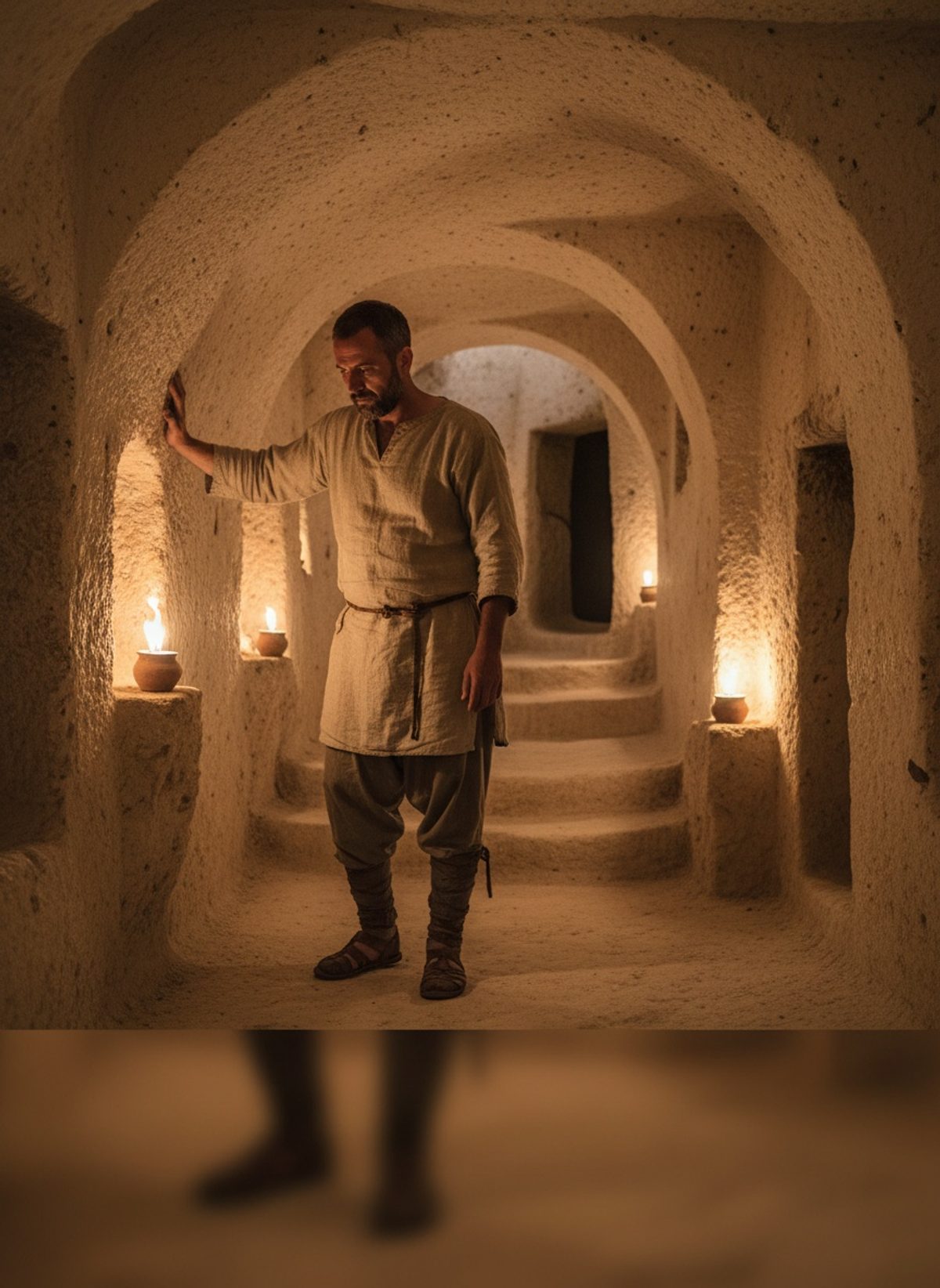
The shadowy embrace of the subterranean labyrinth enveloped him as he ducked through a stony archway, torchlight flickering on walls carved by ancient hands. In the dim passageways below the plains of Cappadocia, history whispered secrets echoing through millennia.
Here, beneath layers of volcanic tuff, lay the ancient underground city of Derinkuyu — a marvel of human ingenuity forgotten by time until a serendipitous discovery in 1963. What began as a routine home renovation unveiled a vast network that once sheltered up to 20,000 people, hidden deep beneath the earth’s surface.
The Undercity Revealed
To appreciate Derinkuyu’s subterranean wonder is to embark on a journey back to a time when Anatolia was a crossroads of empires and cultures. The landscape of Cappadocia, with its otherworldly rock formations, holds the key to understanding why such a city was created. The soft volcanic tuff, rich in texture yet yielding to even rudimentary tools, presented an ideal medium for carving sprawling underground complexes.
Derinkuyu’s first levels likely date back to the early centuries BCE. The ancient inhabitants, like those described in Xenophon’s *Anabasis*, found solace below ground, crafting dwellings large enough for families, livestock, and stores of grain. The first two floors of this ancient refuge were hewn into a living space that defies modern understanding, a testament to the ingenuity of its creators.
Read next: Poverty Point: A City Built in Louisiana 3,700 Years Ago
As the centuries flowed, the subterranean realm expanded prodigiously during the Byzantine era. The need for protection from external threats, such as the Umayyad and Abbasid invasions during the Arab–Byzantine wars (780-1180 CE), prompted further development. Eighteen floors deep, the city incorporated everything necessary for life under siege: stable stalls, communal halls, wine and oil presses, schools, and chapels. Every aspect of Derinkuyu’s architecture served dual purposes of habitation and defense, ensuring survival during troubled times.
The deep wells and intricate ventilation shafts tapped into underground reservoirs, sustaining thousands with fresh water. Ingeniously, the city was sealed off by one-ton stone doors active only from within, turning friend into fortress against any thrust from above. Each detail bore witness to a communal life shaped by a precarious existence — in a world where seclusion was safety, and stone became the shield.
A Hidden Sanctuary
During its peak, Derinkuyu was more than a refuge. It was a bustling, vibrant world beneath the world, a society thriving in seclusion. Families conducted their daily life in chambers quiet yet alive with echoes, worshipers gathered in subterranean chapels adorned with the crosses and iconography of the Byzantine church. In the cool, dark silence, wine and oil were pressed, grain was milled, and livestock ventured into stony stalls.
This underground haven was indispensable in the recurrent tides of conflict that swept through Anatolia. Following Timur’s destructive campaigns in the 14th century and the ensuing Ottoman conquest, the Greeks of Cappadocia continued to retreat to Derinkuyu’s depths.
Centuries later, in the early 20th century, the scent of history still lingered in its corridors. Cambridge linguist Richard MacGillivray Dawkins visited these chambers in 1910-1911. He recorded how the structures had served as *kataphygia* — sanctuaries against the persecution that rippled through the region.
The city endured as a bastion of security until the tumultuous events of the early 20th century altered its fate irrevocably. In 1923, the population exchange between Greece and Turkey forced Cappadocian Greeks, the city's last guardians, to leave. Abandoned to silence, Derinkuyu’s secrets slipped into the depths, waiting for their rediscovery.
The Rediscovery and Mystery
For decades, Derinkuyu lay forgotten beneath the pastoral landscapes of Cappadocia until, like an ancient myth, it resurfaced in an unexpected revelation. In 1963, as a local resident knocked down a mysterious wall during renovations, the wall crumbled to reveal an entryway — and beyond it, the honeycombed sanctum of a lost world. The modern discovery reignited interest in the city and prompted archaeological endeavors that began to map its vast expanse.
Read next: Skara Brae: A Stone Village Buried Under Sand for 4,500 Years
As scholars and adventurers descended into Derinkuyu’s depths, they unraveled layers built by successive generations, each seeking refuge and sustainability in different eras. But many questions remain: What propelled the original builders to envisage such an ambitious undertaking? How did they manage its construction, coordination, and the logistics of living underground to evade their foes?
The city invites contemplation and wonder, reminding us of humanity’s unparalleled adaptability and resourceful spirit. Today, Derinkuyu stands open to the public, its storied halls resonating with the whispers of past lives and vibrant cultures interwoven into the fabric of history. Tourists walk its ancient paths with the shadowy echoes of bygone inhabitants acting as silent guides.
Derinkuyu is more than a marvel of engineering; it is a portal to understanding profound resilience. As we traverse these forgotten corridors, we encounter the ingenuity that allowed ancient peoples to carve a living city beneath the ground.
In doing so, we gain greater insight into the legacy of human endurance, creativity, and adaptation — and the extent to which our ancestors went to protect their communities from the tumultuous forces that shaped their world. Such legacies are enduring chronicles of the courage and resourcefulness written not only into the stone but firmly into the human story.