Eratosthenes was both a librarian and a mathematician. His greatest achievement involved neither books nor numbers.
A Scholar Among Giants
Born in 276 BCE in Cyrene, now modern-day Libya, Eratosthenes stepped into a world ripe with philosophical and scientific thought. Cyrene, with its Greek origins and thriving culture, was a cradle for intellect. Eratosthenes rose from these humble beginnings to become a renowned polymath.
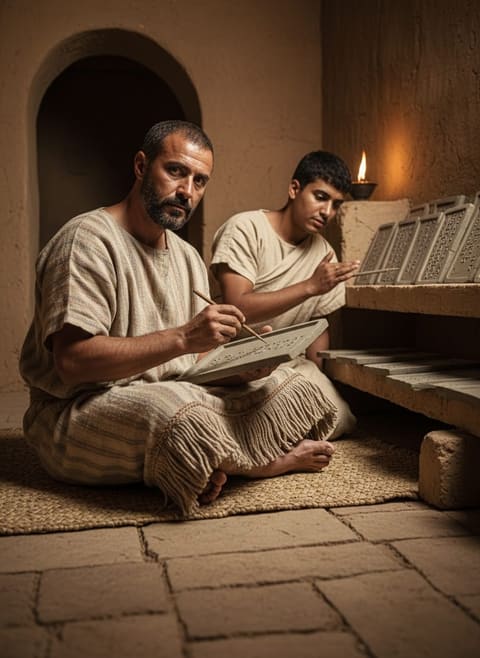
Educated in Athens, he was taught by notable figures like Zeno of Citium, founder of the Stoic school of philosophy. His education was diverse, touching on philosophy, mathematics, and astronomy, and it paved the way for his eventual appointment as the chief librarian of the Library of Alexandria.
At the Library of Alexandria, he mingled with the elite minds of his time, accessing the vast reservoirs of knowledge that the library held. It was here that Eratosthenes made strides in fields like geography and number theory, leading to innovations that would influence generations. They called him “Pentathlos,” praising his versatility across disciplines. Still, it's his bold venture into understanding the Earth’s geometry that remains the crowning jewel of his intellect.
Read next: Tim Berners-Lee Built the World Wide Web and Gave It Away Free
Two Cities, One Shadow
Picture the bustling streets of Alexandria on June 21, the summer solstice. The sun hung high in the sky, casting shadows as it moved. This day would offer more than warmth; it presented an opportunity for a groundbreaking experiment. Eratosthenes knew that on this day, in the city of Syene (modern Aswan), the sun cast no shadow. Sunrays landed directly into the deep wells, a phenomenon attributed to its position on the Tropic of Cancer.
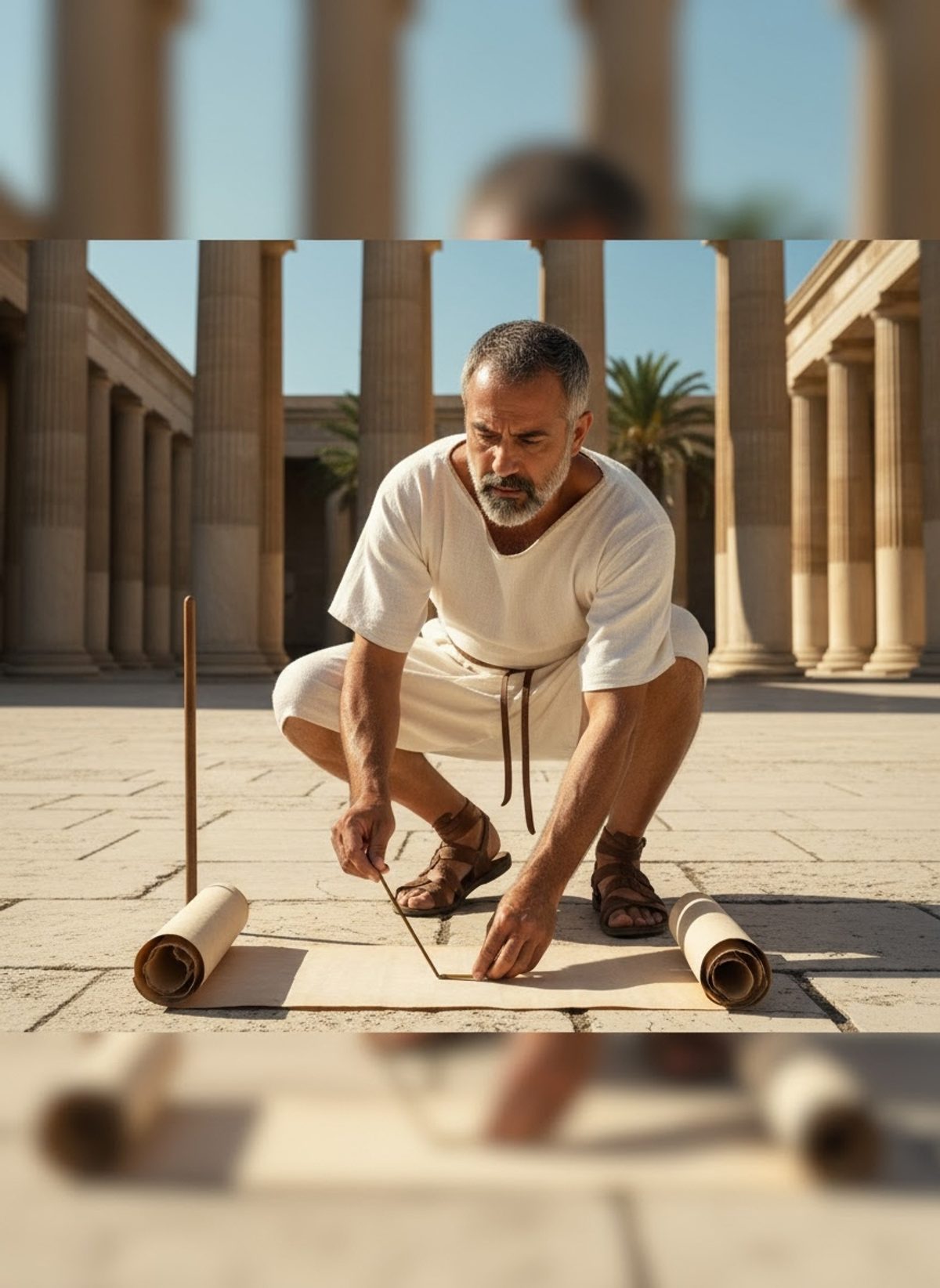
Eratosthenes imagined an elegant way to measure the Earth’s curve. In Alexandria, about 800 kilometers north of Syene, he placed a stick, or gnomon, upright in the ground. As the sun reached its zenith, he measured the shadow it cast. The angle was approximately 7.2 degrees. This seemingly simple observation would unlock the secrets of the Earth's dimensions.
The Geometry of the Globe
Eratosthenes’s genius lay not just in observation but in application. He knew the Earth was a sphere, an understanding rooted in Greek mathematical traditions. With the angle measured, he made a vital leap in hypothesis: if 7.2 degrees is the angle between Alexandria and Syene, then this angle represents 1/50th of a circle. Therefore, the distance between these two cities was 1/50th of the Earth’s total circumference.
The next crucial step involved calculating that distance. Eratosthenes used reports from camel caravans traveling regularly between the two cities. They estimated the journey at about 5,000 stadia. Multiplying this by 50, Eratosthenes arrived at 250,000 stadia for Earth’s circumference. The precise length of a stadion is debated by historians, but his calculation remarkably approximated modern measurements within 2 percent accuracy.
Read next: Beck Weathers Walked Into Camp After 15 Hours Frozen on Everest
Legacy of a Shadow
Why does this story linger in the halls of history? Eratosthenes’s calculation stood for centuries not just because he was correct but because he used simple tools and effective reasoning. His work merged observation with theoretical geometry and empirical data collection, showcasing the power of logical reasoning.
Few could have foreseen the ramifications. His work marked the birth of geography as a scientific discipline. Eratosthenes coined the term "geography" and drew the first map with longitude and latitude lines, laying foundations for navigation and exploration. However, his achievement resonates beyond geography. It exemplifies the triumph of human curiosity and intellect over the vast unknown.
Lessons in Shadows
Many think of ancient scholars as isolated within their philosophies, yet Eratosthenes dared to apply knowledge to understand the world itself. His work reminds us not to underestimate the power of observation and the courage to question what lies beyond the horizon.
Indeed, Eratosthenes did more than just measure the Earth’s size. He charted a path for scientific inquiry that transcends time. In every line of longitude, we trace his legacy; with every step across the Earth, we tread upon the echoes of his discovery. The story of a stick in the ground changing our perception of the planet is a testament to human ingenuity. It's a reminder that sometimes, the answers to our grandest questions lie in the simplest observations.