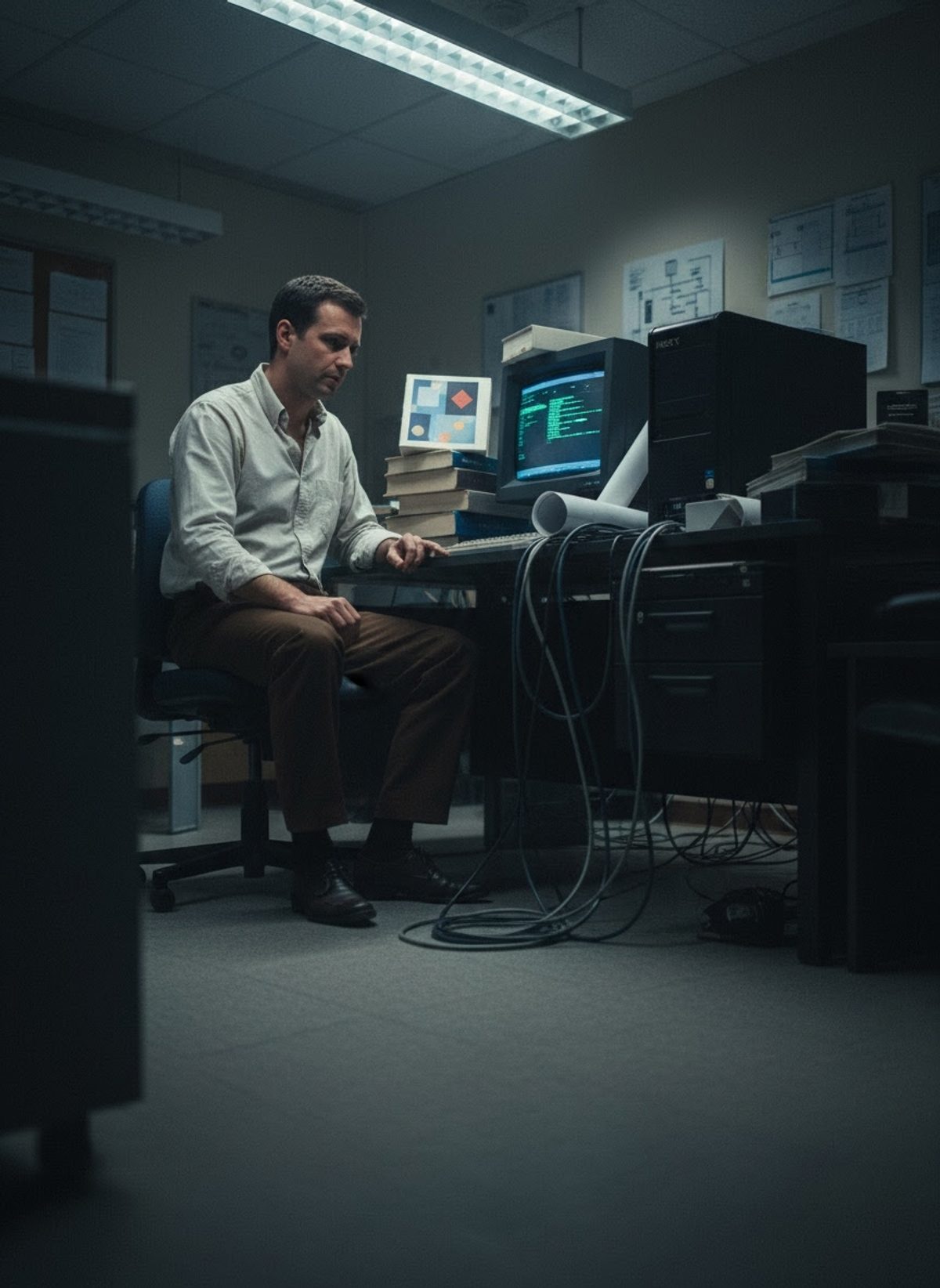
He hadn’t drawn attention to himself. Tall and softly spoken, Tim Berners-Lee did not fit the mold of a disruptive innovator. Yet, in a basement office at CERN in Geneva, he had quietly begun working on something that would change the world. More notably, once he completed what many would call the most valuable invention of the 20th century, he didn’t cash in. Instead, he just gave it away.
From Vague Proposal to a Digital Revolution
On March 12, 1989, Tim Berners-Lee submitted a proposal to his boss at CERN. At the time, CERN was a bustling hub of scientific exploration, but managing and sharing information was cumbersome. In response to this challenge, Tim drafted an ambitious but vague plan aimed at using hypertext to enable the efficient sharing and updating of information. His boss replied with a note that simply stated, "Vague, but exciting."
With the green light, albeit tentative, Tim began work on a prototype system, crafting a vision of interconnected documents accessed via a seamless digital network. The technology was not entirely new; hypertext had roots in previous iterations of computer technologies.
However, it was Tim's foresight to marry it with the burgeoning power of the Internet that was revolutionary. In 1990, alongside physicist Robert Cailliau, Tim realized the first effective communication between an HTTP client and server — a pivotal milestone in digital communication.
Read next: Akkadian Scribes Wrote the First Dictionary in 2300 BCE
By Christmas 1990, Tim had developed the foundational technologies of the World Wide Web: the first web page, browser, and server were all operational within CERN's walls. This digital trinity laid the groundwork for an interconnected future. Using an old NeXT Computer, Tim would craft the architecture of what would become a global phenomenon, a virtual universe populated with sites housing data, stories, cultures, and more.
But in 1993, the most extraordinary decision was made: rather than seeking patents or profit, Tim Berners-Lee made sure that the World Wide Web would remain open and free to all. This decisive move was rooted in his vision of an inclusive, interlinked world. Had he chosen differently, the tapestry of the Internet today could have been marred by walled gardens, monopolized by the few rather than shared by the many.
The Unfurling of an Open Web
The surrender of patent rights on April 30, 1993, stands as a testament to Tim’s altruistic intentions. This act was not just about technology but about shaping a new culture of openness. Motivated by an earnest belief in the Web’s potential to be a free space for collaboration and communication, Tim’s gift was a beacon for innovation without barriers.
The release of Open Source licenses allowed the World Wide Web's subsequent exponential growth. Engineers, students, and curious minds worldwide could now explore this technological marvel. It ushered in a new era: businesses leveraged it to transcend traditional commerce, educational institutions to democratize knowledge, and communities to forge cross-cultural connections.
Within a short span, from desktop dial-up to modern fiber optics, the World Wide Web became the pulsing heart of daily life. By 1995, the Web accounted for 0.4% of worldwide traffic; by 1999, it had transformed into a daily utility for millions. The likes of Amazon, Google, and Facebook, driven by accessible Web technologies, would stand upon the shoulders of this freely given infrastructure.
Yet, the open nature of the Web came with unintended concequences. Issues of privacy, misinformation, and cyber security have been pushed into the forefront of daily discussions. These new frontiers challenge the decentralized foundation of the Web, prompting ongoing debates about its governance and evolution. Nonetheless, Berners-Lee's unwavering dedication to an accessible platform remains an anchor for those who champion digital freedom and neutrality.
Read next: Jimmy Carter Swung a Hammer at 95 With 14 Stitches in His Face
A Future Beyond Profit
The track laid in 1989, guided by Tim Berners-Lee's principles, is still detectable in today’s digital landscape. During the opening ceremony of the 2012 London Olympics, Berners-Lee took center stage and sent a message across the vast digital realm: "This is for everyone." An apt reminder that the Web, in its entirety, belongs to people, not corporations or governments.
His ongoing work, including the establishment of the World Wide Web Consortium (W3C) and foundations supporting open data and transparency, reiterates his enduring commitment to an open digital sphere. Such efforts emphasize that the Web is a continuous work in progress, adapting to societal challenges and needs.
In an age where digital platforms wield enormous influence, the ideal of a democratic, accessible Web stands out. Tim Berners-Lee’s choice to forgo fortune in pursuit of freedom not only liberated a tool but inspired a mindset.
It begs the question — what kind of world do we want to build? Do we incite closed systems or cultivate environments of collective growth? Those insights from a CERN lab in 1989 crafted not just a digital network, but a call to action that resonates across generations.