Imagine holding the world's first dictionary. Now imagine it is made of clay. In Mesopotamia around 2300 BCE, Akkadian scribes were busy crafting lists not for decoration, but for comprehending two major languages — Sumerian and Akkadian. They etched these words into clay, creating a bilingual reference work, an innovation that transformed the ancient world even if it looks nothing like the volumes on our bookshelves today.
The Two Tongues of Mesopotamia
The city-states of ancient Mesopotamia were a tapestry of cultures and languages. By the mid-third millennium BCE, the region's dominant languages, Sumerian and Akkadian, were inextricably intertwined. Yet they were distinct: Sumerian, with its agglutinative structure, had little in common linguistically with Akkadian, a member of the Semitic language family. Interaction between speakers of these languages was an everyday reality, but so was the confusion that often accompanied it.
Akkadian, the earliest documented Semitic language, held sway over the lands of Akkad, Assyria, Babylonia, and beyond. The Akkadian Empire, stretching from c. 2334 to 2154 BCE, marked a significant epoch. Its scribes saw the practical need for a systematic approach to language, leading them to create tables of words with Sumerian on one side and Akkadian on the other. These tablets make up what can be considered the world's first dictionary, a true marvel of ancient linguistic ingenuity.
The Craft of Cuneiform
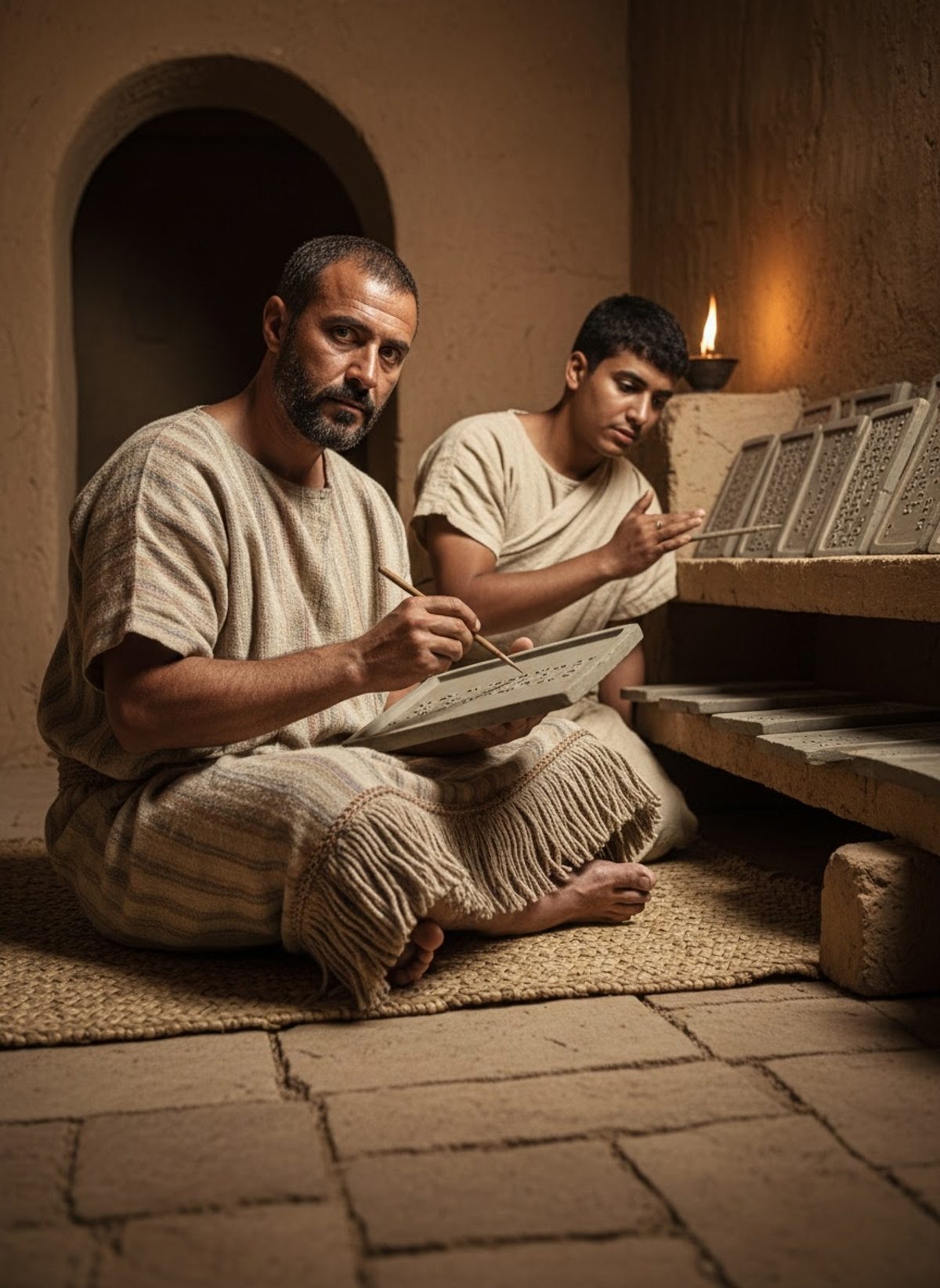
To the untrained eye, the tablets resembled a chaotic array of wedge-shaped marks. Yet, for scribes skilled in cuneiform, a writing system first developed for Sumerian and adopted for Akkadian, these patterns were full of meaning. The cuneiform script had developed from pictographs into a more abstracted form that was versatile enough to transcribe multiple languages in the ancient Near East, including Eblaite, Hurrian, and Hittite.
Read next: David Thompson Mapped 2 Million Square Miles of North America on Foot
The creation of a bilingual dictionary using cuneiform was no mean feat. Scribes worked meticulously, pressing reed styluses into wet clay to form each symbol with care. These tablets were more than mere lists; they were structured frameworks where words found their counterparts and contexts across two languages. Given the complexity and time-consuming nature of this task, the project was a testament to the intellectual dedication of these ancient scholars.
Beyond Mere Translation
This ancient dictionary was not just a translation tool; it was an embodiment of the cultural and scholarly exchanges between the Sumerians and Akkadians. As they crafted these tablets, scribes were mediating a linguistic dialogue that went beyond the mere substitution of words. They were opening doors to understanding differing concepts, practices, and customs embedded within each language.
The influence of Sumerian on Akkadian was substantial. It shaped Akkadian phonology, syntax, and vocabulary. This mutual influence, known in linguistic terms as a *sprachbund*, is evidence of the deep interconnectedness of these cultures. The creation of the dictionary was therefore not only practical but also symbolic of the synthesis of thought and language that defined ancient Mesopotamian civilization.
Read next: Earle Dickson Invented the Band-Aid in His Kitchen for One Hand
The Legacy of Clay Tablets
Hundreds of thousands of texts and text fragments from the Akkadian period have been uncovered, painting a vivid picture of life in ancient Mesopotamia. These writings cover everything from legal texts and mythological narratives to scientific treatises and economic reports. However, it is the bilingual tablets that offer a unique insight into the early development of systematic learning and multilingual communication.
By attempting to bridge the linguistic divide, Akkadian scribes laid the groundwork for what would become a tradition of lexicography spanning millennia. This effort to compile and compare languages paved the way for later endeavors and is a testament to the cognitive leaps of early civilizations. It shows us that even in ancient times, where the division between languages and people could be stark, there was a concerted effort to create understanding and continuity.
Today, language remains a vital bridge across cultures, and the need for dictionaries persists. These ancient tablets remind us of the power of language to connect and to widen perspectives. The scribes of Akkad may not have foreseen the far-reaching impact of their work, yet they set humanity on a path toward shared knowledge and greater understanding, a journey that continues to shape the contours of our modern world.