Sears was synonymous with American retail dominance in the early 20th century. Yet its president, Julius Rosenwald, did something far more impactful than selling more clothes. He dismantled one of America’s grimmest injustices, building 4,977 schools for Black children across the Jim Crow South.
The Unexpected Alliance
Rosenwald's path to philanthropy began far from the dirt roads and cotton fields of the southern states. Born in 1862 in Springfield, Illinois, just blocks from Abraham Lincoln’s residence, Rosenwald was immersed in a Jewish upbringing that valued "tzedakah," or charity, coupled with a fierce desire to repair the world.
By his teenage years, he was honing his skills in the clothing trade under the guidance of his uncles in New York City. However, a meeting with another visionary would lead Rosenwald from retail to reform.
In the early 1900s, Rosenwald, then leading Sears, met Booker T. Washington, a prominent Black educator born into slavery who became a leading force for Black education through his work at the Tuskegee Institute. Washington, whose philosophy advocated self-help and vocational training, found a kindred spirit in Rosenwald. Their partnership was rare for the era—a powerful Jewish businessman teaming up with a pioneering Black intellectual in an America still reeling from the Civil War and Reconstruction.
Read next: Beck Weathers Walked Into Camp After 15 Hours Frozen on Everest
This partnership aimed to solve a critical issue: the gross inadequacy of educational facilities for Black children in the rural South. The mission was daunting; funding alone was not enough to overcome the entrenched racial barriers. Both men knew that real change required community involvement.
Schools Built from the Ground Up
The initiative began with a modest approach. In 1912, Rosenwald funded the construction of six schools in rural Alabama, seeding what would grow into a revolution in education. The key was in the model they chose: Rosenwald contributed money, but with a caveat. Black communities and local governments would have to raise matching funds. The result was a staggering wave of communal collaboration.
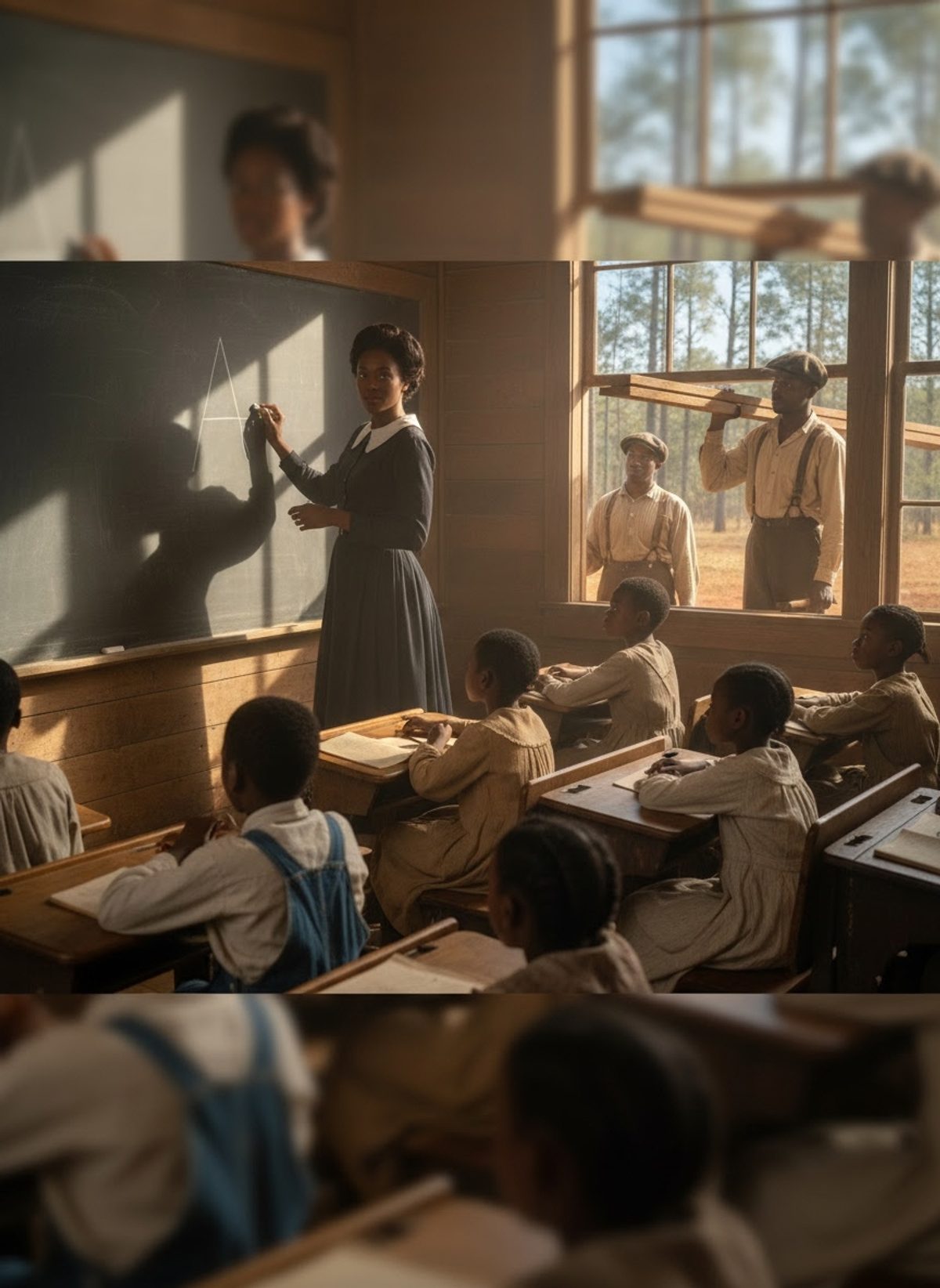
Communities of sharecroppers, washerwomen, and laborers pooled resources, often pledging cotton or coins earned through months of labor. This wasn’t just about building schools—it was about empowering communities. The schools, many modest one-room structures, became the heart of these communities, offering hope and future prosperity to families who had known only profound inequality.
In 19 years, 4,977 such schools were constructed across 15 states. They were equipped with bright windows and sturdy desks, a hopeful contrast to the bleak surroundings. Rosenwald knew the stories these walls would tell—stories of resilience, learning, and dreams in defiance of a system determined to enforce ignorance.
Voices at Their Desks
Within these walls sat future luminaries and drivers of societal change. John Lewis, a key figure in the U.S. Civil Rights Movement, and Maya Angelou, the lauded poet and writer, both found early inspiration in Rosenwald Schools. For many, these schools were the first and only touchpoints to education, offering a sliver of equality in a system steeped in segregation.
Read next: Akkadian Scribes Wrote the First Dictionary in 2300 BCE
The long days spent under the tin roofs, the backdrop of clinking chalk, and the presence of devoted teachers created spaces where talent could thrive unhindered by racial prejudice. The Rosenwald initiative educated over 660,000 students, a critical step toward dismantling longstanding barriers.
Yet, the schools themselves faced considerable challenges. Despite their success, they were continually threatened by the oppressive Jim Crow laws and the colossal indifference of local authorities. Often these schools were underfunded by local governments, which was a foregone conclusion of the matching funds stipulation. Still, those schoolhouses stood as beacons inviting all to challenge and upend the status quo.
A Lasting Legacy
Rosenwald’s work did not end at schools. He supported fellowships for Black artists, musicians, and scholars, providing close to one thousand grants to foster Black achievement. Yet, it is his schools that resound most vividly in today’s historical consciousness—a testament to what focused philanthropy and collective action can accomplish even in the harshest of environments.
This historic experiment is more than just a chapter in the annals of early 20th-century philanthropy; it is an enduring lesson on mutual respect, equity, and the pursuit of education as a form of empowerment. At a time when dialogues about equality and education prevail, the Rosenwald Schools remind us that systemic change begins with challenging existing structures and replacing them with communities built on pillars of hope and resistance.