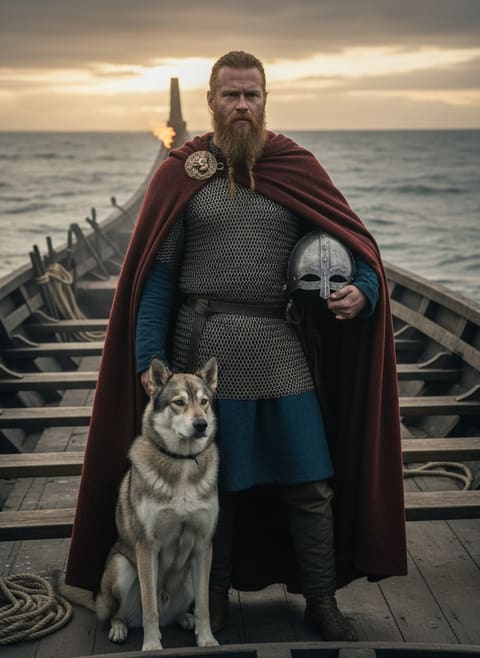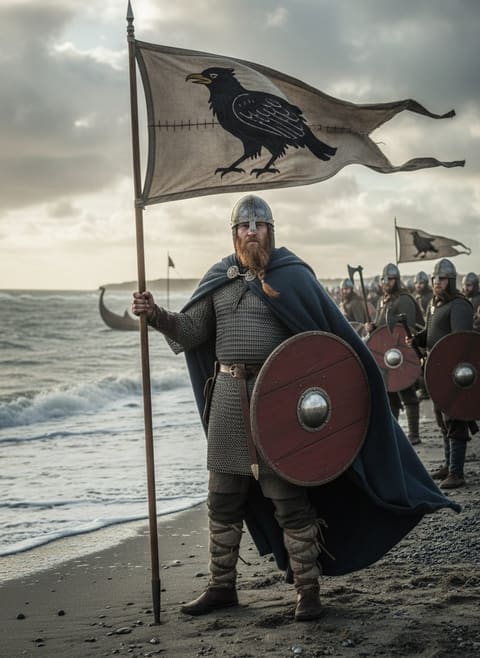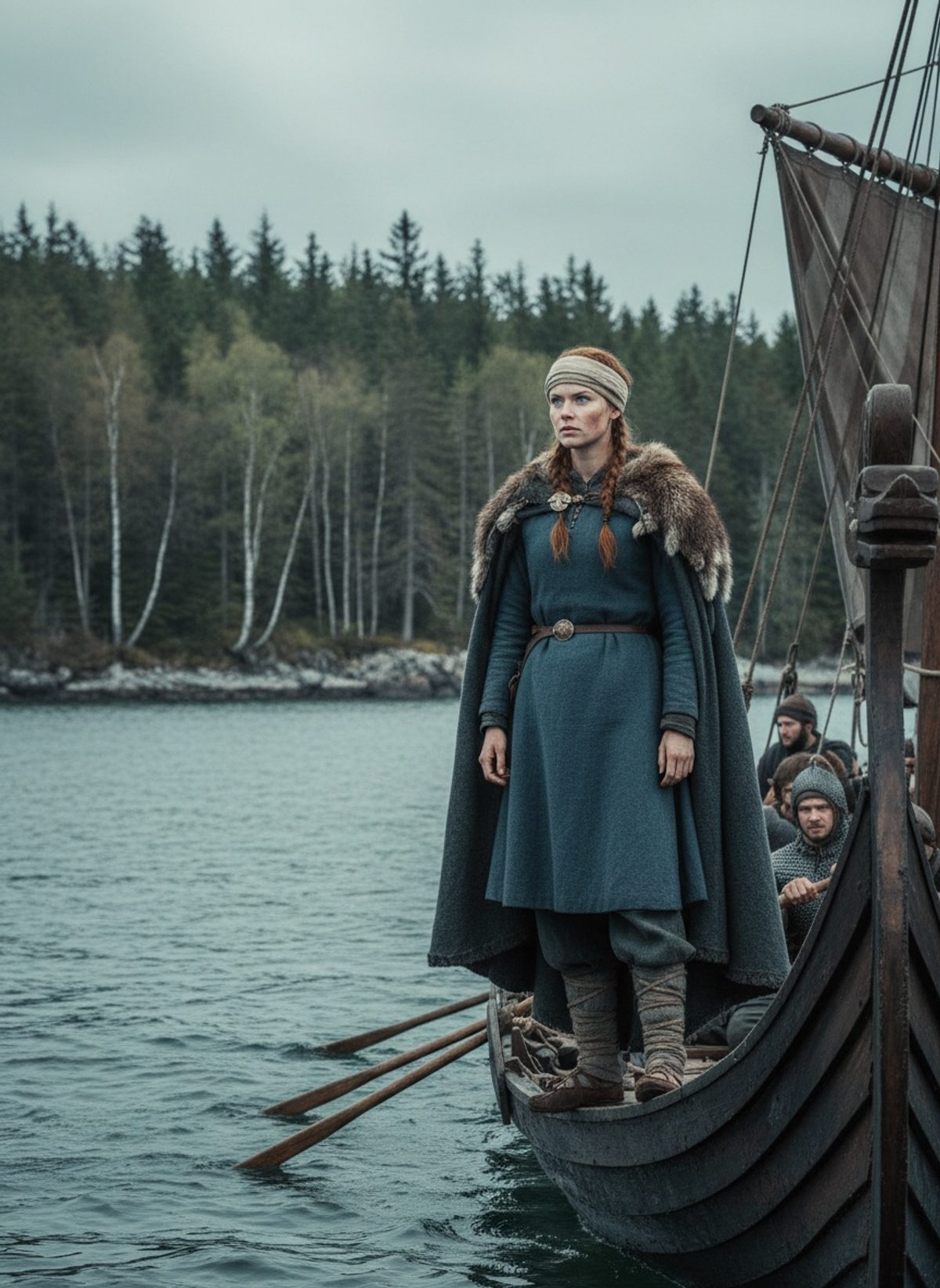
Spring, 1000 AD. The sun shimmered off the icy waters as Gudrid Thorbjarnardóttir scanned the horizon, her heart racing with the promise of discovery.
A Viking Voyage to New Worlds
Born in Iceland around the year 980, Gudrid Thorbjarnardóttir was no ordinary woman of the Viking Age. Raised in a world where the sea was both path and peril, she embarked on extraordinary journeys that led her across the North Atlantic. Her story is interwoven with the legendary Saga of Erik the Red and the Saga of the Greenlanders, which describe her as both daring and devout.
Her odyssey began when she and her father, Thorbjorn, sought new beginnings in Greenland, joining the famed Erik the Red. Despite the challenges of poor weather and devastating illnesses, they persevered, arriving in Greenland during the harsh, unyielding winter. Unlike tales of Viking warriors, Gudrid's saga unfolds through resilience and exploration.
While in Greenland, Gudrid's life took another turn. She would marry Thorstein Eiriksson, further intertwining her fate with the saga of Erik's descendants. Thorstein's mission was to retrieve his brother Thorvald's body from Vinland, the mysterious land in the west. Gudrid accompanied him on this ill-fated voyage, initially bound for new nordic settlements but finding only death and disease as Thorstein succumbed.
Read next: Olaf Haraldsson Baptised His Kingdom With an Iron Fist
Vinland and the First European Birth in the Americas
In the wake of Thorstein's death, Gudrid found herself once again seeking a future on uncertain seas. Her new husband, Thorfinn Karlsefni, would lead her to the mythical Vinland. Together, they spearheaded an expedition brimming with hope, setting sail for the land of abundant woodlands and rolling pastures that Leif Erikson had discovered before them.
On the shores of Vinland, Gudrid gave birth to a son, Snorri Thorfinnsson, marking the first recorded birth of a European child in North America. This remote land, far from the familiar fjords of Iceland or Greenland, became the cradle of new life. Though their stay lasted only a few years due to tensions with the native Skrælings—believed to be the Indigenous people—Gudrid's status as a mother of the New World cemented her legacy in sagas to come.
The lush, unfamiliar landscapes of Vinland provided both bounty and peril. The Norse settlers found themselves in constant negotiation with nature and human counterparts. Gudrid, with her deep spiritual conviction, carried the songs she learned from her Icelandic foster-mother into this brave new world, blending survival with spirituality.
From Vinland to the Heart of Europe
The Norse soon abandoned Vinland due to frequent hostilities and the daunting reality of a frontier that felt insurmountable at the time. True to her wanderlust and intrepid spirit, Gudrid returned to Greenland and then onto Iceland, each voyage etching her name among the most travelled of the Vikings.
After resettling in Iceland, Gudrid fulfilled a prophecy once delivered by her deceased husband, Thorstein, who foretold her future journeys. Many years later, she embarked on a pilgrimage to Rome. By foot, she traversed the vastness of Europe—a testament to her unyielding faith and the Norse spirit of exploration.
Read next: Thorvald Died There. His Crew Buried Him Anyway.
In Rome, she experienced the heart of Christendom, soaking in its grandeur and religious fervor. This journey was not simply an act of faith but a bridge between her pagan past and her Christian present, an embodiment of the cultural shifts of her time. Although we know little about her experiences there, her return voyage to Iceland ensured that a church would eventually rise near her farm.
The Legacy of Gudrid the Far-Travelled
Gudrid Thorbjarnardóttir was more than a woman of extraordinary journeys. She stood as a testament to the intersection of cultures, faiths, and continents during the Viking Age.
Known in Icelandic lore as *víðförla*, or the "far-travelled," Gudrid’s expeditions form a narrative tapestry of adventure and resilience. Her life highlights a less-explored aspect of Viking exploration—the critical role of women in these ventures and the profound cultural exchanges born from them. Gudrid's journeys remind us that history is not only shaped by warriors and kings but also by intrepid explorers like her, whose stories whisper from the edges of the known world.
As each tide carried Gudrid further from her beginnings, she bridged worlds, leaving behind not just tales of Nordic voyages but a legacy of curiosity and courage. In a society where her name faded amidst the myths and legends of her male counterparts, Gudrid remains a vivid icon of discovery, embodying an adventurous spirit echoing across the centuries, inviting us to rethink the narratives of exploration.