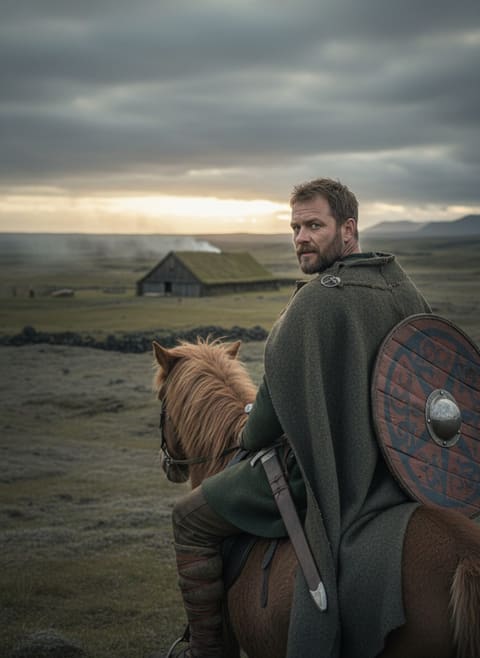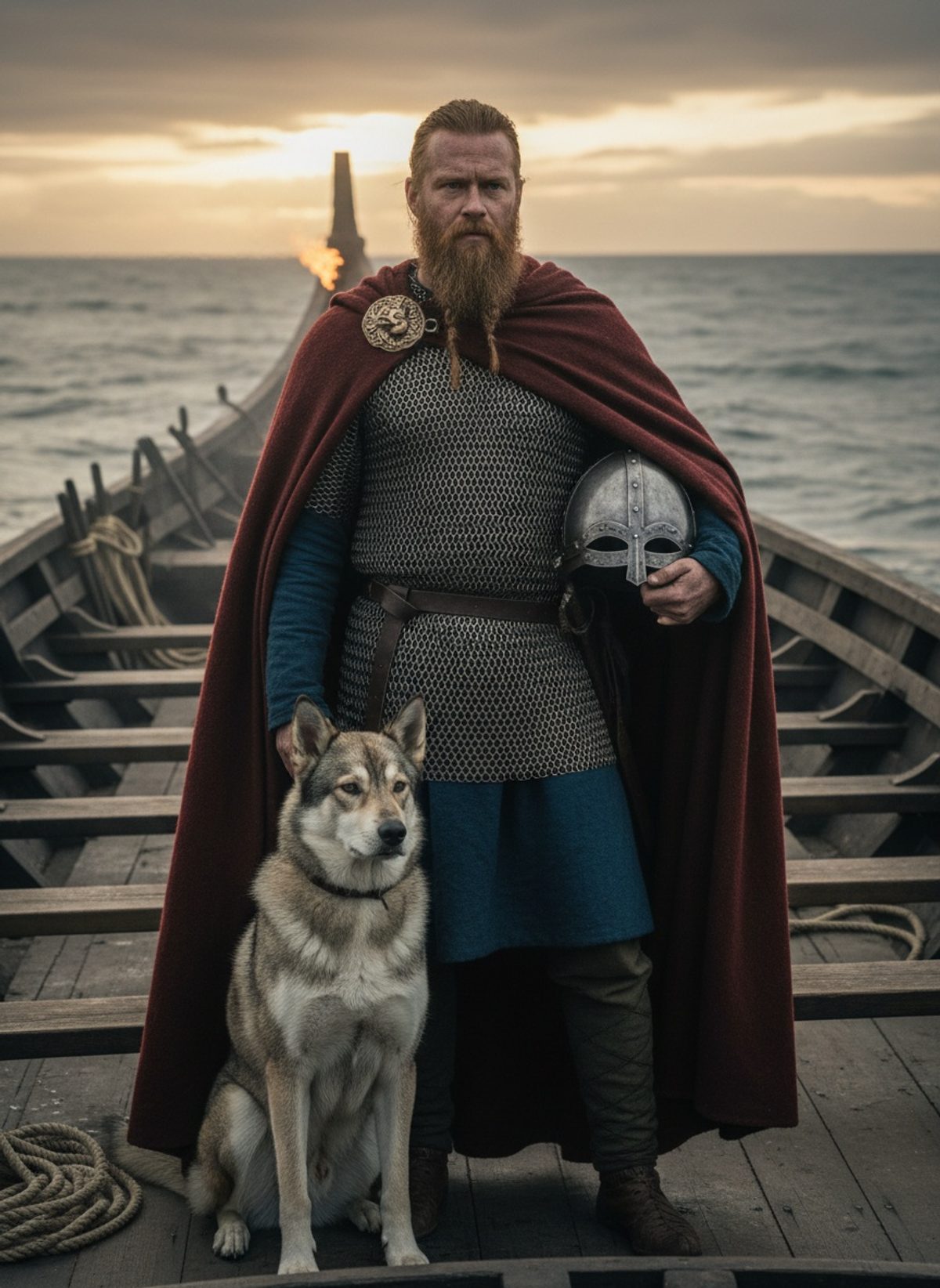
The sea air was thick with salt and tension as Olaf Tryggvason's longship knifed through the rough Scandinavian waters. Beside the towering and formidable king, a shadow moved with uncanny grace—a hound of considerable size and fierce demeanor whose sharp eyes never left the horizon. The dog's name was Vigi, a guardian more loyal than any berserker and more attentive than any scout.
The Unlikely Guardian
In the volatile world of Viking rulers, where axes clashed as often as political alliances shifted, King Olaf Tryggvason was a man accustomed to danger. Renowned not only for his martial prowess but also his strategic acumen, he retained trust sparingly. Among his retinue, however, was one protector far removed from the human politicking—a dog named Vigi.
It is remarkable to find a canine mentioned in the historically rich Norse sagas, yet Vigi's loyalty and vigilance earned him a place beside a legendary king. In a land where myths swirled more freely than truth, this dog’s namesake survived centuries of storytelling, chronicled by Snorri Sturluson and other saga writers, who saw fit to preserve Vigi’s loyalty in the annals of history. While warriors swore oaths before kings, Vigi's bond required no words, purely the ironclad allegiance of a dog to his master.
A King's Complicated Realm
The late 10th century was a turbulent era in the Scandinavian peninsula. As king of Norway, Olaf Tryggvason faced innumerable threats from rival chieftains and ambitious nobles, each eager for power and prepared to depose or even assassinate the ruler to advance their own ends. As such, Olaf relied heavily on a network of trusted warriors and, unusually, on the acute senses of Vigi.
Read next: Gunnar Refused the Ship. He Chose the Hill Instead.
Vigi was said to be ever watchful, a staunch sentinel when the king took camp or sailed to distant shores. These journeys were not simple social calls but were treacherous endeavors through waters fraught with enemies and uncertain alliances. In those precarious moments, the tangible presence of Vigi offered Olaf a measure of security beyond swords and shields. Indeed, the dog's growl was said to have foreshadowed betrayal more than once, alerting Olaf to dangers that no human could perceive so quickly.
The Bonds of Loyalty
Though the life of a Viking king was dictated by intrigue and conflict, the kinship between Olaf and Vigi transcended the ordinary bonds of master and dog. Tales tell of Vigi standing guard not only during the king’s waking hours but also through the dark hours of the night. Even in moments of apparent peace, where Olaf’s other warriors relaxed, Vigi remained poised, his eyes surveys constantly, his ears pricked to the slightest hint of sound.
This loyalty, however, was not merely one-sided. King Olaf was known to be fond of his canine companion, reputedly rewarding Vigi with the same consideration given to his human followers. In a culture that revered strength and loyalty, Vigi’s fierce yet devoted presence may have served as both a symbol and a living testament to the values Olaf considered closest to his kingship.
The Memory of Vigi in Saga
The Norse sagas, predominantly oral histories shared around the glow of open fires, are fraught with embellishment and mythologizing of events. That a dog would be remembered alongside some of the region’s most formidable figures is a testament to Vigi’s impact and likely a reflection of the respect he commanded among those who walked with Olaf. Within these tales, Vigi symbolizes the unwavering loyalty that is almost mythical in human storytelling—a narrative thread that still resonates with readers centuries later.
Read next: Óláfr Haraldsson Faced the Skald. He Spared Him.
The survival of Vigi’s name through time is an anomaly in the often mutable Norse tradition, suggesting that the saga writers understood the intrinsic bond between man and animal to be as compelling a story as the blood-feuds and battle-songs so prevalent in their narratives. This was perhaps a recognition of the simpler, primal connections that define all living beings, beyond the shifting sands of human allegiances.
Echoes of Vigi's Vigilance
In the twilight of the Viking Age, as the forces of Christianity and centralized kingdoms reshaped Europe, the story of Vigi serves as a poignant reminder. It is a testament not only to the sagas’ ability to capture the essence of an era but also to how history is woven with threads both monumental and minute. The tale of Vigi reminds us that among the exploits of warriors and kings, the steadfast loyalty of a dog can shine with enduring clarity. It challenges our appreciation of history to recognize the contributions of those often overlooked, whether they stand on two legs or four.
A dog’s unwavering duty, recorded and cherished through centuries, suggests that sometimes the most unassuming figures in history can offer the greatest insights into what it means to be truly devoted. As we look back across the centuries, Vigi's story endures, a silent witness to the deep bonds that transcend time, rising above the din of conquest and conflict to whisper of an unwavering guardianship that even a king could depend upon.