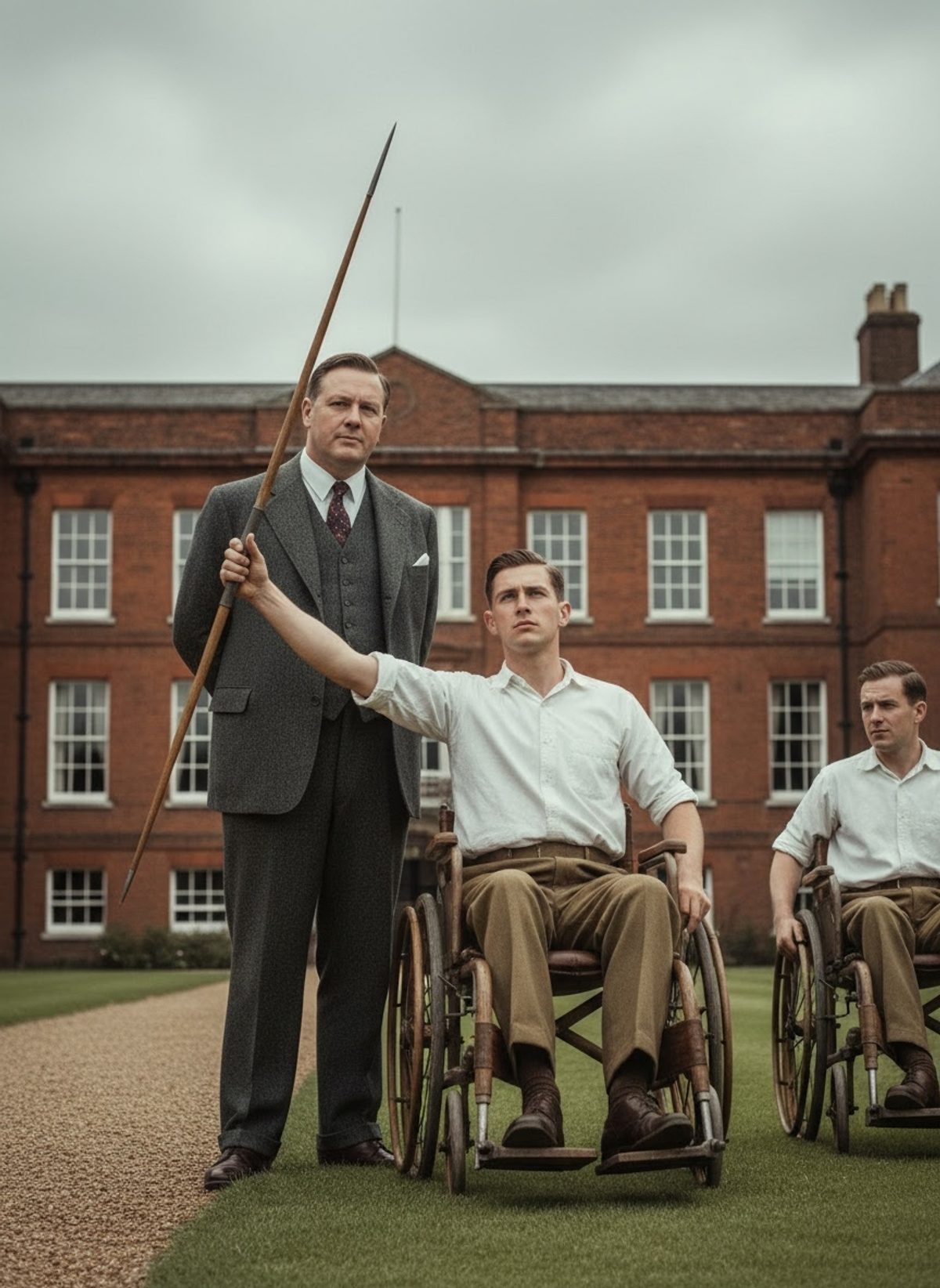
He was a physician, trained to heal with delicate surgeries and expert hands. Yet, Sir Ludwig Guttmann is perhaps best remembered for handing spinal injury patients javelins and telling them to throw. In doing so, he began a movement that transformed lives and perceptions worldwide.
From Breslau Refugee to Oxford Scholar
Born in the town of Tost, Upper Silesia, in 1899, Ludwig Guttmann was a promising student of medicine, whose early career saw both triumph and tragedy. At 18, while volunteering at a hospital in his hometown of Königshütte, he encountered a paraplegic coal miner — a moment that deeply affected his understanding of spinal injuries and their grim consequences.
By 1933, he was a renowned neurosurgeon working in Breslau, but the rise of the Nazis and the sinister Nuremberg Laws stripped him of his professional roles due to his Jewish heritage. He became the medical director at the Breslau Jewish Hospital.
Amidst the brutality of Kristallnacht in November 1938, Guttmann displayed extraordinary courage by sheltering Jewish patients at his hospital. His decision saved 60 out of 64 individuals slated for deportation, risking his safety to protect his community. By early 1939, the growing threats pushed Guttmann and his family to escape to England, a move facilitated by his work for the Portuguese dictator, Salazar, and the assistance of the Council for Assisting Refugee Academics.
Read next: Julius Rosenwald Built 4,977 Black Schools Across the Jim Crow South
The Innovative Ward at Stoke Mandeville
In 1944, Guttmann was appointed to head the National Spinal Injuries Centre at Stoke Mandeville Hospital, near Aylesbury. Walking into a ward of soldiers who were left to languish, Guttmann found men resigned to die in despair. At the time, such injuries were often considered a death sentence, with a lifespan of mere months post-injury.
Guttmann, however, brought a new philosophy. Determined to rehabilitate through sport, he began by placing patients in wheelchairs and involving them in physical activities. Rather than passive care, he promoted rigorous exercise, organized competitions, and introduced archery and javelin. These were sports that demanded focus and skill but could be adapted to their abilities. The walls of Stoke Mandeville vibrated with a new energy.
Starting a Movement
By 1948, Guttmann's sporting experiment had blossomed into something extraordinary. On July 28, the same day as the opening of the London Olympics, Guttmann organized the first Stoke Mandeville Games. Sixteen injured veterans gathered to compete on a grassy lawn — a humble beginning for what would later become the prestigious Paralympic Games.
The event did more than lift spirits; it showcased the athletes' courage, resilience, and latent potential. Guttmann was redefining what it meant to live with a disability, turning perceived limitations into triumphs. The local press captured the event, spreading news of this groundbreaking venture to all corners of the globe.
Read next: Tim Berners-Lee Built the World Wide Web and Gave It Away Free
Beyond Physical Rehabilitation
The true genius of Guttmann's initiative was not just the physical gains but the psychological and social rehabilitation it fostered. “You are not doomed,” was his message that resonated within the hospital walls. Veterans who once believed their lives were over discovered a newfound confidence and community through sport.
Sports became therapy, and therapy became empowerment. Patients developed a camaraderie that extended beyond competition. They weren’t just healing from war wounds; they were rebuilding their sense of self, challenging a world that pitied them into seeing them as equals.
The Lasting Legacy
Guttmann's vision altered the landscape of recovery and disability rights. His pioneering work at Stoke Mandeville didn’t just stop with sports; it influenced broader societal perceptions. In a post-war world grappling with notions of normalcy and ability, he demonstrated the profound impact of inclusion, setting the stage for the global Paralympic movement.
Today, the Paralympic Games stand as an enduring testament to human spirit and ingenuity, echoing Guttmann’s early belief that sport could empower and transform. His story invites us to imagine a world where limitations are pushed, and new possibilities emerge from the shadow of adversity. In a small British hospital ward, a German-Jewish neurosurgeon rewired not just sport, but the human spirit itself.