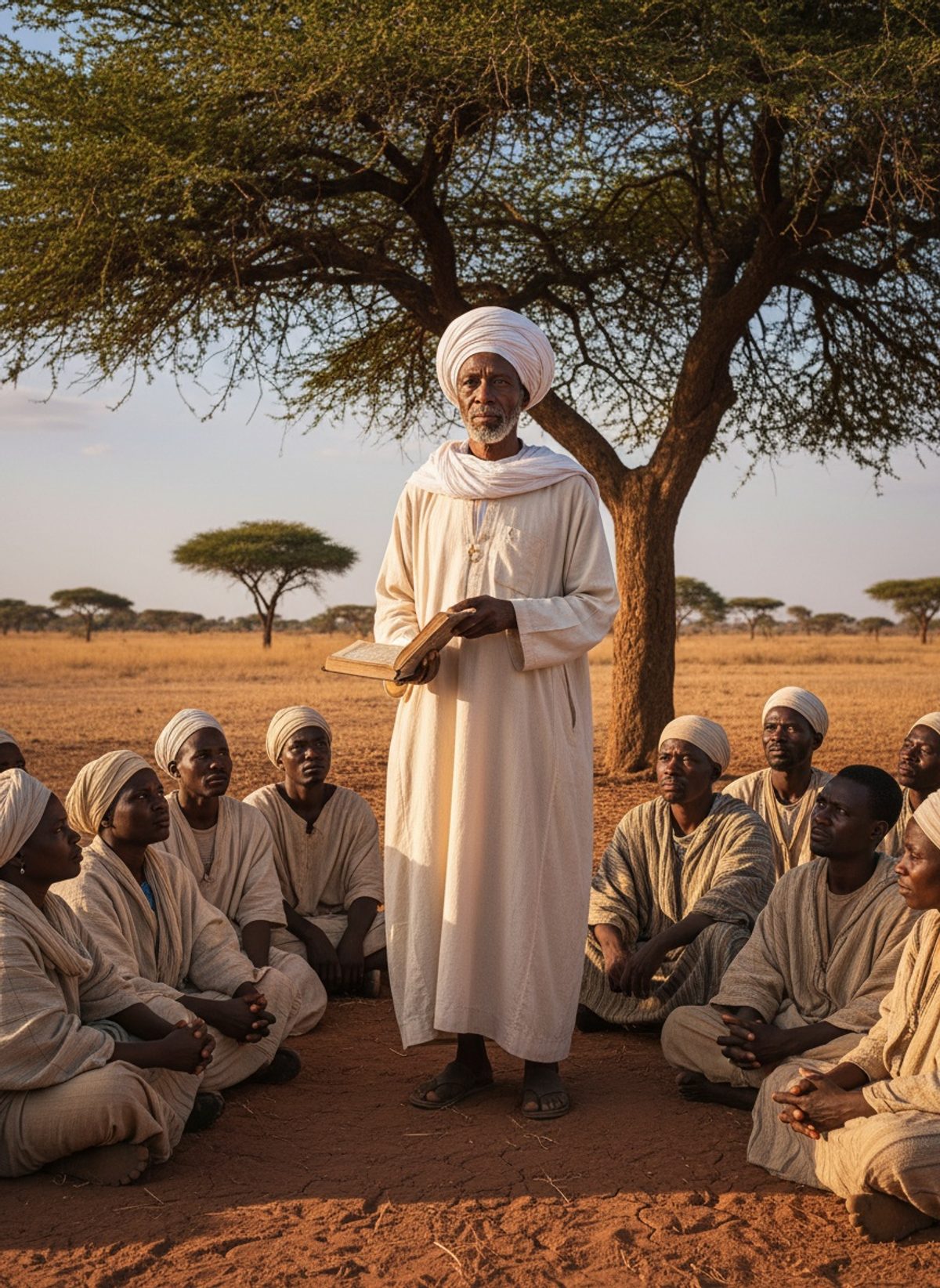
The dust swirled in the dry, hot air, carrying with it the echoes of the restless crowd gathering beneath the midday sun. The scholar, Usman dan Fodio, stood at the heart of it, his voice unwavering even as the oppressive heat and threat of reprisal loomed like a gathering storm overhead. His eyes, burning with the fire of conviction, swept across the throng of weary travelers who had come from distant lands, propelled by hope and desperation.
An Unyielding Voice Against Injustice
Amidst the simmering tension in the Sokoto Caliphate, Usman dan Fodio emerged as an unlikely beacon for the disenfranchised. The established Sultan of Gobir, wary of this growing influence, had commanded silence from the scholar, issuing a decree to stifle the voice that threatened his power. With no military might, no opulent courts, and no formidable weaponry, dan Fodio had only his words, yet they reverberated throughout the land more loudly than the clashing of swords.
His teachings, grounded in a profound understanding of Islam, resonated deeply with the poor and marginalized. Dan Fodio spoke of the injustices perpetrated by corrupt rulers, of an Islam untainted by greed. This resonated in the hearts of those who toiled under oppressive taxes and unfair treatment, spurring them to flock to him, despite the looming threat from their rulers. The Sultan's edict to silence him only fueled the curiosity and determination of his followers, transforming his sermons into a movement.
The people, previously scattered and voiceless, found unity and strength in dan Fodio's call for reform. His voice became a rallying cry not only in Gobir but echoed across the savanna, touching the hearts of those who had never met him. He embodied the hope that the ruling elite could be challenged, that the downtrodden could reclaim the dignity that was systematically stripped from them. As more gathered to hear him speak, his influence grew, spreading like wildfire through the dry grasslands of West Africa.
Read next: She Walked Into a Room of Kings. She Spoke for the Poor.
The Journey Through Waves of Resistance
In 1804, against a backdrop of political unrest and discontent, Usman dan Fodio initiated what would become a socio-religious revolution. This was not a call to arms, but a spiritual awakening that demanded mindfulness, justice, and the equitable application of Islamic principles. The scholarly insurgent was not alone for long. His followers, initially few, swelled into an uncontainable tide, sweeping through with a momentum that defied the Sultan’s efforts to quash it.
There was a transformative aura to dan Fodio's gatherings—an energy that transcended the mere assembly of people. The communities of the region felt a stirring, a defiant beating heart beneath the oppressive weight of tradition and tyranny. Many walked for days, traversing harsh terrains, driven by a hunger for the truths he unearthed with eloquence as rich as the land itself.
The Sultan's court watched with growing apprehension as dan Fodio's reach extended beyond borders. He had catalyzed a movement calling for a return to purer forms of governance and religious adherence, challenging not only Gobir’s internal stability but also the very foundation upon which unjust power rested across West Africa. The scholar's sermons, peppered with compelling narratives and scriptural revelations, were impossible to ignore. His resolve, deeply embedded in cultural and religious consciousness, was armed not with weapons but with an unassailable moral authority—a stark contrast to the tangible force of military suppression they faced.
Read next: Menelik II Wrote One Letter. Italy Lost an Empire.
A Legacy Etched Into the Sands of Time
Kano listened. As did Katsina, Zaria, and beyond, each city laying ears to the ground, hearing the subtle but insistent hum of change guided by dan Fodio’s fearless pursuit of integrity and justice. By 1817, the seeds of reform he had sown burgeoned into something inexplicably powerful; his ideals had taken root, giving birth to the Sokoto Caliphate, a center for Islamic scholarship and governance that redrew boundaries not just physically but intellectually and spiritually across West Africa.
In the years following, the vision he inspired continued to guide societal transformations, anchoring itself in education and virtue over tyranny and greed. The revolution, once a mere whisper against repressive winds, spoke volumes of resilience, highlighting the tenacity of those who chose principles over convenience and challenge over complacency.
Usman dan Fodio's journey was more than just a historical chapter—it was a powerful testament to the enduring strength of the human spirit against oppression. It invites us to reflect on the real power of ideas and the profound change they can instigate when championed with authenticity and courage. Usman dan Fodio did not merely walk into the fire alone; he lit a path that many would follow, shining brightly as an intrinsic part of West Africa's historical fabric.