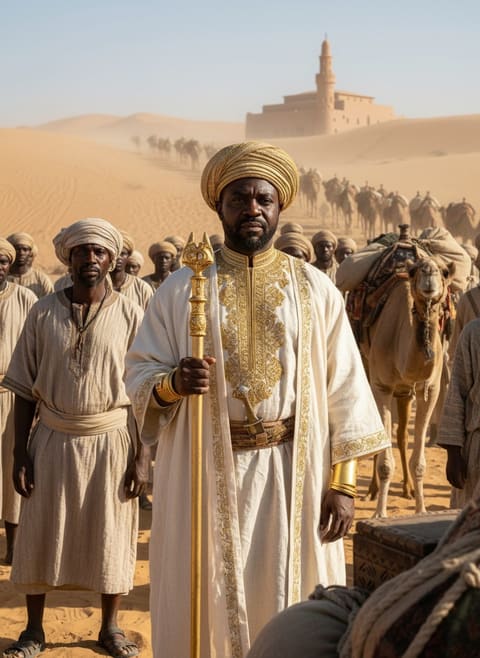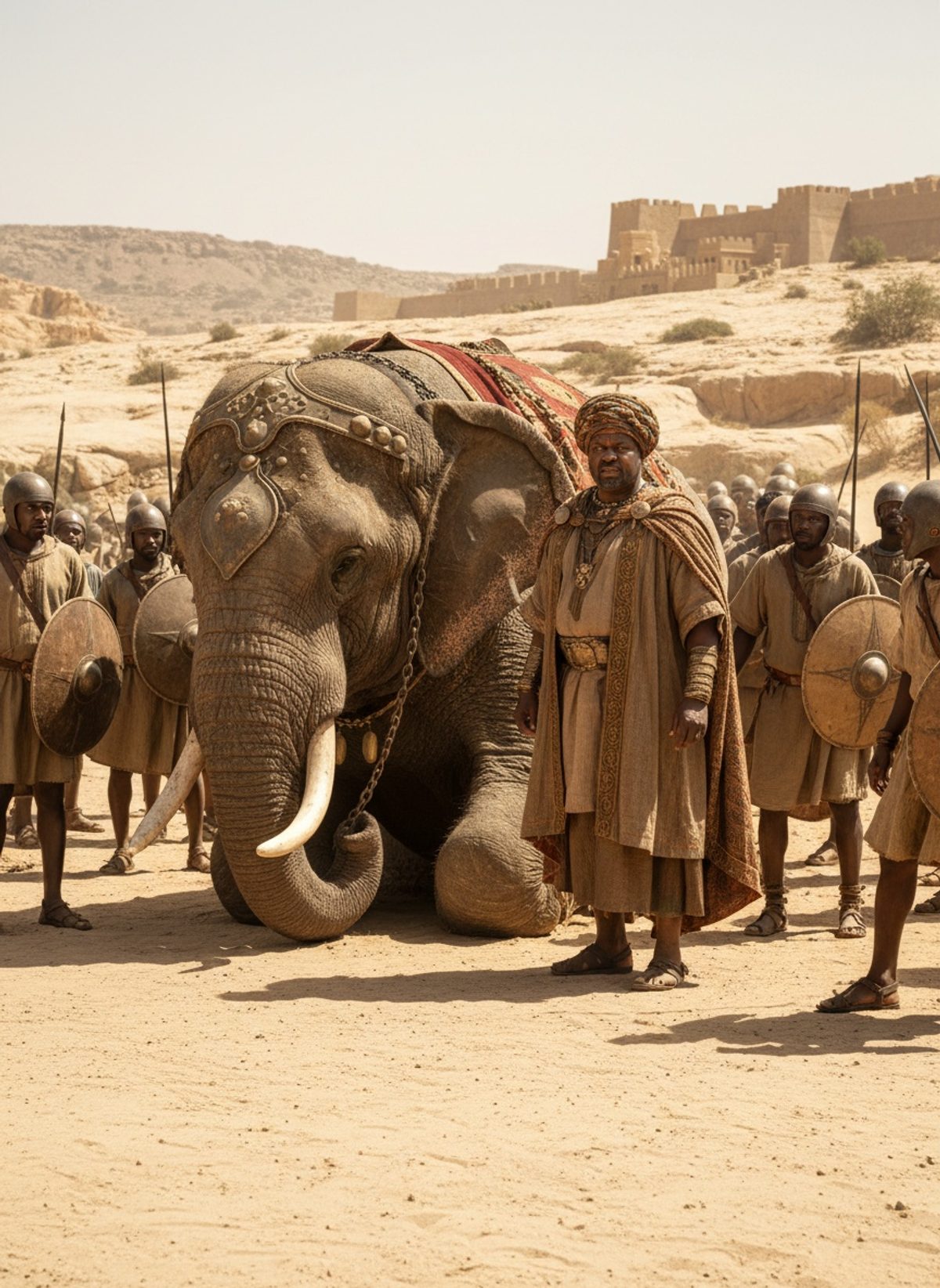
The early morning sun of March 571 AD crested over the vast, undulating dunes of the Arabian Peninsula, casting long shadows in the gentle sandy winds. In the stillness of the desert, an unassuming calm descended, broken only by the distant echoes of a marching army. Abraha, the formidable viceroy of Himyar, commanded an imposing force of men and animals, the ground trembling under the weight of his war elephant—an awe-inspiring beast leading the charge. The city of Mecca lay on the horizon, a jewel of religious and cultural significance drawing the ambition of a ruler whose empire aspirations stretched across the land. Yet, the fate of this pilgrimage city was about to hinge on a moment as fragile and profound as the whispering desert breeze.
Abraha's power journey had seen him rise from a shadowy past into a ruler of considerable influence. Historians debate the circumstances of his origins. Procopius, a Byzantine chronicler, depicted Abraha as a former slave freed to embrace his destiny, while Arabic sources suggest he bore royal blood from Aksumite lineage. Whatever the truth, Abraha had demonstrated cunning and resilience in seizing control of the Himyarite Kingdom, defeating rivals, and navigating political intricacies. By the mid-sixth century, he had solidified his sovereignty, casting an eye toward achieving greater dominance across the Arabian Peninsula.
In this era, the Kingdom of Aksum, known for its sprawling trade networks, saw its influence extend over Himyar. Abraha fortified his rule in Yemen and embarked on bold undertakings, enhancing infrastructure and earning the respect or ire of prominent tribes. With a vision of expanding Aksumite influence further, the coveted spiritual and commercial nexus of Mecca became the next jewel in his sights. The motivations behind his obsession with Mecca are shrouded in a blend of political ambition and defiance against non-Christian centers of gathering. The Abrahamic faiths already venerated the Kaaba, a sacred sanctuary that was drawing worshippers from across the lands.
Emboldened by a formidable army, estimated to number near 100,000, and the unparalleled advantage of war elephants—a strategic innovation introduced to this theater by Aksumite forces—Abraha journeyed with confidence. The campaign through Arabia was arduous, yet victory seemed preordained due to his superior might. However, as history often shows, the winds of fortune are fickle. Arriving on the outskirts of Mecca, Abraha was prepared to define an era through conquest that would engrave his name into the stone of ages. But as they approached their final destination, an extraordinary event unfolded—one that continues to inspire wonder and debate.
Read next: Yaa Asantewaa Stood Before the Chiefs. She Picked Up the Gun.
The vanguard of Abraha’s army was led by Mahmud, the mighty elephant. Revered for its colossal strength and imposing presence, the creature was instrumental in commanding fear and fending off adversaries. Yet, as the forces were poised just outside the gates of Mecca, this very symbol of power would become the herald of divine intercession, at least in the eyes of the people of the time. Despite all attempts to urge it forward, the elephant refused to rise, kneeling in still defiance to the chagrin of its handlers. Neither prodding nor coaxing altered its obstinate stance—a living monolith against the backdrop of shifting sands. This unforeseen rebellion sowed chaos and disillusionment among the heavily armed battalions that flanked it.
The sacred texts and oral traditions that emerged from this encounter bestow layers of meaning upon the event. Islamic tradition recounts this episode as one of divine intervention, believed to be a manifestation of Allah’s protection over the Holy Kaaba. According to some interpretations, this was the backdrop behind Surah al-Fil (The Elephant) in the Quran, a passage invoking the miraculous defense of Mecca against an overwhelming force. Such spiritual narratives lent powerful credence to the cultural memory of the event, with 571 AD being forever immortalized as the "Year of the Elephant."
As reality intertwined with legend, the profound symbolism of the elephant’s refusal played a crucial role in elevating the status of Mecca and its custodians, the Quraysh tribe. The peaceful resolution—a military withdrawal without bloodshed—only intensified the Kaaba's aura of sanctity, elevating Mecca's stature among Arabian tribes as the heart of faith and spiritual pilgrimage. Over time, Mecca’s reputation as an inviolable sanctuary under divine protection attracted increasing numbers of pilgrims, solidifying its central role in the religious life of the region.
Read next: She Walked Into the Court. She Left With Her Kingdom.
Historians continue to examine the implications of Abraha’s campaign, and conjectures vary between interpretations of weather, politics, strategic missteps, and providence. What remains unambiguous is the broad impact on historical record-keeping in the region. The "Year of the Elephant" became an epochal anchor for timekeeping, a pivotal reference point used to chronicle subsequent events across generations.
Abraha’s ambitions, though temporarily successful in crafting a moment of fear, ultimately failed to reshape the Arabian geopolitical landscape as intended. His sons, lacking their father's vision and astuteness, would preside over a diminishing domain. Yet, the lessons of humility and restraint manifest in Abraha’s odyssey resonate beyond mere conquests, underscoring the timeless balance between power and fate. This episode offers a thoughtful juxtaposition of human endeavor against forces beyond comprehension, suggesting that destiny pivots on seemingly small but potent acts of defiance.
In today's world where ambition and hubris often overshadow humility, the story of Abraha's thwarted seige provides a profound reminder of the limits of human power. It is both a sobering and enlightening tale, speaking to the enduring human quest to honor sanctity amidst the grand theater of history's rise and fall.