May 25, 1982. The chill of the South Atlantic wind sliced through the Falklands dawn.
The Leap from Sea to Land
The plan was foolproof on paper, meticulously laid out. After landing at the San Carlos beachhead on 21 May, the Royal Marines of 45 Commando and the Paratroopers of 3 PARA were to be airlifted across East Falkland by a fleet of helicopters from the Atlantic Conveyor. The destination: Stanley, the capital where Argentine forces had quickly entrenched themselves after the invasion in April. This operation was not merely about traversing distance but reestablishing British control over the coveted Falkland Islands, a struggle emblematic of the waning days of a global empire.
But war is an unpredictable beast, and unpredictability found its voice on 25 May. An Argentine Exocet missile struck a fatal blow to the Atlantic Conveyor, sending three Chinook and several Wessex helicopters to the cold ocean depths. With them went the vital air bridge that was to swiftly carry the troops forward into conflict. What was left behind was an ominous silence and an arduous task: a 56-mile march that would enter history not as a mere logistical footnote but as a defining moment of grit and endurance.
Treading Rough Terrain
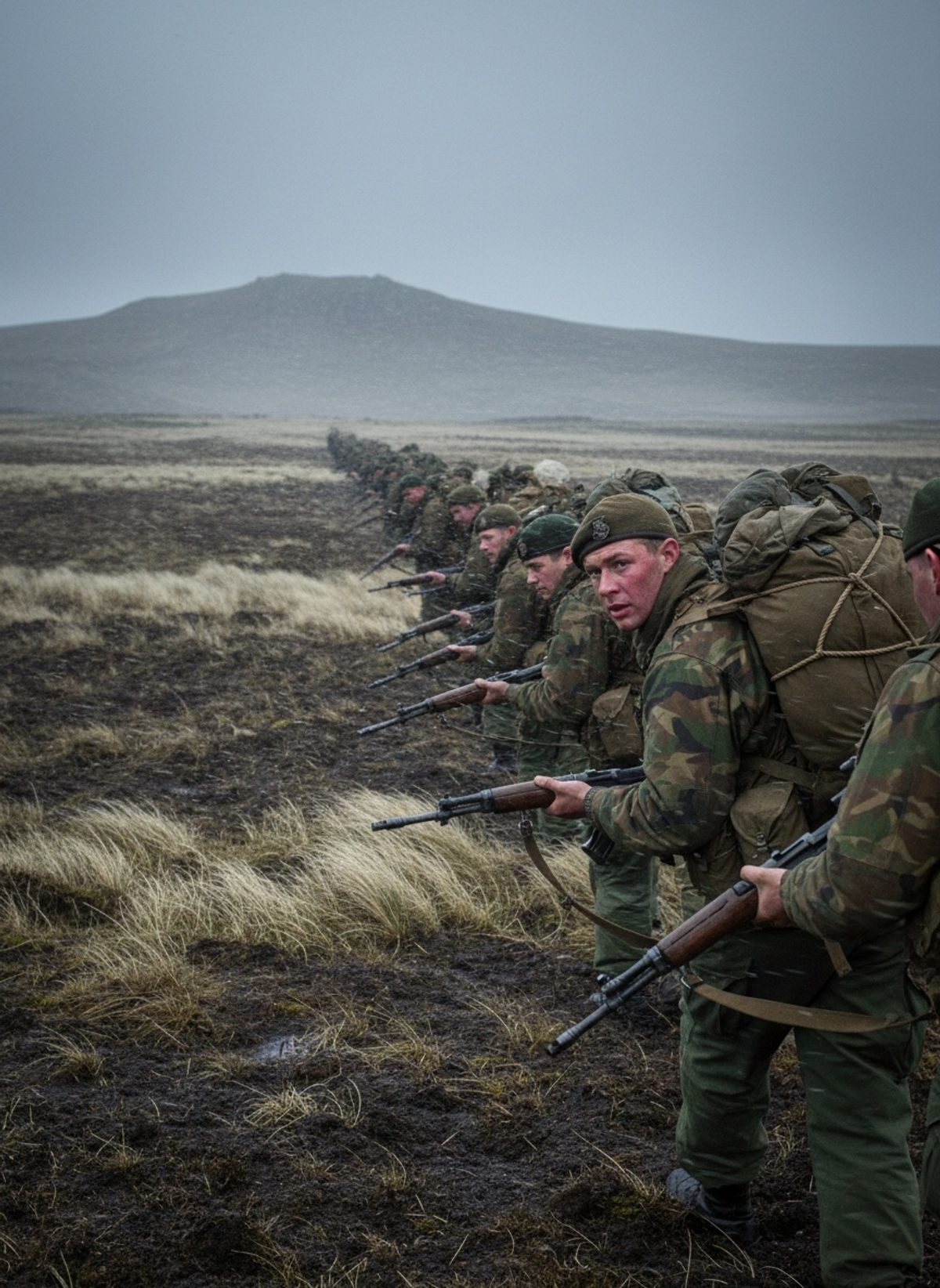
The word yomp might have seemed an innocuous term in military slang before 1982, but it soon became the spirit of the British offensive in the remote South Atlantic. It was a word without a clear etymology but rich in meaning — a long-distance loaded march, something tough and resolute, the kind of endeavor seasoned soldiers might groan about but to which they would invariably rise. In the public’s eye, it evolved from somewhat niche Marine terminology into a marker of quintessential British tenacity.
Read next: When a Padre Gave Last Rites and Tea at the Clearing Station
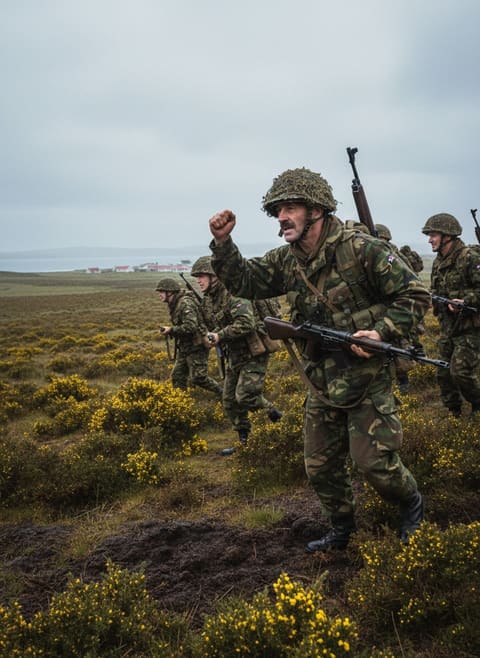
As they trudged with 80-pound packs on their backs, these men — tiny against the stark, desolate landscape — were no longer Marines just marching. They were yomping, a word that was at once new yet ancient to them. The landscape of East Falkland was unrelenting: wet peaty ground that sapped energy with each step, jagged rock runs promising spilled blood if a foot faltered, and gusts of freezing wind that knew no mercy.
Their route read like coordinates on an adventure map, each name echoing a story: Port San Carlos, New House, Douglas Settlement, Teal Inlet, and finally, the looming silhouette of Mount Kent. Their journey was more than miles; it was the steel of mind meeting the sinew of muscle, the cascade of boots striking earth as they pushed through both elements and exhaustion over three long days.
The Silent Companions
Any retelling of this epic march cannot neglect those who endured silently alongside the men — the kits. Packed with necessities and the gear of war, each bergen weighed down by the harsh math of life on campaign. Spare clothing, rations, ammunition, medical supplies — every item a silent testament to an individual and their hope of making it through what the days ahead would bring.
In the fierce brushstrokes of this campaign, there was little room for comfort. Tents had been lost with the Atlantic Conveyor, leaving many nights of open skies and unyielding winds to remind them of their fragile human form amidst the unending stretch of nature’s challenge. But these were Marines — and Paratroopers — instilled with an understanding that though comfort might depart, resolve should never waver.
The Unseen Battle
The yomp across East Falkland was merely the prelude, a journey defined not by its end in the hills above Stanley but by the confrontation awaiting on the other side. On the night of 11 to 12 June, tired but unwavering, 45 Commando attacked Two Sisters, a rugged bastion in the mountain chain west of Stanley. The price paid was steep: eight Marines gave their lives, with seventeen more wounded.
These men who had stoically carried their lives on their backs under an unforgiving sky faced a stern test — one of blood, fire, and fury, casting the yomp not as the climax, but the course to destiny's arena. Each step had brought them closer to the choice of action under fire. And through that, they determined the course of history, affecting not just the men, but an entire domain of Empire rising for a final gamble in an age drawing itself into close.
The Picture Worth More Than Words
The announcement of Argentina’s surrender came not as a loud shout or a grand parade but whispered in the march along the Moody Brook track towards Stanley. Among those documenting the unfolding history was Petty Officer Peter Holdgate, a Commando Forces Photographer whose lens would capture an image more powerful than rhetoric.
Read next: The Last Man to Die in the Zulu War, 1879
Marine Trev Gillingham, sensing a moment of national significance, retrieved a small Union flag from his kit, secured from the bunting locker aboard SS Canberra, and affixed it to Corporal Peter Robinson's radio antenna — a symbol turned fluttering talisman amidst their advance. The flag, tenuously bound with masking tape, became emblematic of not just the Marines’ journey but the reassertion of British presence on the Falklands.
The photograph that emerged, The Yomper, was spontaneous, a raw snapshot of endurance captured for posterity, eventually inspiring a statue unveiled by Margaret Thatcher a decade after the conflict at the Royal Marines Museum. Here stood no triumphant conqueror but a symbol of endurance — a yomp through the trials of distance, landscape, and the human spirit.
This march across East Falkland, under the prohibitive load of both gear and expectations, is more than a footnote in a war narrative. It questions and asserts the meaning of resilience. It is a reminder of the burdens willingly shouldered when plans fail and hope must walk on until it becomes reality.
This week, a new generation of paratroopers and Falklands reservists marched 20 miles across the same island.
Part 3 of 24: One Falklands story a day until Remembrance Sunday