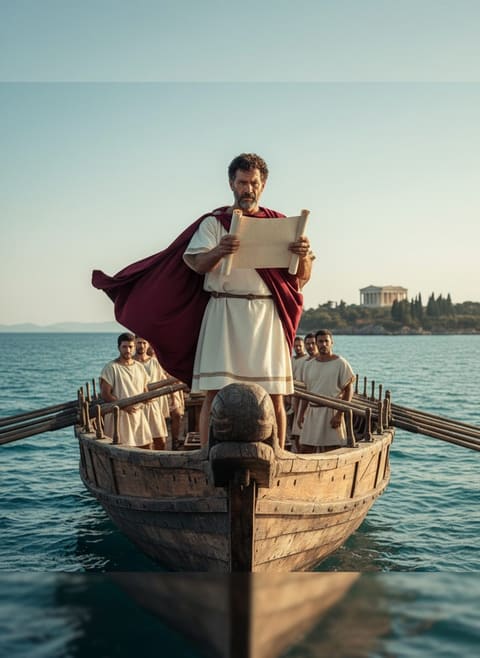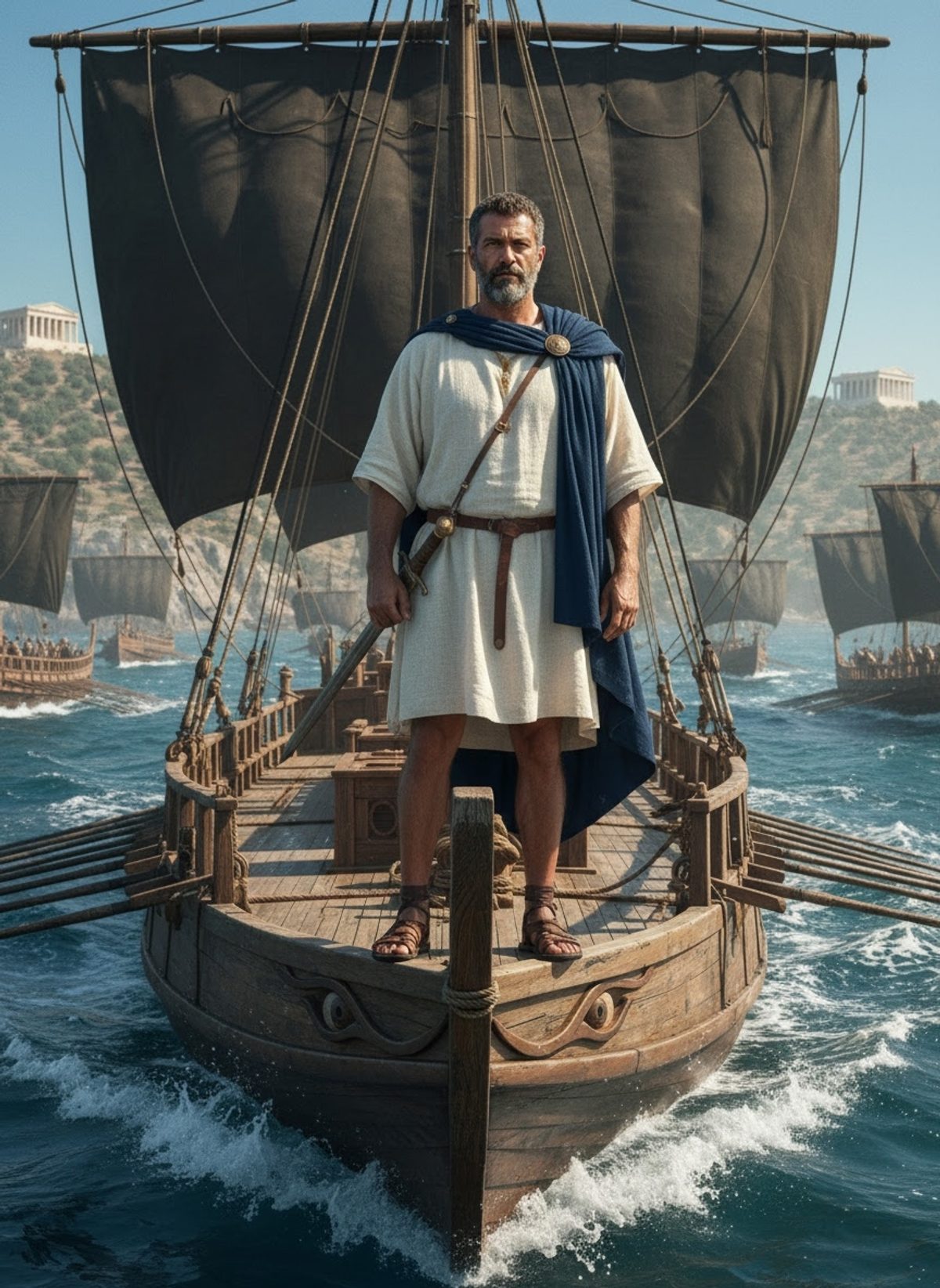
The clash of wood and the tang of salt filled the air as Polycrates stood on the deck of his flagship, eyes scanning the horizon for any sign of resistance. Somewhere out there, a vessel dared to challenge his rule over the Aegean Sea. This had become a familiar scene: the tyrant of Samos ensuring that no ship traversed these waters without first bending to his will.
The Rise from Shadows
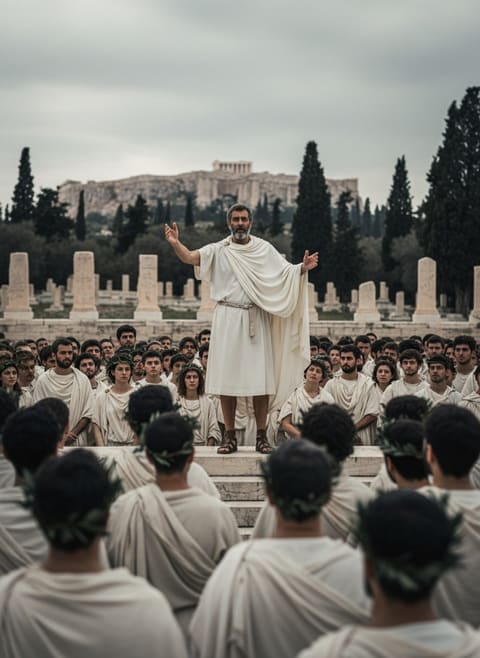
Polycrates' rise to power was as remarkable as it was ruthless. Originating from a family whose influence was not clearly recorded, Polycrates seized control of Samos in the wake of civil turmoil. In this period of upheaval, funerary stelae lay shattered, a symbol of the broken aristocracy.
It was around 540 BC, amid this chaos that Polycrates, with his brothers Pantagnotus and Syloson and a mere fifteen followers, executed a daring coup. Once in power, he swiftly eliminated any threat, killing Pantagnotus and forcing Syloson into exile, establishing his rule solo. Olympiad ideals of honor and heroism would not deter his ambition; he was determined to carve his legacy through action.
Polycrates' strategy embraced the unconventional. His method of establishing dominance was not confined to land but extended to the seas, as he recognized the transformative power of naval supremacy. Samos, once a modest island in the vast tapestry of Greek city-states, was to become the seat of a maritime empire.
Read next: Xenophon Led 10,000 Greek Mercenaries Home Through Enemy Persia
A Navy Unmatched
The Aegean itself became Polycrates' arena. Within years, he masterminded the construction of a formidable fleet, reputedly comprising one hundred warships. These vessels were not just military pawns but instruments of economic power. By controlling the key trade routes traversing the Aegean, Polycrates imposed taxes on every ship passing through. His toll gleamed like the sun, filling the coffers of Samos and amplifying his influence across the region.
Polycrates' navy was so commanding that it caught the eye of the Mediterranean's great powers. Egypt and Persia, both titans in their own right, reached out with gifts, eager to maintain peace and ensure Polycrates' neutrality. His stature meant the difference between open trade routes and economic standstills for these mighty empires.
The tyrant of Samos wielded his naval might not just as leverage against foreign powers but also as an extension of his domestic reign. His fleet's omnipresence in the Aegean ensured that his edicts were followed, whispering both promise and peril to those who dared dissent.
Calculations Beyond Ambition
Polycrates' empire was not one of recklessness, despite the fiery nature of his ascension. The tyrant displayed traits not solely of ferocity but of sagacity, carefully calibrating his moves like a master chess player. However, the tension between forces pro- and anti-Spartan on the island added a layer of intrigue to his reign. Samos, under Polycrates, was a nexus of both economic ambition and political cunning.
Yet, beneath this princely ego lay strands of vulnerability. Aware of both loyalty and subterfuge surrounding him, he established lavish displays of wealth and power to inspire and cow simultaneous. Like the fabled Icarus who soared close to the sun, Polycrates' confidence built bridges of prosperity but sowed seeds of envy.
The Fall from Grace
The tides of fate have a reputation for turning, even for the grandest of rulers. 522 BC marked not only the beginning of a new era but also the end of another. Orchestrated through promises and deception, Polycrates accepted an inviting ordinance from the Persian satrap Oroetes, a siren call that led him to his doom.
Read next: Solon Cancelled Athens' Debt and Freed Its Enslaved Citizens
The allure of potential riches draped like a shroud over a deadly trap, ensuring that this Aegean king would never see the turquoise waters of home again. Perished and crucified, his body a monolith of his former pride and ambition.
Syloson, his exiled brother, would return to Samos, under the auspices of Persia. The transition from Polycrates' maritime dominance to his brother's reign exemplified the fleeting nature of power and the unforeseen consequences that tethered family ties could spiral into.
A Thread in the Tapestry of Time
Polycrates' story is much more than a ruler's aspiration for dominance; it is a nuanced reminder that the sea, in its vastness, reflects the boundless ambition of those who dare to navigate its waves. His empire, built on wood and wind, was a testament to a time when power was defined less by the land underfoot than by the waves traversed.
This extraordinary chapter in Greek history underscores the complexity of human ambition and the intricate dance of diplomacy and warfare. In revealing the tale of a once-ordinary ruler from an inconsequential island, we are reminded of the myriad forces at play in shaping history. Power, like the oceans, is unpredictable, and perhaps it is only through these stories that we may gain solace in the ever-turning currents of destiny.