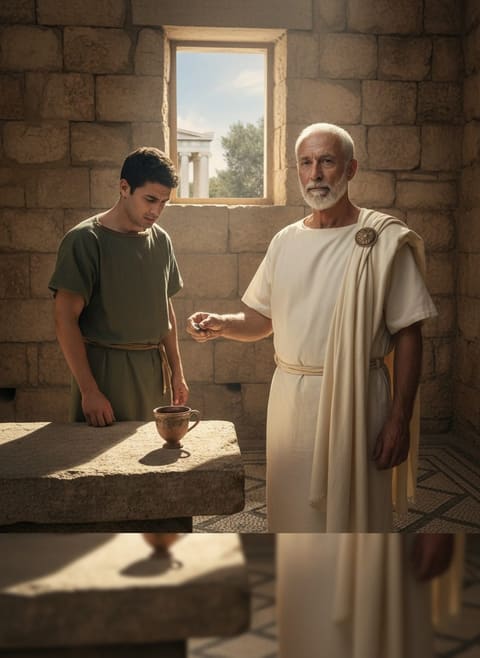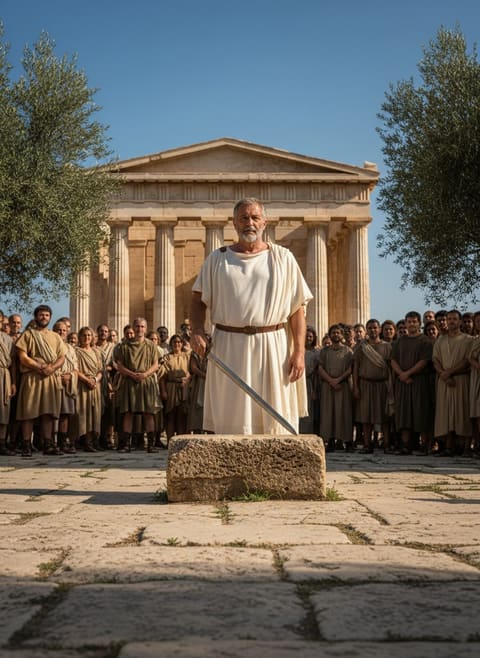
The court chamber in Athens was filled with the crisp chill of early spring in 406 BC, a thin veil of mist curling around the statues that lined the Agora. The low hum of conversations mingled with the distant cries of market vendors, creating a tapestry of sound that filled the air. Inside, the light diffusing through the high windows illuminated the faces of the judges, their expressions a mix of curiosity and skepticism. The scene's focal point was an elderly figure draped in simple robes, his presence commanding despite his frail frame. This was Sophocles, the revered playwright of Athens, now unexpectedly on trial in his twilight years. His accusers? None other than his own flesh and blood.
The Family's Accusation
The allegations brought forth by Sophocles' kin were serious. They claimed that the playwright, now ninety years old, had succumbed to senility, no longer capable of managing his affairs or his estate. Such a claim was not entirely unheard of, given the circumstances. In ancient Athens, as elsewhere, families sometimes pursued legal measures to gain control of an elder's property, particularly if they suspected mismanagement or simply sought to protect their inheritance. However, accusing a man of Sophocles' stature—a cultural titan and victor of numerous dramatic competitions—was bold, if not high-stakes.
What added intrigue to this already dramatic setting was the absence of traditional legal maneuvers. Sophocles brought no witnesses, harangued no advocate to champion his cause. Instead, he carried nothing more than a papyrus scroll clutched in his aged hands. His family’s motives, rooted perhaps in a mix of genuine concern and opportunistic designs, seemed poised to unravel before the gathered assembly. Here stood Sophocles, prepared to defend not only his competence but his enduring genius.
The Playwright's Defense
Instead of a legal argument, Sophocles offered a performance. With a voice that still carried the weight of years of theatrical success, he began to read from his latest work, the newly completed Oedipus at Colonus. It was a poignant choice, a narrative steeped in themes of fate, redemption, and the search for peace despite a life's turmoil—a reflection of Sophocles' own odyssey. As he read, the room shifted from a space of judgment to one of enchantment.
Read next: Leonidas Was Gone. One Man Walked Into the Fire.
His recitation was not just a testament to his cognitive clarity but a vivid showcase of the enduring power of his prose. The room, soon forgotten as a court of law, transformed into a theater, the judges and onlookers becoming an unintended audience to one of Athens’ final literary masterpieces. With every line, Sophocles demonstrated a sharpness of mind and a creative vitality unfaded by years. The result was both a legal and artistic triumph, as his family’s claims wilted under the evidence of his own genius.
Dismissal and Reverberation
The dismissal of the case held a dual significance. Legally, it reaffirmed Sophocles’ right to manage his own affairs, swatting away the accusations of his family. His victory was a personal vindication, a poignant assertion that his faculties remained intact. Yet, the true reverberation was cultural. This incident, rather than being a mere footnote in his biography, underscored the deep respect and influence Sophocles wielded in Athenian society.
Read next: Demosthenes Stood Before Athens. They Laughed. He Came Back.
For decades, he had been an unparalleled force in the realm of tragedy, reshaping the structure of drama itself. Adding a third actor into plays—a bold move attributed to him—expanded the narrative possibilities and reduced the overreliance on the chorus, a technique that generations of playwrights would follow. His treatment of characters, rich and complex, had no equal, a testament to his understanding of the human condition. His defeat of senility charges became an emblem of the enduring power of wisdom and creativity, transcending the confines of age.
A Lasting Legacy
Sophocles' courtroom triumph was more than a personal exoneration; it was a symbol of the profound and often enduring impact art can have on life's legal, social, and moral domains. The grains of time could not silence the voice of a storyteller whose words spoke to the core of humanity, nor could they dull the vibrancy of his creative light. In reading his own work as a defense, Sophocles not only dispelled the notion of senility but also reminded his city—and indeed posterity—of the power of literature to transcend societal confines.
In the heart of Athens, the reverberation of that day in 406 BC continues to echo. It remains a testament to the timelessness of true artistry—a compelling reminder that creativity and wisdom can defy the erosion of age. Sophocles, standing before his judges, reading aloud from a play that would outlive him, illustrated that even in a city obsessed with youth and vigorous democracy, the wisdom of age and the brilliance of one's mind can become the most formidable witness. This, perhaps, is one of the greatest stories the annals of history can teach us today.