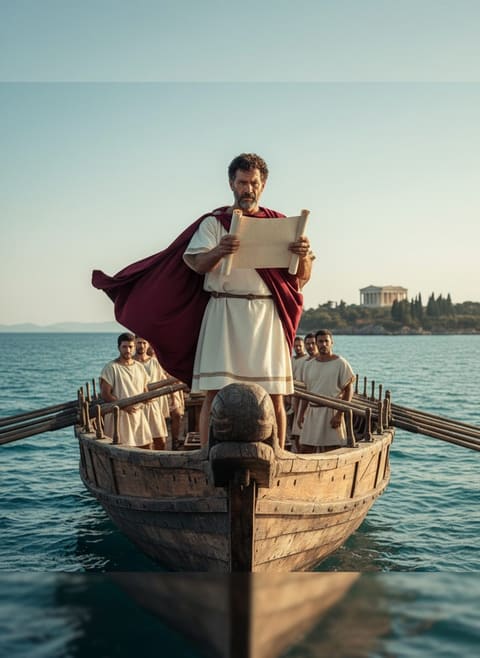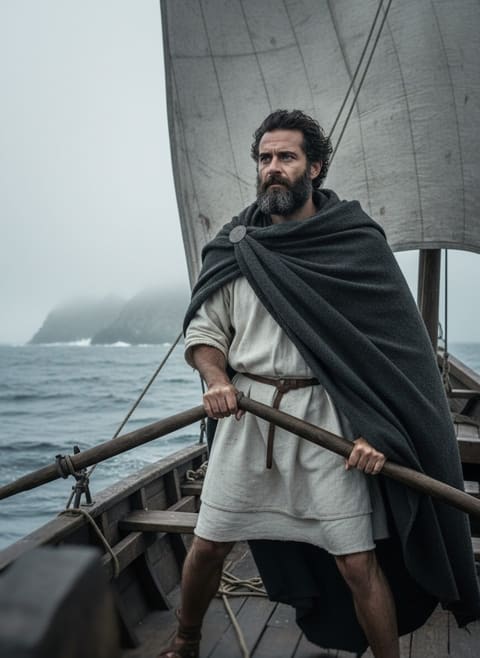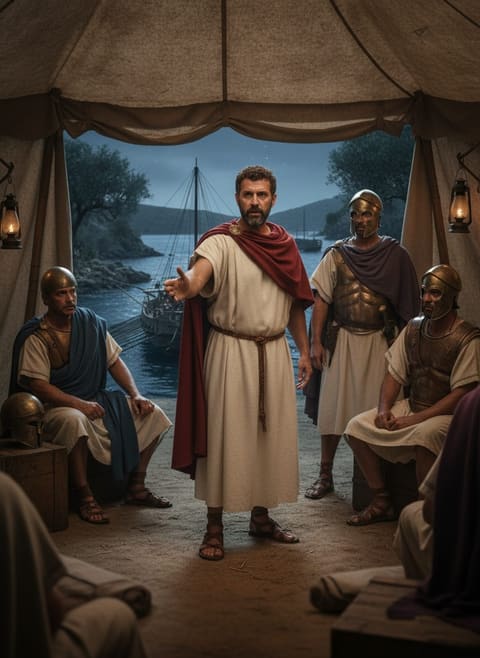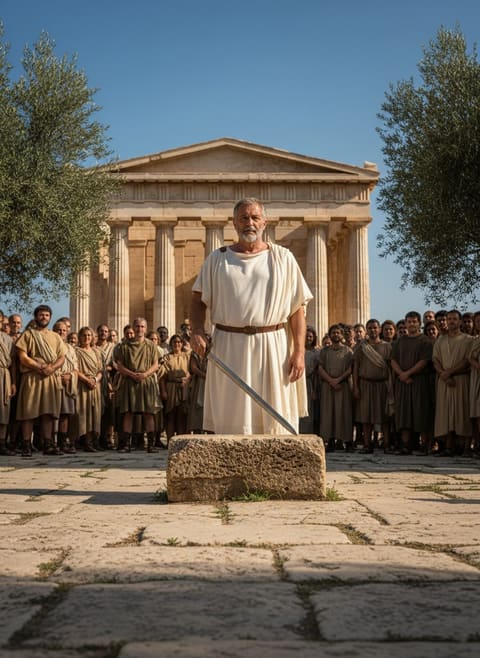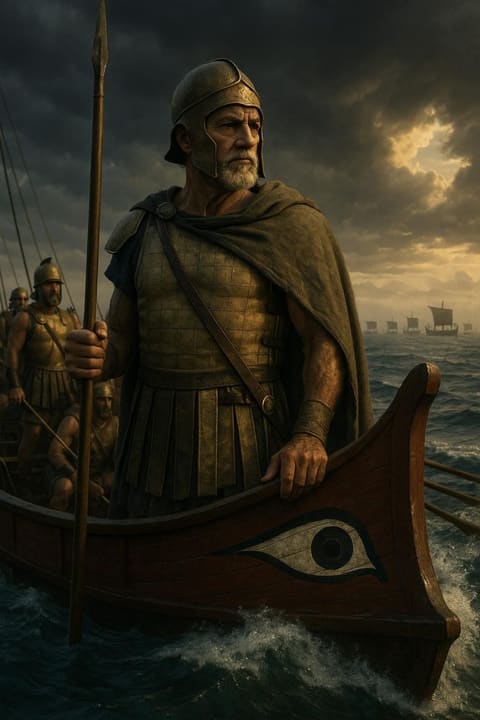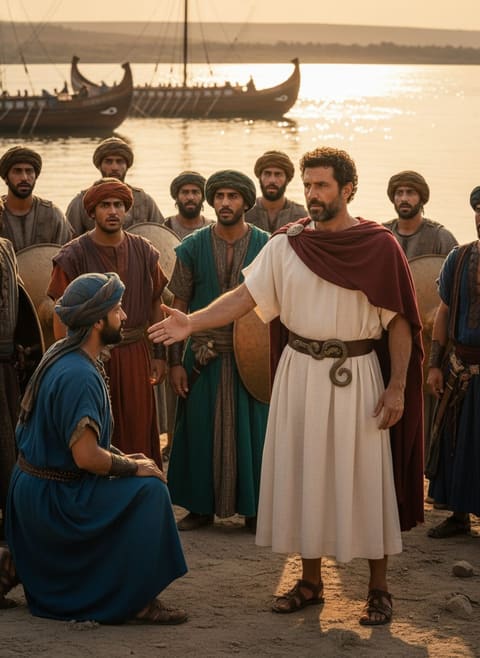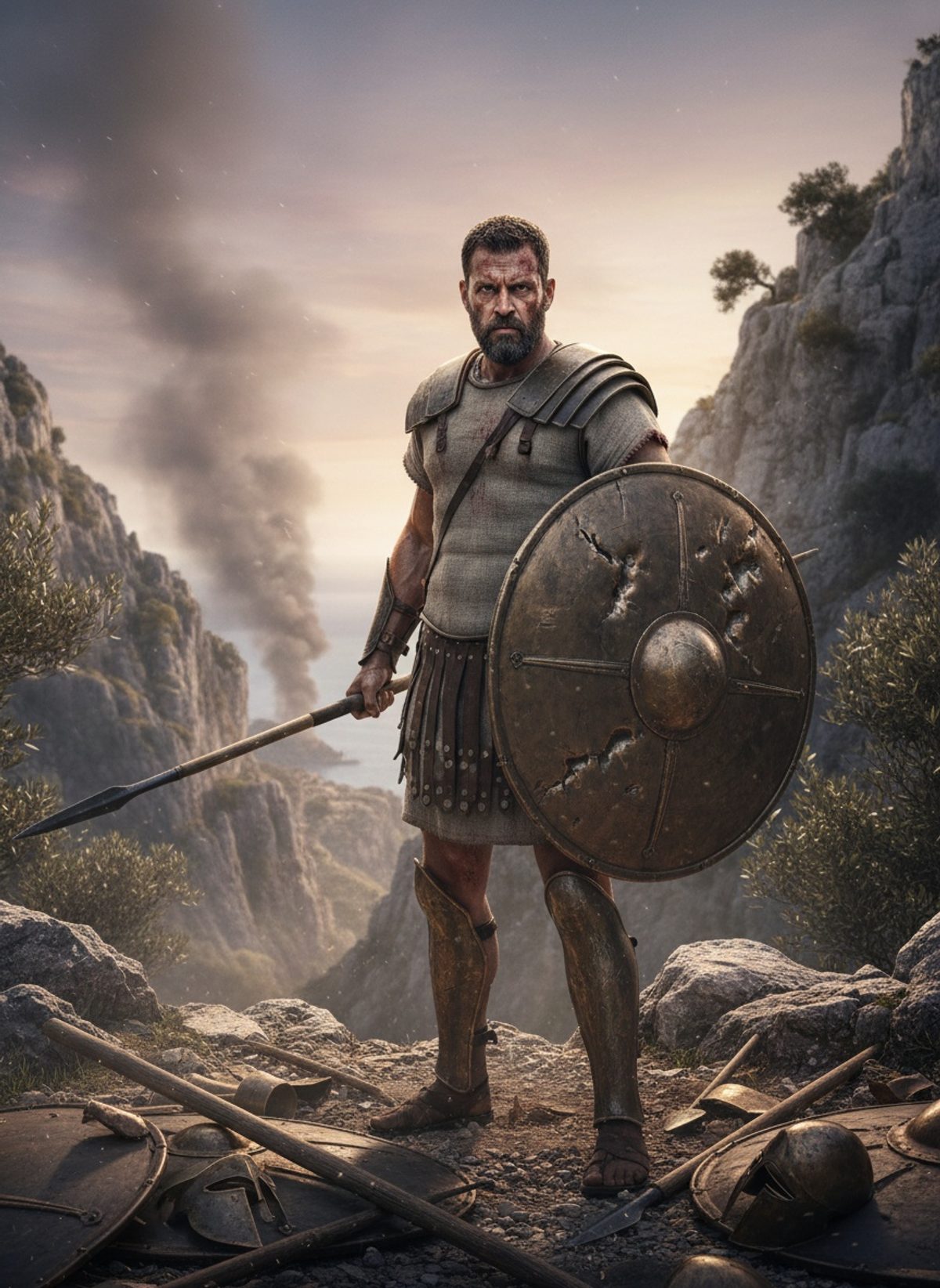
The August air in Thermopylae clung thick and heavy, carrying the salty tang of the Aegean Sea. The narrow pass, a stark contrast to the expansive waters beyond, was choked with spent tensions and the eerie silence of death. Less than a day before, these weathered cliffs had echoed the battle cries of Leonidas's legendary 300 Spartans, vibrating with the fervor of their defiant stand against the immense Persian forces. But now, the acoustics of heroism were silenced, and the pass lay wide open, a gaping wound in Greece's defensive armor.
At the heart of this unfolding catastrophe was Aristodemus, a Spartan unlike the fallen comrades surrounding him, but not for reasons of valor or grit. Aristodemus was alive. He had been sent home shortly before the last drop of blood had been shed, dispatched under circumstances smudged by the finger of fate and the stern hand of Spartan custom. An eye infection, an ailment so mundane it seemed almost dissonant amid the dreams of glory, had rendered him temporarily unfit to fight. Together with Eurytus, another Spartan similarly afflicted, he was ordered away from the battle to recover. Yet, while Eurytus returned to meet his end alongside Leonidas, Aristodemus remained absent from the storied massacre at Thermopylae.
The Spartan code left little room for weakness, even less for survival through dismissal. As Leonidas’s prominent figure lay among the honored dead, seeds of scorn had been sown for Aristodemus back in Sparta. The concept of duty was almost divine, the pillars upon which the very spirit of Sparta rested, tempered by the fiery belief that a warrior lived and died for his polis. Aristodemus was condemned to bear the mark of a coward — a "trembler" — a stigma worse than death for a Spartan man.
Thermopylae had fallen, yet the war was not lost. The Greeks were battered but not broken, finding unity in adversity with the realization that their liberation demanded sacrifices beyond the individual. With the subsequent strategic victories in battles such as Plataea under their belts, the coalition of city-states staved off Persian domination. Nonetheless, for Aristodemus, personal redemption was a war of its own, one fought not against flesh and blood but within the corrosive silence of his soul.
Read next: Pericles Stood at the Grave. He Chose Every Word.
It was during the fierce encounter at the Battle of Plataea in 479 BC – a year after Thermopylae – that Aristodemus would seize an opportunity to exorcise his guilt. Historians later recounted how his fervor in battle seemed almost reckless, driven not by the ordinary courage expected of a Spartan but by a desperate desire to reclaim his lost honor. His actions on the battlefield were nothing short of extraordinary; he charged into the heart of the Persian ranks, cutting through enemies with a blend of precision and fury that spoke louder than words ever could.
The battle itself was an amalgam of chaos and calculated strategy, set on the broad plains where the Persians had intended to envelop the Greek forces in a pincer move. Yet, behind the clamor of shield on spear, Aristodemus found a personal convergence of opportunity and intention. Showcasing what some might call madness, others might call courage, he charged once more into the fray, disregarding the wounds that were strewing a tapestry of crimson across his body. Many describe the spectacle of his intent focus, etched with shadows of resolution that made friends and foes alike turn heads amidst the battle’s pandemonium.
Read next: Phocion Was Condemned to Die. He Tipped the Executioner.
As the day waned, so too did the strength of Aristodemus, though he fell having achieved his mission. The tales of his fearless march resonated back to Sparta, and the man once shamed by survival had written his own kind of redemption at the price of his own life. Sparta’s harsh reckoning with duty did not change — his name was perhaps restored in part by the extreme measure of equality: death. Yet even the unyielding city-state could recognize the swing of the pendulum that Aristodemus had forced. In the end, he was judged not as simply brave nor as a suicide in battle, but something at the intersection that would allow his name not to slumber in dishonor.
This story of Aristodemus survives not merely as a footnote in the grand tale of the Greco-Persian Wars but challenges us to consider deeper truths etched in the human experience. It’s a reminder that the line between hero and coward sometimes hangs by fragile threads of circumstance, judgment, and redemption. As we reflect back on these distant sands stained by heroism and hubris, we recognize that beneath the aegis of their armor, these ancient warriors carried human hearts burdened with personal battles not always visible to the naked eye. Aristodemus walked back into the fire that history might never again mark him as its trembling survivor.