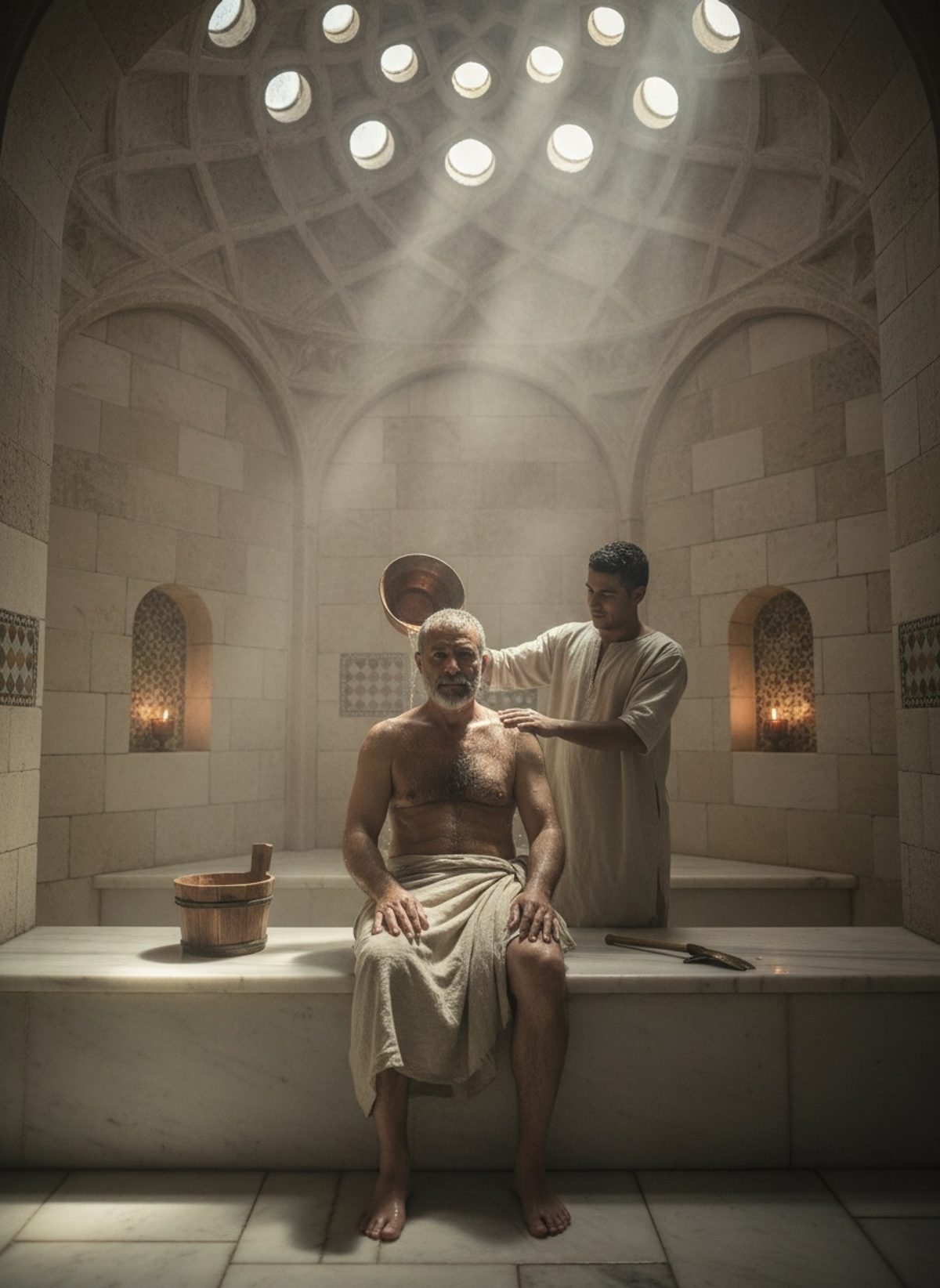
The soothing hiss of steam enveloped the dimly lit room, as droplets of water cascaded down the marble walls. Beneath the flickering glow of oil lamps, shadows danced over the mosaicked floor, alive with the whispers of men seeking refuge from the desert's unyielding heat. Laughter echoed softly, mingling with the warm spirals of rising mist, creating an intimate symphony that only the hammam could compose. Here, amidst the permeating scent of cedar and lavender oil, Baghdad’s social tapestry interwove, as its people shed burdens as openly as they shed their clothing.
The Hammam: A Communal Oasis
In the heart of medieval Baghdad, where narrow lanes pulsed with life and the golden dome of the Round City's mosque gleamed like a beacon of prosperity, public bathhouses — or hammams — were prolific. By 900 CE, more than 60,000 of these sanctuaries adorned the cityscape, providing a rare common ground in a city where a caliph’s servant could share a space with a bustling street merchant. The hammam was more than a place for hygiene; it was a societal leveller, where the distinctions of class lost their rigidity under the soothing embrace of steam.
Step through the grand entrance, and you’d find yourself in the frigidarium, where cool drafts and trickling fountains welcomed bathers. Beyond, the tepidarium offered a gentle warmth, teasing the senses, a mere prelude to the caldarium, where the true alchemy happened. Heat and sweat coalesced, purifying the flesh and spirit alike. Here, attendants patiently administered their craft, scrubbing and anointing the skin with fragrant oils — sandalwood and rose petals infusing a sweet essence that clung to the air.
But the hammam was more than sensory delight. Medieval physicians, following the Hippocratic tradition, prescribed the bathhouse ritual in their scripts, believing that the heat could cure ailments ranging from fevers to grief. Indeed, the hammam was the city’s surgery, where both body and soul found reprieve. The heat knitted sore muscles, improved circulation, and was a balm for anxious minds. As the body unwound, so too did the guards of everyday life, facilitating conversations that ranged from the essential to the inconsequential.
Read next: The Roman Thermopolium: Where Ancient Rome Ate Its Lunch
Gossip, Knowledge, and the Pulse of the City
Inside the translucent curtains of rising mist, the hammam transformed into Baghdad’s buzzing newsroom. With the caliph's court a distant realm for most, information traveled through whispers exchanged in these steamy enclaves. Here, stories were not merely retold; they were woven afresh, alive with exaggeration and flourish. Men exchanged not just gossip, but knowledge — the speculation around political maneuvers or a charming anecdote of a foreign visitor. The hammam fed the soul with stories as much as it cleansed the skin with steam.
In this verdant pit of social interaction, alliances were forged and broken, business deals sealed with a firm handshake over the water’s edge. Baghdad’s residents knew this public square not just as a haven of relaxation, but as the city’s heart — the pulse that echoed with the rhythm of news, familial ties, and evolving trends. Diplomats, merchants, and humble artisans exchanged ideas, their voices muddled in the warm confines.
For the Abbasid scholars, the hammam was an almost anthropological experience, illustrating the narratives that never stretched across papyrus. It was a place where philosophical musings intersected daily chatter. One could imagine the patrons discussing translations fresh from the House of Wisdom, where the world’s knowledge was distilled and expanded upon — an act of preservation and enlightenment that paralleled the cleansing virtues of the bath.
Sanctuary of the Senses
To understand the true essence of Baghdad’s hammams is to appreciate them as sanctuaries, extending beyond basic utility. Within the city’s structured chaos, they provided balance; the lit corner where mental and physical burdens found release. Here, friendship was cemented amid the communal splendor, and traditions of hospitality were deeply ingrained. Whether to wash, to heal, or to listen, patrons left renewed, their spirits fortified against the demands of Abbasid life.
Read next: She Was Born Before Napoleon Fell. She Lived to See Cars.
Attending the hammam was a ritual deeply interwoven with the ebb and flow of an Abbasidian day. Often, this custom was a joyous occasion, a retreat from the oppressive sun and a pause in the relentless pace of the caliphate’s capital. As much as it was a necessity, it was also a form of celebration — of one’s self, of society, and of shared humanity.
The hammams were not eternal. Time, and with it, political and social changes, altered Baghdad and its treasures. Yet the remnants of these bathhouses linger in stories, smells, and sensations captured in ancient texts. They reflect an era where the embrace of public sanitation and community intermingled as one. These echoes remind us of the relentless priority for wellness, the communion intrinsic to human nature, transcending barriers of status and wealth.
In today’s ever-divided world, the legacy of Baghdad’s hammams speaks volumes. It depicts a society that harbored within its folds a space for all, regardless of power or plight. Wrapped in steam, individuals stood as equals, momentarily shedding the hierarchical robes of their daily lives. Through the vapors, we glimpse not just a storied past, but an enduring human connection, venerating simplicity amidst complex social constructs. It's a reminder etched in steam and stone, lingering like the scent of cedar in a world that yearns for connection just as much as for peace.