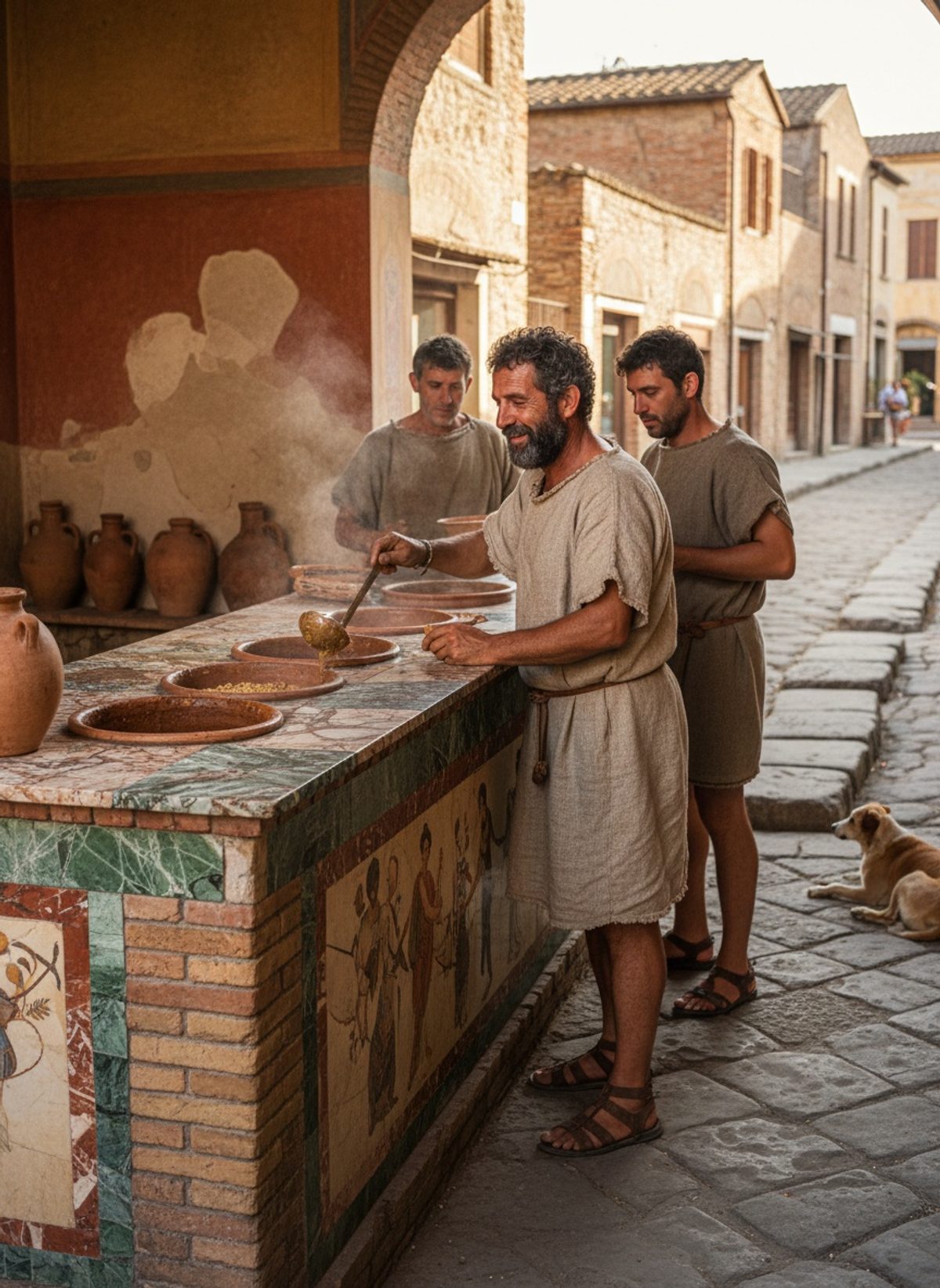
It was the hub of the daily grind in ancient cities, yet it was devoid of utensils. Plates and forks were absent for a simple reason. If you strolled into a thermopolium in Pompeii, you'd likely eat with your hands; it was where fast food was born, long before the golden arches loomed large over cityscapes worldwide.
Let us travel back to 79 CE, when Pompeii thrived under the warm embrace of the Italian sun, in the shadow of Mount Vesuvius. Far from a relic of ancient extravagance, the thermopolium was a practical cornerstone of Roman daily life, threading together the vibrant mosaic of Italy’s social fabric. These bustling food outlets lined nearly every street corner, offering hot meals to the myriad of residents who, due to their lack of kitchen facilities at home, depended on these places for their daily sustenance. It is estimated that Pompeii alone boasted approximately 80 thermopolia before the catastrophic eruption.
The scene was a vibrant tapestry of human activity. Slaves, artisans, and merchants flooded these establishments, exchanging the coin for a taste of hot lentil stew ladled from terracotta jars sunk deep into counters of intricately veined marble. The menu was often emblazoned on the walls in vibrant hues, their rich colors inviting and commanding attention in a time when literacy was not commonplace. Foods such as boiled beans, lentils, pork, and fish were staples, simmering in clay pots and exuding aromas that enticed both the well-off and the common Roman with equal fervor.
The simplicity of the thermopolium's service concealed the complexity of Roman culinary art. These foods, rich in flavor yet humble in origin, were a testament to the deeply rooted tradition of Roman gastronomy. Wine was a regular feature — a constant companion to any meal, regarded not as a luxury but a necessity. It was not only consumed by patricians but was democratized to become an integral part of every Roman’s diet. Amphorae, those indispensable ceramic jars used to ferry wine and other goods across the empire, stood silently behind the counter. Their modest exteriors belied their importance as vessels of trade that connected Rome’s vast territories with its gastronomic center in Italy.
Read next: He Walked Into the Emperor's Court. He Wept for a Sparrow.
Wine’s ubiquity in the roman gastronomic sphere was no accident. The practice of viticulture had its roots deep in history, influenced by the Greeks, Etruscans, and even the Carthaginians. Although most elite Romans preferred imported wines from Greece, the spread of wine production across the empire was deliberate. It ensured Roman soldiers always had access to their favored drink, fortifying them with each campaign they undertook.
Yet, it was not just the patrons of thermopolia who feasted on simple meals with such gregarious zeal. Roman emperors and aristocrats also indulged in the pleasures of these unrefined delicacies. A visit to a bustling thermopolium might offer a senator a break from the tedium of political discourse, a grounding ritual in the pulsating heart of urban life, away from opulence and decadence found elsewhere in Roman society.
In the Greek settlements of southern Italy, where Rome’s dominion extended by 270 BC, such cultural exchanges sowed the seeds of culinary fusion. The ancient Greeks’ appreciation for wine and viticulture merged organically with Roman traditions, leaving a lasting imprint on culinary practices. The sprawling vineyards of Tuscany, formerly under Etruscan control but later Romanized, became key producers in an economically intertwined web of trade and prosperity that linked Roman Italy with distant shores.
Read next: Einstein Cooked His Egg in the Soup. On Purpose.
The thermopolium was more than just a place to satiate hunger; it was an intricate beat in the city's living heart, where social hierarchies dissolved over shared meals. Here, life buzzed with the robust discussions of merchants negotiating deals, artisans gossiping about local events, and freedmen recounting tales of newfound liberty. It was this cross-section of society that painted the true essence of Roman social dynamics — epitomes of everyday life that seldom found themselves immortalized in the annals of grander history.
As excavations unearthed these ancient eateries centuries later, archaeologists discovered food remnants left undisturbed in their clay repositories. Vivid frescoes and reliefs on the walls, like remnants of vivid dreams, revealed the abundance once available to these lost generations — a tangible connection to humanity long past. Even in today’s contemporary culinary sphere, the echoes of the thermopolium linger, as every modern street vendor and bustling café might find their ancestral likeness within these Roman progenitors of fast and convenient dining.
The stories that linger within Pompeii’s still-silent streets today, whispered through the ruins of its many thermopolia, compel us to ponder the seamless continuity of urban life’s essentials across millennia. From these hubs of warmth and food, we discern not only the daily rituals of ancient Rome but glimpses of a resilient spirit that transcends time and space. These generous counter spaces dissolved stratifications and presented life itself in steaming terracotta bowls, nurturing both body and community with every indulgent scoop.