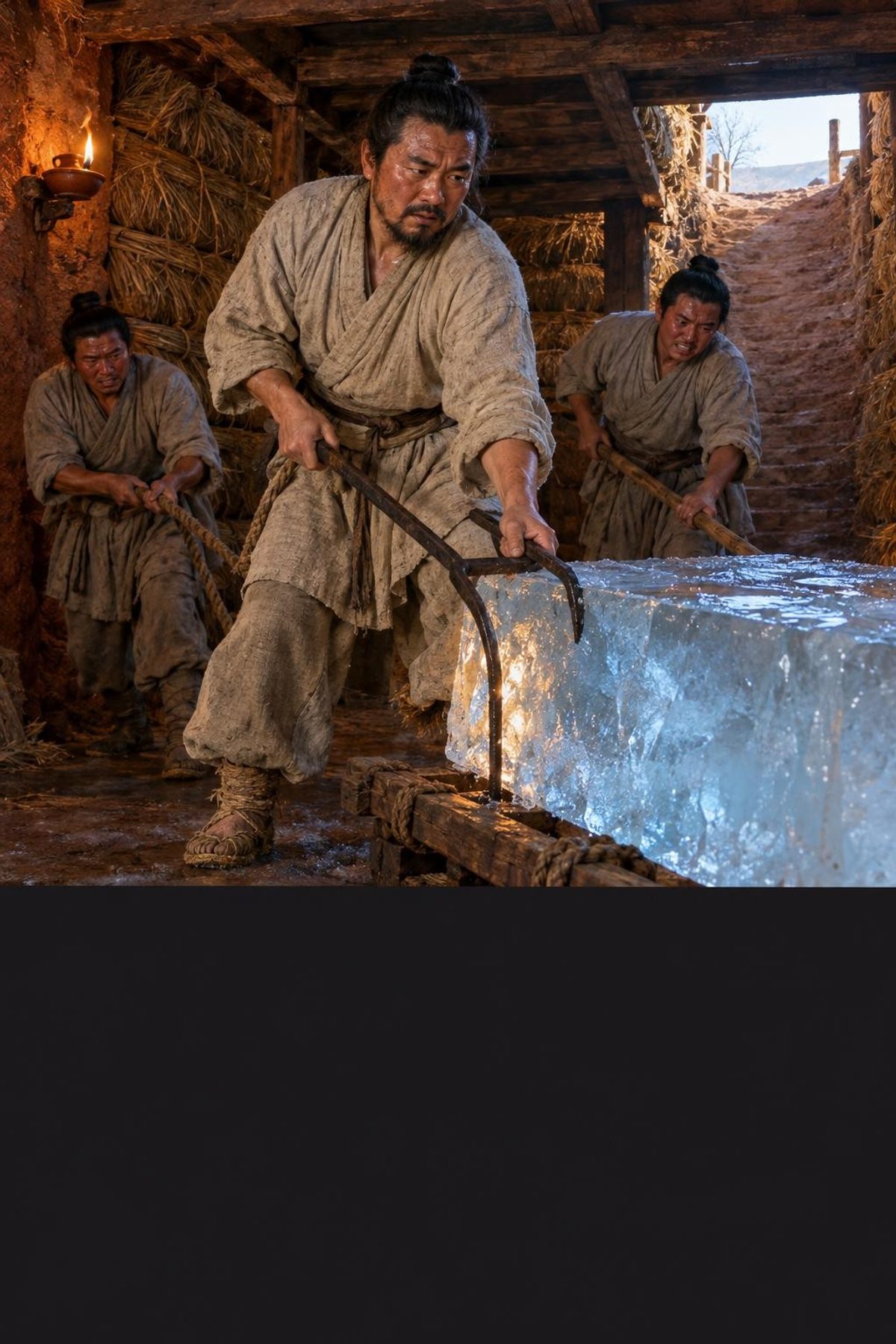
The crack of ice echoed through the frigid air as a team of workers swung their heavy iron cleavers into the frozen surface of the Wei River. The river, usually a flowing artery of trade and life, lay still under a thick blanket of ice that glinted in the low winter sun. This activity was not merely for navigation or water management; it was the beginning of a process that would culminate in a summer feast for the Emperor of the Tang—a millennium before the advent of modern refrigeration.
In the bustling capital of Chang'an, summer's oppressive heat could not penetrate the hidden ice stores, carefully curated and managed by the imperial ice masters. These specialists, responsible for the emperor's comfort, orchestrated the collection and preservation of vast quantities of ice, a testament to their ingenuity and the sophisticated logistical prowess of Tang dynasty China. Each January, armed with picks and ropes, these workers transformed the frozen expanses into blocks of translucent treasure, their breath misting in the chilly air.
A Winter's Task
With deft precision, the ice-cutting teams labored along the frozen rivers of the Tang Empire, chiseling enormous blocks of ice from nature's generous bounty. The Wei River, near Chang'an, provided a convenient and abundant source of this precious commodity. As the workers bore down, the rhythmic thunder of their tools reverberated across the icy landscape, a stark contrast to the silent severity of the winter around them.
Transporting these heavy ice blocks was no small feat. The Tang dynasty, celebrated for its advancements in engineering and logistics, deployed hundreds of workers and animals in a coordinated effort. Sledges carved carefully with grooves and equipped with stout ropes moved the ice across the frozen ground, convoying them over long distances to reach specially prepared ice pits.
Read next: The Medieval Hammam: Where Baghdad Washed, Gossiped, and Healed
These pits, dug deep into the earth and insulated with layers of straw, were the key to preserving the ice through the sweltering summer months. The Tang engineers understood the insulating properties of straw, creating an underground refrigerator that was effectively communal and essential. Strategically placed across the empire, these ice pits ensured that the fruits of their labor in January would not melt away before August.
The effort was monumental but pivotal, a yearly testament to the persistence and foresight of a civilization that mastered nature with available means. What might surprise us today is how effective this rudimentary refrigeration system was—enough to ensure that the Tang aristocracy could partake in chilled delicacies even when the city streets baked under a relentless sun.
Courtly Pleasures and Public Delights
By the time summer reached its zenith, the ice had found its way into the heart of the Tang court. In the grand halls of Chang'an, Emperor Xuanzong could enjoy the happy bounty of chilled fruits and icy confections, a luxurious reprieve from the heat that underscored his empire's opulence and technological prowess.
But how, one might wonder, did such a sophisticated system contribute to broader society? Here lies a tale of democratization unusual for such a rare commodity. While the emperor relished his iced delicacies, the surplus of this preserved winter ice filtered down to the city's streets. Enterprising vendors hawked chilled drinks and snacks, accessible to the common folk of Chang'an for a few coins, providing a refreshing escape for anyone weary of the summer's coma-inducing warmth.
This phenomenon of seasonal ice created a vibrant commercial ecosystem, where cooled beverages became a staple not just of elite feasting but of popular taste. These thriving streets of Chang’an painted a picture of a society that, while anchored in its hierarchical traditions, offered small yet significant luxuries to its inhabitants.
Read next: The Tang Dynasty Bathhouse That Served Emperors and Farmers
The Tang dynasty was not merely a towering political and cultural behemoth, revered for its poetry and military conquests. It was also a society that innovated in ways that brought joy and comfort to its people, providing material benefits that transcended class barriers. This ability to improve the daily lives of all its citizens, even with something as fragile and fleeting as ice, speaks to a civilization that truly understood the warmth of cool compassion.
Ingenious Innovations and Lasting Insights
The decline of the Tang dynasty in the 9th century marked the end of many of its innovations. The An Lushan Rebellion and later regional power struggles eroded the central authority that had sustained its ventures. Nevertheless, the legacy of their ice trade persisted, with subsequent dynasties adopting and adapting the system for their climates and courts.
What remains compelling about the Tang dynasty's ice trade is not just the technical feat it represented. It highlights the resonance of human endeavor against nature's constraints, reflecting an ancient understanding of resource stewardship and environmental adaptation. The ability to carve blocks from frozen rivers, store them meticulously, and distribute them months later speaks volumes of a society attuned to its ecological rhythms.
In today’s world, while we rely heavily on modern refrigeration, the innovative spirit of the Tang offers a reflective lens for sustainable resource management. It challenges us to consider how ancient solutions, crafted from observation and necessity, might inform our approach to the environmental issues we face today. In the hands of the Tang ice merchants, blocks of ice became more than just frozen water—they were a testament to human creativity, foresight, and the cooling power of civilization.