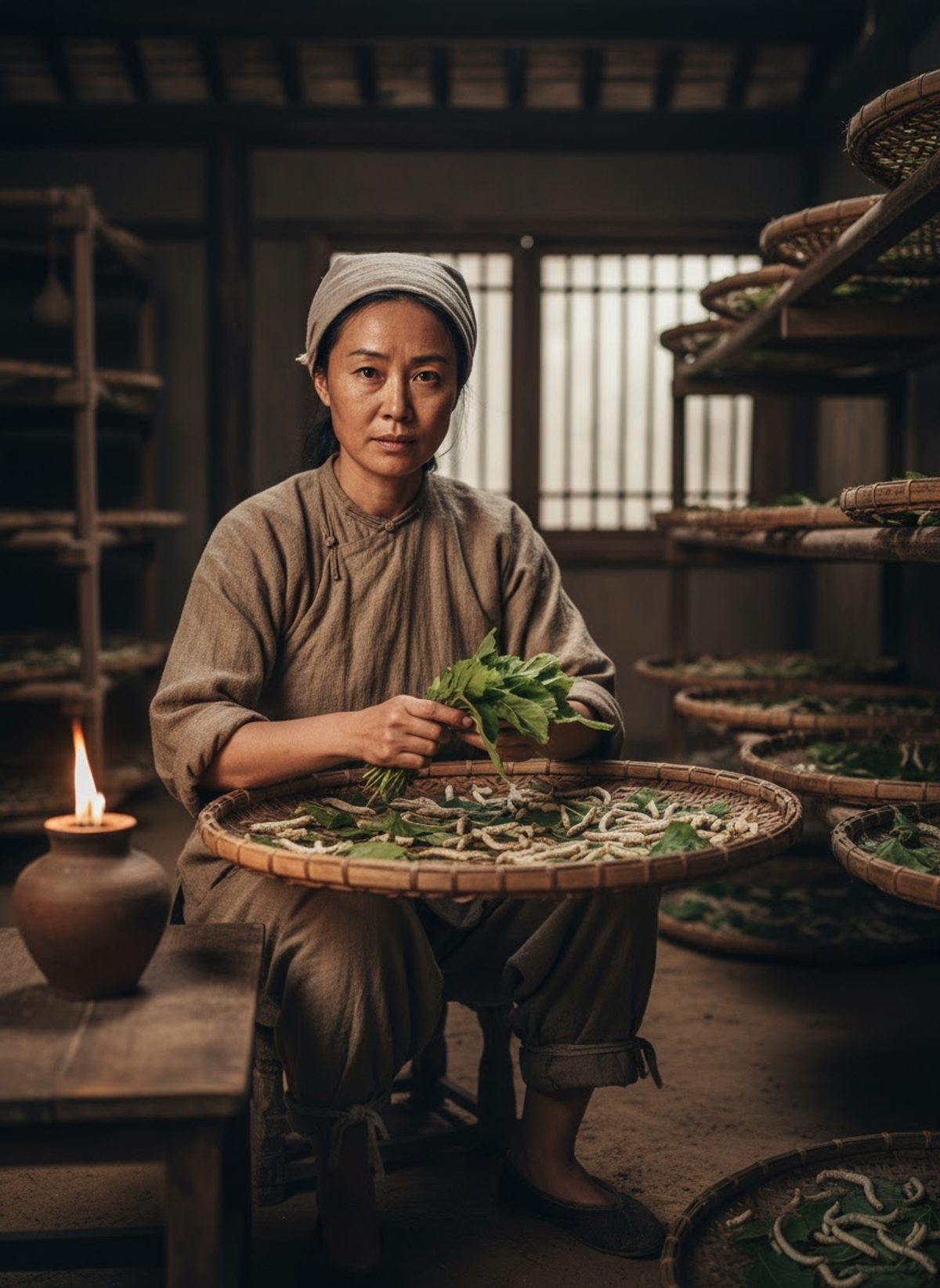
April 17, 742 CE. The first light of dawn barely flickered through the small window of the Zhong family's modest home in rural Sichuan.
The Intimate Symphony of Survival
In the heart of Tang Dynasty China, Sichuan's rolling landscapes were awakening under the tender care of spring—a promise of renewal and life. Yet, in this serene countryside, families like the Zhongs found themselves bound to an intense and demanding ritual.
Within their simple, earthen homes, the family’s livelihood was handed over to creatures less than the length of a thumb. Thousands of silkworms, meticulously cared for, lay waiting in the family bedroom, transforming the sleepy abode into a hub of industrious purpose.
Sichuan, a province known for its diverse geography, with the Tibetan Plateau to the west and the Daba Mountains to the north, cradled a rich agricultural tradition. It was here that silkworm farming flourished, thanks to the region's favorable climate and the proximity to mulberry trees, the sole diet of the silkworms.
Read next: Song Dynasty Inkstick Makers Ground Pine Soot for Forty Days
Each spring, farmers moved their precious worms into their bedrooms to maintain the warmth crucial for their growth. Underneath wooden beams and above earthen floors, the family room bristled quietly with life. The ten thousand tiny mouths gnawed with an insatiable hunger, a sound akin to whispering rain.
Women at the Heart of the Cocoon
The household's matron, Ling, moved gracefully yet deliberately among the wooden trays stacked with silkworms. It was the women of the house who bore the lion's share of the responsibility during this arduous process.
They harvested mulberry leaves through the day, and by night, under the dim glow of candlelight, cut the leaves into confetti-sized portions for their hungry wards. Silence was paramount—not just a preference but a necessity. Loud noises were said to shock the silkworms, affecting their delicate constitution.
For forty days, the worms were the pivot around which life turned. Ling and her family tended to them with unwavering dedication. Every rustle, every motion was orchestrated, following an age-old choreography passed down through generations. This dance between human and creature was as crucial as it was precarious. One misstep—a sudden frost, a night of neglect—and the fortunes of an entire year could be lost.
The Fragile Art of Creation
As the silkworms grew, so did the fervency of the family's work. The larvae fattened swiftly, needing constant attention. The air inside the home, transformed into a miniature ecosystem, grew thick with the scent of crushed leaves and warm bodies. Silkworms followed a rigorous schedule, known to pause and molt four times—a process requiring pristine conditions.
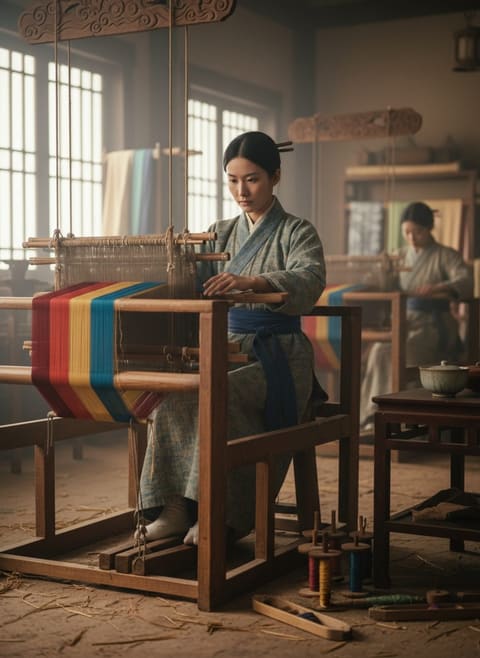
Through this delicate period, the promise of the worms crystallized into precious silk. When the silkworms finally cocooned, they spun threads more valuable than gold. The resultant silk clothed emperors and courtiers, a fabric so coveted it became a symbol of status across the vast empire and beyond. The farmers of Sichuan, though humble and muted in history's annals, were craftsmen of an unmatched weave in this grand tapestry of civilization.
Read next: Tang Dynasty Doctors Who Diagnosed Illness From the Tongue
A Season's Unforgiving Edge
Yet, every farmer knew that nature was a fickle ally. A sudden cold snap or a rainy week could spell disaster, sealing the fate of the year's harvest in an undeniable instant. Sichuan, with its fertile reaches and expressive weather, was a theater of possible fates. The locals were as hardened by this reality as they were respectful of it. They knew well that prosperity, like the silken threads they produced, was both strong and fragile.
April was drawing to a close, and the cocooning worms were left untouched, wrapped in silken orbs. A canopy of anticipation blanketed the house. As the worms awaited their destiny, so did the family. Success meant plentiful grain for the year, enough to cover taxes and secure sustenance. The Zhong family stood at the precipice of their annual dance with fortune—a ritual incessantly repeating, with every spring, every silkworm, honoring the delicate balance of life.
In a corner of the world often overlooked by the grand narratives of emperors and wars, these silkworm farmers crafted an enduring legacy. Their silent dedication reveals the profound connection between humans and the smallest, most unassuming creatures.
Such tales remind us that the fabric of history is often woven by hands more humble than we know, residing in bedrooms warmed by a delicate symphony of ten thousand mouths. This is the quiet yet powerful narrative of survival and subsistence that history silently threads into its tapestry.