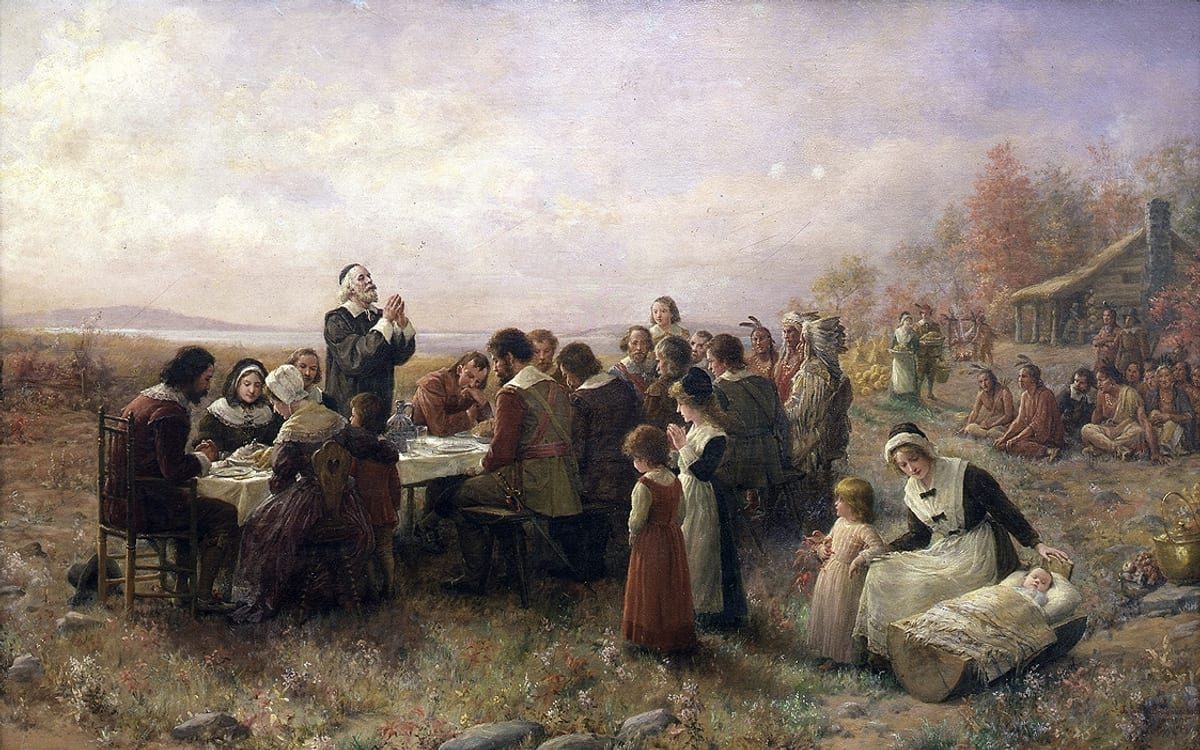
Most of us picture the first Thanksgiving as a long table, a prayer and a roast turkey. The real event was a good deal plainer, and the written evidence for it is thin.
The Pilgrim Hall Museum says there are two primary sources for the autumn of 1621 at Plymouth, and only two.
What Edward Winslow saw
The main account comes from Edward Winslow, who wrote about it in Mourt's Relation. Once the harvest was in, he said, the governor sent four men out fowling, so that "we might after a special manner rejoice together". In a single day those four men killed enough birds to feed the company for almost a week.
Winslow then adds that "many of the Indians" came among them, "and amongst the rest their greatest king Massasoit, with some ninety men". The English entertained and feasted them for three days. The Wampanoag men went out and killed five deer, which they gave to the governor, the captain and others. Winslow also says the settlers "exercised our Arms" during the visit.
Read next: Tang Dynasty Silkworm Farmers Raised Worms in Their Bedrooms
What William Bradford added
The second source is Governor William Bradford, in Of Plymouth Plantation. His passage does not describe a feast at all. He writes about the autumn in general: there was "great store of wild turkeys, of which they took many, besides venison", along with fish such as cod and bass.
Bradford also noted that the settlers were "all well recovered in health and strength" and had "all things in good plenty". Many afterwards wrote of that plenty to their friends in England, and he wrote that those reports were "not feigned but true".
Who was at the table
The English were few. The Pilgrim Hall Museum lists 53 survivors of the Mayflower voyage. It notes that no other ship reached Plymouth until after the celebration.
Plimoth Patuxet Museums say that at least 140 people took part. That means Massasoit's ninety guests were a large share of those present. The museum calls the three days a secular harvest celebration, though it says some sort of grace or prayer almost certainly came before the eating. Its historians also note that Native women may have been there and may have helped with the cooking.
Read next: Tang Dynasty Noodle Makers Pulled Dough Into Silk-Fine Strands by Hand
What was on the menu
Plimoth Patuxet says the only eyewitness account mentions just two foods: venison and wildfowl. It calls it "probable" that the feast featured turkey, though the eyewitness account does not say so.
University of Wisconsin–Madison historian Stanley Schultz says a Pilgrim brought to a modern Thanksgiving dinner would not have recognised mashed potatoes, cranberry sauce, pumpkin pie or apple pie. Other foods available that autumn included dried maize, lobsters, oysters, eels, squash and beans, though Schultz says we can only speculate whether they were served.
A feast, not yet a holiday
The extracts on the Pilgrim Hall page speak of rejoicing, not of a thanksgiving. The name came later. Plimoth Patuxet explains that New Englanders in the 1830s began to refer to the harvest feast as the "First Thanksgiving", because it resembled their own holiday.
What happened in 1621 was a three-day harvest gathering of two peoples, sharing what the land had given. Plimoth Patuxet, which calls Massasoit by his Wampanoag name Ousamequin, says his gift of five deer was essential to the diplomacy of the event.